
Sign up to save your podcasts
Or



Based on Podcast App listening data
Jeremiah is speaking at a time when his society was literally falling apart—politically, psychologically, socially and culturally. Everybody was asking, “What’s wrong?” And the answer of God through Jeremiah, was, “It’s not the economy. It’s sin.”
The Bible shows us that sin is a dislocation of the soul. The soul should be centered on God, and all of our problems come from our unwillingness to center on him because we don’t want to lose control. So what happens? What are the effects of centering on something else?
Jeremiah gives a metaphor of us falling in love with other gods, meaning these other things we center our lives on. And he shows that there are two major consequences: 1) our lover gods will always enslave us, and 2) our lover gods will always leave us empty.
This sermon was preached by Dr. Timothy Keller at Redeemer Presbyterian Church on January 29, 1995. Series: The Seven Deadly Sins. Scripture: Jeremiah 2:19-32.
Today's podcast is brought to you by Gospel in Life, the site for all sermons, books, study guides and resources from Timothy Keller and Redeemer Presbyterian Church. If you've enjoyed listening to this podcast and would like to support the ongoing efforts of this ministry, you can do so by visiting https://gospelinlife.com/give and making a one-time or recurring donation.
In Jeremiah, the people of Israel were calling out and saying, “What’s wrong with us? Why are things falling apart?”
And God came through and said, “Let me tell you what’s wrong.” In Jeremiah 2, we have the first sermon by the prophet Jeremiah to the people of Israel. It’s a sermon to show them why their lives are falling apart, why their culture is falling apart, why their psyches are falling apart, why their families are falling apart. And it’s a sermon on sin.
There are three things that we learn from this passage about the nature of sin: 1) sin is denial, 2) sin is a disposition, and 3) there is a solution.
This sermon was preached by Dr. Timothy Keller at Redeemer Presbyterian Church on January 22, 1995. Series: The Seven Deadly Sins. Scripture: Jeremiah 2:2-13, 19.
Today's podcast is brought to you by Gospel in Life, the site for all sermons, books, study guides and resources from Timothy Keller and Redeemer Presbyterian Church. If you've enjoyed listening to this podcast and would like to support the ongoing efforts of this ministry, you can do so by visiting https://gospelinlife.com/give and making a one-time or recurring donation.
It’s acceptable now to say, “I am spiritually searching.” But it’s not really acceptable to say you’ve found anything.
But the Bible says you can find God. Not just search for God, but find God. And the famous passage about the burning bush, where Moses finds God, is very important—it gives you all of the basic principles for truly finding God. And until the same three things that happened to Moses happen to you, you can’t find God.
Looking at this passage, we can see three stages: 1) the burning bush is a disrupting event, 2) when Moses gets closer he sees it’s an unmanageable power, and 3) in the midst of the burning bush, there’s an angel.
This sermon was preached by Dr. Timothy Keller at Redeemer Presbyterian Church on October 4, 1998. Series: When All You’ve Ever Wanted Isn’t Enough. Scripture: Exodus 3:1-14.
Today's podcast is brought to you by Gospel in Life, the site for all sermons, books, study guides and resources from Timothy Keller and Redeemer Presbyterian Church. If you've enjoyed listening to this podcast and would like to support the ongoing efforts of this ministry, you can do so by visiting https://gospelinlife.com/give and making a one-time or recurring donation.
The Ecclesiastes writer says, “I have sought to construct meaning in life.” He takes the view of a practical secularist—that we don’t know for sure if there’s a God, and that this life is all there is. And then he asks, “If this life is all there is, does that make life meaningless?”
He tells us in Ecclesiastes that he tried to construct meaning by being a cause-based person who fought injustice. He tried to construct meaning by seeking pleasure and beauty. And next, he tries a work-based life, making career and achievement the organizing principle of life.
In exploring a work-based life, he finds three things: 1) a life of work is not worth it, 2) why it’s not worth it, 3) what is worth it.
This sermon was preached by Dr. Timothy Keller at Redeemer Presbyterian Church on September 27, 1998. Series: When All You’ve Ever Wanted Isn’t Enough. Scripture: Ecclesiastes 2:17–26, 4:4–8.
Today's podcast is brought to you by Gospel in Life, the site for all sermons, books, study guides and resources from Timothy Keller and Redeemer Presbyterian Church. If you've enjoyed listening to this podcast and would like to support the ongoing efforts of this ministry, you can do so by visiting https://gospelinlife.com/give and making a one-time or recurring donation.
When you go on a spiritual search, there are problems people always run into. One of them is the problem of pain. But there’s also the problem of pleasure.
I don’t think I’ve ever really talked to anybody who said, “I have trouble believing in God because of pleasure. Why is there pleasure in the world?” But my thesis, and the Ecclesiastes writer’s thesis, is that it should bother you, because pleasure is a huge problem.
The Ecclesiastes writer teaches us three things about pleasure: 1) what pleasure promises, 2) why it fails, and 3) how it points beyond.
This sermon was preached by Dr. Timothy Keller at Redeemer Presbyterian Church on September 20, 1998. Series: When All You’ve Ever Wanted Isn’t Enough. Scripture: Ecclesiastes 2:1–11, 3:10–14.
Today's podcast is brought to you by Gospel in Life, the site for all sermons, books, study guides and resources from Timothy Keller and Redeemer Presbyterian Church. If you've enjoyed listening to this podcast and would like to support the ongoing efforts of this ministry, you can do so by visiting https://gospelinlife.com/give and making a one-time or recurring donation.
If you’re on a spiritual search, there’s no better place to go than the book of Ecclesiastes. In the entire Bible, it’s the only book written from the viewpoint of a skeptic.
The writer of Ecclesiastes asks, “If this life is all here is, what meaning is there in life?” To explore that, he looks at several questions we all have to answer in some way. The first of these is how we deal with the injustice and suffering we see in the world. How do you deal with injustice?
The Ecclesiastes writer 1) refuses to let you avoid the question of injustice, and 2) gives us clues to two answers for how to deal with injustice.
This sermon was preached by Dr. Timothy Keller at Redeemer Presbyterian Church on September 13, 1998. Series: When All You’ve Ever Wanted Isn’t Enough. Scripture: Ecclesiastes 9:2–16.
Today's podcast is brought to you by Gospel in Life, the site for all sermons, books, study guides and resources from Timothy Keller and Redeemer Presbyterian Church. If you've enjoyed listening to this podcast and would like to support the ongoing efforts of this ministry, you can do so by visiting https://gospelinlife.com/give and making a one-time or recurring donation.
When you’re young, there are probably things you’re sure would never happen to you, or things you’re sure you or friends would never do. But usually, as we get older, we begin to wonder whether there’s any rhyme or reason to life. Scientifically, they now say life is chaotic, that there is nothing but disorder. That’s both the practical and the intellectual perception.
But Christianity has the most wonderful, the most sophisticated, and the most decisive answer to that perception: Jesus is King. When we see our lives and history looking chaotic, the Bible comes and says to us, “Calm down. There’s an explanation.”
Let me show you how the two aspects of the kingship of Christ make up this most wonderful answer: 1) Jesus Christ has a kingdom coming, and 2) Jesus is King right now of history.
This sermon was preached by Dr. Timothy Keller at Redeemer Presbyterian Church on January 30, 1994. Series: Understanding Jesus. Scripture: Ephesians 1:9–12.
Today's podcast is brought to you by Gospel in Life, the site for all sermons, books, study guides and resources from Timothy Keller and Redeemer Presbyterian Church. If you've enjoyed listening to this podcast and would like to support the ongoing efforts of this ministry, you can do so by visiting https://gospelinlife.com/give and making a one-time or recurring donation.
Jesus Christ carries out his office of King in two different ways. He carries it out spiritually in the hearts of his people, and he carries it out cosmically in history.
We’re going to look now at the first of these: how Jesus Christ approaches the human heart. And 2 Corinthians 10 describes this approach in an interesting way.
Let’s look at this passage to see 1) what it’s describing implicitly, and 2) what it’s describing explicitly.
This sermon was preached by Dr. Timothy Keller at Redeemer Presbyterian Church on January 23, 1994. Series: Understanding Jesus. Scripture: 2 Corinthians 10:1–6.
Today's podcast is brought to you by Gospel in Life, the site for all sermons, books, study guides and resources from Timothy Keller and Redeemer Presbyterian Church. If you've enjoyed listening to this podcast and would like to support the ongoing efforts of this ministry, you can do so by visiting https://gospelinlife.com/give and making a one-time or recurring donation.
Many people today think of Christianity as a set of beliefs you take up, something you decide upon. But the Bible says Christianity is something that comes upon you. It’s not something you pick up—it’s something that picks you up.
Jesus Christ is not a passive Savior. Jesus is not someone who sits back and waits for you to figure it out. He is a revealer. He makes a provision for us, he comes after us, and he shows us the truth.
Let’s look at this prophetic ministry of Christ: 1) what he does, 2) why he does it, and 3) how he does it.
This sermon was preached by Dr. Timothy Keller at Redeemer Presbyterian Church on January 16, 1994. Series: Understanding Jesus. Scripture: Luke 24:44–53.
Today's podcast is brought to you by Gospel in Life, the site for all sermons, books, study guides and resources from Timothy Keller and Redeemer Presbyterian Church. If you've enjoyed listening to this podcast and would like to support the ongoing efforts of this ministry, you can do so by visiting https://gospelinlife.com/give and making a one-time or recurring donation.
By saying Jesus is a prophet, we mean he is a revealer. He communicates truth. He’s the revealer of who God is and what his will is. As a prophet, Jesus comes and speaks to you and to me for God.
Even though Jesus is far more than a prophet, he is a prophet. And the fact that Jesus is a prophet shows us that we have a God who speaks to us.
Let’s look at two aspects of Jesus as a prophet: 1) what are prophets? and 2) why is Jesus the ultimate prophet?
This sermon was preached by Dr. Timothy Keller at Redeemer Presbyterian Church on January 9, 1994. Series: Understanding Jesus. Scripture: Acts 3:17–26.
Today's podcast is brought to you by Gospel in Life, the site for all sermons, books, study guides and resources from Timothy Keller and Redeemer Presbyterian Church. If you've enjoyed listening to this podcast and would like to support the ongoing efforts of this ministry, you can do so by visiting https://gospelinlife.com/give and making a one-time or recurring donation.
From the publisher's feed
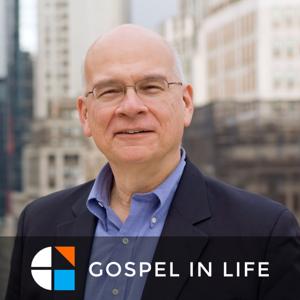
Sermons by Timothy J. Keller (1950-2023), founding pastor of Redeemer Presbyterian Church in New York City, co-founder of Redeemer City to City, and the author of numerous books, including The Reason for God, The Prodigal God, Making Sense of God and The Meaning of Marriage. His thirty-one books have sold more than six million copies and have been translated into twenty-nine languages.
For more sermons and resources, visit www.gospelinlife.com.
Ranked by our users in the last 21 days
1,652 Listeners
1,124 Listeners
3,943 Listeners

2,265 Listeners

19,478 Listeners
1,455 Listeners

1,127 Listeners
1,479 Listeners

6,009 Listeners

2,187 Listeners

2,054 Listeners

340 Listeners

220 Listeners
1,816 Listeners
739 Listeners