
Sign up to save your podcasts
Or



Based on Podcast App listening data
In English, the word Immanuel has only eight letters. Yet I tell you it is heavier than the heavens and the earth.
In that one word, Immanuel, you have the most offensive and the most comforting, the most repulsive and the most attractive message the world has ever heard. It means “God with us.”
Let’s see how this message 1) is the most repulsive because it says Jesus Christ is God, and 2) is the most attractive because it says Jesus Christ is God with us.
This sermon was preached by Dr. Timothy Keller at Redeemer Presbyterian Church on December 19, 1993. Series: Understanding Jesus. Scripture: Matthew 1:20–23.
Today's podcast is brought to you by Gospel in Life, the site for all sermons, books, study guides and resources from Timothy Keller and Redeemer Presbyterian Church. If you've enjoyed listening to this podcast and would like to support the ongoing efforts of this ministry, you can do so by visiting https://gospelinlife.com/give and making a one-time or recurring donation.
Jesus Christ was not just born. He had an existence before he was born; and therefore, Jesus was not just born—he was given to us.
Jesus is the one gift that, if you have it, you have all the other gifts. Jesus is the one gift that, if you reject it, you lose all other gifts. The apostle Paul says that Jesus is the inexpressible gift.
By thinking about Jesus as a gift, I think we’ll come to understand more of who he is and how we should relate to him. So let’s look at three essential qualities of a gift: 1) gifts are surprises, 2) gifts can be insulting, and 3) gifts are immensely valuable.
This sermon was preached by Dr. Timothy Keller at Redeemer Presbyterian Church on December 19, 1993. Series: Understanding Jesus. Scripture: Romans 8:32.
Today's podcast is brought to you by Gospel in Life, the site for all sermons, books, study guides and resources from Timothy Keller and Redeemer Presbyterian Church. If you've enjoyed listening to this podcast and would like to support the ongoing efforts of this ministry, you can do so by visiting https://gospelinlife.com/give and making a one-time or recurring donation.
The context of Psalm 2 is that the king has been installed in Jerusalem, but all the foreign kings are hostile and conspiring against this king. If you read it carefully, you’ll see that no earthly king can completely justify the fury of the threats, and no earthly king can completely justify the glory of the promises given. The language of the psalm, you might say, spills out over its banks.
Psalm 2 is one of the messianic psalms. In verse 2, it says, “The kings of the earth take their stand […] against the Lord and against his Anointed One.” Do you know what the word Anointed One is in Hebrew? It means Messiah.
This psalm is talking about the greater King. And it actually tells us three things: 1) we have a true King, 2) human beings hate the King, and 3) we need the King.
This sermon was preached by Dr. Timothy Keller at Redeemer Presbyterian Church on December 12, 1993. Series: Understanding Jesus. Scripture: Psalm 2.
Today's podcast is brought to you by Gospel in Life, the site for all sermons, books, study guides and resources from Timothy Keller and Redeemer Presbyterian Church. If you've enjoyed listening to this podcast and would like to support the ongoing efforts of this ministry, you can do so by visiting https://gospelinlife.com/give and making a one-time or recurring donation.
In Psalm 69, we have the prayer diary of Jesus and an expression of his anguish and his sufferings for us.
This psalm, of course, is written by David, and it’s about King David and his immediate problems. But it actually doesn’t refer only to David—it also refers to a greater king than David and a far greater suffering. In John 15, Jesus tells his disciples that this psalm is talking about him.
From this psalm, we can learn three things about what Jesus came to do: 1) he came to be a servant, 2) he came to be hated, and 3) he came to be exchanged.
This sermon was preached by Dr. Timothy Keller at Redeemer Presbyterian Church on December 5, 1993. Series: Understanding Jesus. Scripture: Psalm 69.
Today's podcast is brought to you by Gospel in Life, the site for all sermons, books, study guides and resources from Timothy Keller and Redeemer Presbyterian Church. If you've enjoyed listening to this podcast and would like to support the ongoing efforts of this ministry, you can do so by visiting https://gospelinlife.com/give and making a one-time or recurring donation.
At the end of the end of the last of Moses’ sermons, he says something so simple that it’s difficult.
Moses starts saying, “I’m offering you this personal relationship with God.” He’s saying, “It’s not too difficult. It’s near you. You don’t have to go up to heaven. You don’t have to go over the sea.” And actually, people miss this personal relationship with God because it’s so simple; the simplicity is its difficulty.
We’re going to see here, when it comes to this personal, covenant relationship with God, 1) its deceptive ordinariness, 2) its threatening graciousness, and yet 3) its unimaginable promise.
This sermon was preached by Dr. Timothy Keller at Redeemer Presbyterian Church on September 23, 2007. Series: The New Heart God Gives. Scripture: Deuteronomy 30:11-20.
Today's podcast is brought to you by Gospel in Life, the site for all sermons, books, study guides and resources from Timothy Keller and Redeemer Presbyterian Church. If you've enjoyed listening to this podcast and would like to support the ongoing efforts of this ministry, you can do so by visiting https://gospelinlife.com/give and making a one-time or recurring donation.
When you’re about to die, there are no tangents; you get right to the point. You only say the things that are the most important that you’ve ever learned in your whole life.
Here, at the very end of the end of his sermons, at the very end of the book of Deuteronomy, Moses gets to the most crucial things he could possibly tell anyone. Here he gives us the solution to what could be called the ultimate human problem.
So let’s ask 1) What’s that problem? 2) What’s the solution? 3) How do you know if you have it? and 4) If you don’t, how can you receive it?
This sermon was preached by Dr. Timothy Keller at Redeemer Presbyterian Church on September 16, 2007. Series: The New Heart God Gives. Scripture: Deuteronomy 30:1-10.
Today's podcast is brought to you by Gospel in Life, the site for all sermons, books, study guides and resources from Timothy Keller and Redeemer Presbyterian Church. If you've enjoyed listening to this podcast and would like to support the ongoing efforts of this ministry, you can do so by visiting https://gospelinlife.com/give and making a one-time or recurring donation.
If the last thing, practically, that Moses said before he died was, “You need to be in a covenant relationship with God,” then it would behoove us to figure out what that is.
What is a covenant relationship with God? In Deuteronomy, we have a series of sermons that Moses preached just before he died. And Moses thought a covenant relationship with God was that important — that this would be almost the last thing he said.
In this passage, we learn three things: 1) the uniqueness of the covenant, 2) the mystery surrounding the covenant, and 3) the hero of the covenant.
This sermon was preached by Dr. Timothy Keller at Redeemer Presbyterian Church on September 9, 2007. Series: The New Heart God Gives. Scripture: Deuteronomy 29:2-4, 9-18.
Today's podcast is brought to you by Gospel in Life, the site for all sermons, books, study guides and resources from Timothy Keller and Redeemer Presbyterian Church. If you've enjoyed listening to this podcast and would like to support the ongoing efforts of this ministry, you can do so by visiting https://gospelinlife.com/give and making a one-time or recurring donation.
If we look at Jesus Christ, at the case for Jesus being who he said he is, there are five things to see.
First, there was a man who claimed to be God. Second, he apparently did miracles. Third, he got the people closest to him to believe he was God. Fourth, after he was dead, many people saw him risen to life again. And fifth, those people were so transformed by the experience of meeting that risen Savior that they spread the word everywhere.
How do you account for those five facts, for the data of who Jesus is? You have to come up with something. There are only five options for how you account for this. We’ll look at these five options, and what they mean for us.
This talk was given by Dr. Timothy Keller at Redeemer Presbyterian Church on May 1, 1994. Series: Redeemer Open Forums.
Today's podcast is brought to you by Gospel in Life, the site for all sermons, books, study guides and resources from Timothy Keller and Redeemer Presbyterian Church. If you've enjoyed listening to this podcast and would like to support the ongoing efforts of this ministry, you can do so by visiting https://gospelinlife.com/give and making a one-time or recurring donation.
In John 5, Jesus heals a lame man, and then he begins to teach about himself. He makes some astounding claims, and the people challenge him. “Why should we believe you?”
In the context of Jewish jurisprudence, if a claim was made, you had to have two or three corroborating witnesses. Jesus responds to the people’s challenge with three: John the Baptist, Jesus’ own works, and the scriptures.
In the process of looking at what he says here, we learn three things Jesus himself believed about the scripture. Jesus believes in the Bible’s 1) complete authority, 2) unity, and 3) vitality and power.
This sermon was preached by Dr. Timothy Keller at Redeemer Presbyterian Church on November 24, 2013. Series: A Public Faith. Scripture: John 5:31-47.
Today's podcast is brought to you by Gospel in Life, the site for all sermons, books, study guides and resources from Timothy Keller and Redeemer Presbyterian Church. If you've enjoyed listening to this podcast and would like to support the ongoing efforts of this ministry, you can do so by visiting https://gospelinlife.com/give and making a one-time or recurring donation.
You can’t talk publicly about Christianity unless at some point you get down to say, “Well, what is it?”
There’s great consensus that 1 Corinthians was written just 20 years after the death of Jesus Christ. So when Paul says he’s summarizing the message the Corinthians heard and believed before this, he’s talking about something that happened a handful of years after Jesus’ death. If you want to get down to the irreducible core of what Christianity is about, here it is in this passage.
This is the gospel. The gospel is about 1) Jesus, 2) sin and substitution, 3) history and resurrection, and 4) astonishing, transforming grace.
This sermon was preached by Dr. Timothy Keller at Redeemer Presbyterian Church on November 10, 2013. Series: A Public Faith. Scripture: 1 Corinthians 15:1-11.
Today's podcast is brought to you by Gospel in Life, the site for all sermons, books, study guides and resources from Timothy Keller and Redeemer Presbyterian Church. If you've enjoyed listening to this podcast and would like to support the ongoing efforts of this ministry, you can do so by visiting https://gospelinlife.com/give and making a one-time or recurring donation.
From the publisher's feed
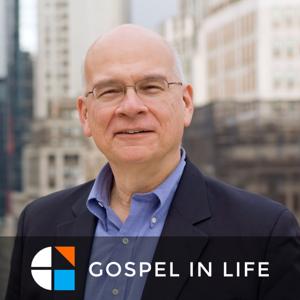
Sermons by Timothy J. Keller (1950-2023), founding pastor of Redeemer Presbyterian Church in New York City, co-founder of Redeemer City to City, and the author of numerous books, including The Reason for God, The Prodigal God, Making Sense of God and The Meaning of Marriage. His thirty-one books have sold more than six million copies and have been translated into twenty-nine languages.
For more sermons and resources, visit www.gospelinlife.com.
Ranked by our users in the last 21 days
1,652 Listeners
1,124 Listeners
3,943 Listeners

2,265 Listeners

19,478 Listeners
1,455 Listeners

1,127 Listeners
1,479 Listeners
6,009 Listeners

2,187 Listeners

2,054 Listeners

340 Listeners
220 Listeners
1,816 Listeners
739 Listeners