
Sign up to save your podcasts
Or



Based on Podcast App listening data
The whole story of Moses and the leading out, the exodus, of the people of Israel out of Egypt and out of their slavery is all told in Hebrews 11 in just a couple of phrases.
In the Passover’s ordinance of the death of a lamb and taking shelter under its blood, God gave the Israelites and anyone who wanted to read the Old Testament a clue to the meaning of the universe. Look at Jesus as Lamb, and a tremendous greatness of life will develop. This is the object of our faith. This is the thing we look at to become people of faith.
From looking at Jesus as our Passover, Jesus as the Lamb of God, we get three lessons: 1) we see everybody deserves judgment, 2) Jesus’ death is a propitiation, and 3) the reason Jesus Christ was so weak as the Lamb was because his love was so strong.
This sermon was preached by Dr. Timothy Keller at Redeemer Presbyterian Church on November 20, 1994. Series: The Nature of Faith. Scripture: Hebrews 11:27-29.
Today's podcast is brought to you by Gospel in Life, the site for all sermons, books, study guides and resources from Timothy Keller and Redeemer Presbyterian Church. If you've enjoyed listening to this podcast and would like to support the ongoing efforts of this ministry, you can do so by visiting https://gospelinlife.com/give and making a one-time or recurring donation.
Is it possible in a throwaway culture, in a society of throwaway relationships, and in a society of throwaway identities to be a person who can endure and hyperstand?
To hyperstand means you put your feet down and nothing can knock you off your feet. It’s like you’re in a river, but you can stand in the river. That’s what the book of Hebrews is about. And in the life of Moses, we see the secret of endurance, of someone who stands firm in the long run.
Let’s look at 1) what Moses endured, and 2) how he did it.
This sermon was preached by Dr. Timothy Keller at Redeemer Presbyterian Church on November 13, 1994. Series: The Nature of Faith. Scripture: Hebrews 11:23-30.
Today's podcast is brought to you by Gospel in Life, the site for all sermons, books, study guides and resources from Timothy Keller and Redeemer Presbyterian Church. If you've enjoyed listening to this podcast and would like to support the ongoing efforts of this ministry, you can do so by visiting https://gospelinlife.com/give and making a one-time or recurring donation.
If we live a big life of faith, how will it show itself in the most specific and particular daily lifestyle details?
The writer of Hebrews shows us the lifestyle of a person of faith. If circumstances and events and troubles no longer have the mastery over us, if we instead master them, what kind of people will we be in the way we live? We will be characterized by a lifestyle of openness and generosity.
There are three kinds of openness and generosity that are mentioned in this passage: 1) living space, 2) social situations, and 3) your finances.
This sermon was preached by Dr. Timothy Keller at Redeemer Presbyterian Church on November 6, 1994. Series: The Nature of Faith. Scripture: Hebrews 13:1-6.
Today's podcast is brought to you by Gospel in Life, the site for all sermons, books, study guides and resources from Timothy Keller and Redeemer Presbyterian Church. If you've enjoyed listening to this podcast and would like to support the ongoing efforts of this ministry, you can do so by visiting https://gospelinlife.com/give and making a one-time or recurring donation.
How can you live a life so no matter what comes at you, you face it with equilibrium, you face it with poise, you face it with strength?
Today we come to an incident in Abraham’s life which is called a test. In the beginning of this particular brief account, it says God tested Abraham. This is the secret of a great life. The secret of a great life is to understand you become great only through tests.
We have to understand 1) there are tests, 2) how these tests work, 3) why we need these tests, and 4) how we pass these tests.
This sermon was preached by Dr. Timothy Keller at Redeemer Presbyterian Church on October 30, 1994. Series: The Nature of Faith. Scripture: Hebrews 11:17-19.
Today's podcast is brought to you by Gospel in Life, the site for all sermons, books, study guides and resources from Timothy Keller and Redeemer Presbyterian Church. If you've enjoyed listening to this podcast and would like to support the ongoing efforts of this ministry, you can do so by visiting https://gospelinlife.com/give and making a one-time or recurring donation.
There’s one guy who is so preeminently an example of a life of faith that three religions look to him as the paragon of faith. That guy’s name is Abraham.
Here’s the story of Abraham’s life: God said, “Get out!” Abraham said, “Where?” God said, “I’ll tell you later. Just go.” The Lord said, “I will give you this land.” Abraham said, “When?” God said, “I’ll tell you later. Just wander around in tents.” The Lord said, “I will give you a son.” Abraham said, “How?” God said, “I’ll tell you later. Just wait around.” The Lord said, “Slay your son.” Abraham said, “Why?” God said, “I’ll tell you later. Just walk up the hill with him.” If you read the whole narrative, you’ll find that he fell down a number of times. But every time Abraham masters the situation.
In the face of it, the circumstances didn’t master Abraham. How? Three principles: 1) he heard the call of God, 2) he obeyed the call of God, and 3) he looked to the city with foundations.
This sermon was preached by Dr. Timothy Keller at Redeemer Presbyterian Church on October 23, 1994. Series: The Nature of Faith. Scripture: Hebrews 11:8-16.
Today's podcast is brought to you by Gospel in Life, the site for all sermons, books, study guides and resources from Timothy Keller and Redeemer Presbyterian Church. If you've enjoyed listening to this podcast and would like to support the ongoing efforts of this ministry, you can do so by visiting https://gospelinlife.com/give and making a one-time or recurring donation.
Abraham had greatness in the face of a completely uncertain future. He had no idea what was coming, and yet he lived a life of greatness. How can we?
The writer of Hebrews is writing to a group of Christians whose lives were going very badly. And in chapter 11, he says to them, “You don’t understand. The great men and women of God have never had designer lives. Yet they lived great lives.” And Abraham is perhaps the greatest case given.
How we can live life with greatness, with stability, with confidence? There are three principles: 1) the negative principle, 2) the positive principle, and 3) the ultimate principle.
This sermon was preached by Dr. Timothy Keller at Redeemer Presbyterian Church on October 16, 1994. Series: The Nature of Faith. Scripture: Hebrews 11:8-16.
Today's podcast is brought to you by Gospel in Life, the site for all sermons, books, study guides and resources from Timothy Keller and Redeemer Presbyterian Church. If you've enjoyed listening to this podcast and would like to support the ongoing efforts of this ministry, you can do so by visiting https://gospelinlife.com/give and making a one-time or recurring donation.
Enoch is a very mysterious Old Testament figure. God took him right to heaven without him tasting death—because he walked with God. What’s so special about walking with God?
In the garden of Eden, in the beginning of time, God took long walks with us every evening. And yet the minute human beings disobeyed God, they couldn’t stand intimacy with infinity anymore. Humans no longer walk with God. But suddenly, in Genesis 5, Enoch shows up and he still walks with God. What? It’s still possible? Yes, it’s possible by faith. Faith. You can do it too.
Being a Christian is not about a general belief in God—it’s about walking with God. To walk with God is to 1) walk in peace with him, and to 2) walk in the presence of God. Let’s look at these two aspects and then, 3) look at how these two are drawn together.
This sermon was preached by Dr. Timothy Keller at Redeemer Presbyterian Church on October 9, 1994. Series: The Nature of Faith. Scripture: Hebrews 11:5-7.
Today's podcast is brought to you by Gospel in Life, the site for all sermons, books, study guides and resources from Timothy Keller and Redeemer Presbyterian Church. If you've enjoyed listening to this podcast and would like to support the ongoing efforts of this ministry, you can do so by visiting https://gospelinlife.com/give and making a one-time or recurring donation.
Many of us are wondering how we’re even going to face Monday, but the men and women in Hebrews 11 didn’t just know how to face life—they were enabled to even go against the whole world. And the thing that enabled them was they were commended by God.
Abel got the commendation from God—he was shown God accepted him as absolutely righteous, and as a result, he became one of these great hearts who can face the world, can face anything. By looking at Abel, and the contrast with Cain, we can have some understanding about how we also can know this same thing.
The best way to understand the case of Cain and Abel is to ask: 1) how were Cain and Abel alike, 2) how were they not alike? and 3) are you Cain or Abel?
This sermon was preached by Dr. Timothy Keller at Redeemer Presbyterian Church on October 2, 1994. Series: The Nature of Faith. Scripture: Hebrews 11:1-7.
Today's podcast is brought to you by Gospel in Life, the site for all sermons, books, study guides and resources from Timothy Keller and Redeemer Presbyterian Church. If you've enjoyed listening to this podcast and would like to support the ongoing efforts of this ministry, you can do so by visiting https://gospelinlife.com/give and making a one-time or recurring donation.
Christian faith is more than thinking, because the Christian message, the gospel, is much more than an idea. It is not just an idea; it’s a power.
The gospel bears fruit in you. It’s a living thing. But how does faith move from being an idea to being a power? You stop just believing in God and you start believing God. Noah shows us the way.
Hebrews 11 shows us that Noah does three things that bring the power of faith into life: 1) he believes God, 2) he condemns the world, and 3) he hides in the ark.
This sermon was preached by Dr. Timothy Keller at Redeemer Presbyterian Church on September 25, 1994. Series: The Nature of Faith. Scripture: Hebrews 11:1-7.
Today's podcast is brought to you by Gospel in Life, the site for all sermons, books, study guides and resources from Timothy Keller and Redeemer Presbyterian Church. If you've enjoyed listening to this podcast and would like to support the ongoing efforts of this ministry, you can do so by visiting https://gospelinlife.com/give and making a one-time or recurring donation.
The Bible tells us faith begins with thinking. The Bible says faith requires and stimulates the profoundest thinking and reasoning. You cannot be a Christian without using your brain to its uttermost.
Nowadays, we’re told by our culture from the time we’re very little that the big questions—what is real, what is right and wrong, and what we should be living for—are questions for the philosophers. We’re taught that the important things are standard of living, career, appearance, and psychological needs.
Hebrews 11 shows us three aspects about faith: 1) that thinking leads to faith, 2) how thinking leads to faith, and 3) whythinking leads to faith.
This sermon was preached by Dr. Timothy Keller at Redeemer Presbyterian Church on September 18, 1994. Series: The Nature of Faith. Scripture: Hebrews 11:1-7.
Today's podcast is brought to you by Gospel in Life, the site for all sermons, books, study guides and resources from Timothy Keller and Redeemer Presbyterian Church. If you've enjoyed listening to this podcast and would like to support the ongoing efforts of this ministry, you can do so by visiting https://gospelinlife.com/give and making a one-time or recurring donation.
From the publisher's feed
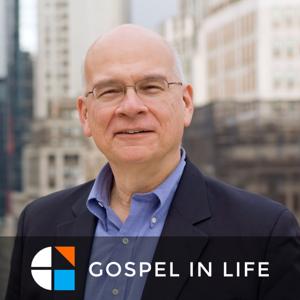
Sermons by Timothy J. Keller (1950-2023), founding pastor of Redeemer Presbyterian Church in New York City, co-founder of Redeemer City to City, and the author of numerous books, including The Reason for God, The Prodigal God, Making Sense of God and The Meaning of Marriage. His thirty-one books have sold more than six million copies and have been translated into twenty-nine languages.
For more sermons and resources, visit www.gospelinlife.com.
Ranked by our users in the last 21 days
1,652 Listeners
1,124 Listeners
3,943 Listeners

2,265 Listeners

19,478 Listeners
1,455 Listeners

1,127 Listeners
1,479 Listeners

6,009 Listeners
2,187 Listeners

2,054 Listeners
340 Listeners

220 Listeners
1,816 Listeners
739 Listeners