
Sign up to save your podcasts
Or



Based on Podcast App listening data
Christianity is never a mechanical thing. And the church is not a morality agency—it’s a regenerating agency.
The real goal of the do’s and the don’ts in the Christian life is always character—growing into God’s holy people. The church does bring about moral behavior but, in a sense, as a byproduct. Because what the church is after is to turn people into saints, to create a kind of person.
In Ephesians 5, we learn three things: 1) your Christian faith has to include a saying no as well as a saying yes, 2) Paul explains a few critical things you must say no to (greed, foolish talking, and sexual immorality), and 3) the whole point is not to give us a list of do’s and don’ts, but the point is always to be holy.
This sermon was preached by Dr. Timothy Keller at Redeemer Presbyterian Church on May 12, 1991. Series: Christian Lifestyle. Scripture: Ephesians 5:3-7.
Today's podcast is brought to you by Gospel in Life, the site for all sermons, books, study guides and resources from Timothy Keller and Redeemer Presbyterian Church. If you've enjoyed listening to this podcast and would like to support the ongoing efforts of this ministry, you can do so by visiting https://gospelinlife.com/give and making a one-time or recurring donation.
Whenever God turns to you, if you believe in him, all he sees when he looks at you is complete beauty and sweetness. Jesus Christ offered himself up and fulfilled all of the obligations we owe God, so he has completely satisfied God. God sees nothing and senses nothing but sweetness when he regards you.
But you still live in a world twisted and broken by sin. And you have to deal with the realities of that. Therefore, there’s always a negative. And Ephesians 5:3-7 tells the negatives: there are prohibitions, limits, warnings. There are no exceptions to them.
We must see both the positive and the negative: 1) the positive is that Jesus has fulfilled the law, and 2) for the negative, there are three categories of no’s: no covetousness, no foolish talking, and no sexual immorality.
This sermon was preached by Dr. Timothy Keller at Redeemer Presbyterian Church on May 5, 1991. Series: Christian Lifestyle. Scripture: Ephesians 5:3-6.
Today's podcast is brought to you by Gospel in Life, the site for all sermons, books, study guides and resources from Timothy Keller and Redeemer Presbyterian Church. If you've enjoyed listening to this podcast and would like to support the ongoing efforts of this ministry, you can do so by visiting https://gospelinlife.com/give and making a one-time or recurring donation.
If you look at the particulars Christian teachings, the particulars don’t look that different from many other ethical systems. The difference is that Christianity is never interested in moral behavior simply as moral behavior. In every instance, putting on the new self means to remember your identity.
Being a Christian is ultimately about being melted with spiritual understandings of who you are now that Jesus Christ has said, “You are my beloved child,” of who you are now that the Holy Spirit has come in and said, “I now live within your heart.” Ephesians 4 is an amazingly multifarious passage on what the Christian lifestyle really is. And the purpose of this passage is to show how we can put off the old self and put on the new.
Let’s look at anger and forgiveness. We’ll look at anger to see 1) suppression or denial of anger is wrong, 2) anger is sometimes required, 3) there are sinful forms of anger, and 4) if you can’t forgive, it’s because you haven’t sensed his forgiveness.
This sermon was preached by Dr. Timothy Keller at Redeemer Presbyterian Church on February 3, 1991. Series: Christian Lifestyle. Scripture: Ephesians 4:25-32.
Today's podcast is brought to you by Gospel in Life, the site for all sermons, books, study guides and resources from Timothy Keller and Redeemer Presbyterian Church. If you've enjoyed listening to this podcast and would like to support the ongoing efforts of this ministry, you can do so by visiting https://gospelinlife.com/give and making a one-time or recurring donation.
Christianity has an amazing approach to lying and to anger that almost nobody else has. For truth-telling, it says truth must always be told with love. And for anger, it says, “Be ye angry, and sin not.”
Paul doesn’t say, “Well if you get angry, it might be okay.” He says, “Be angry. Do it.” Very often it is wrong not to be angry. But then he turns around and says, “and sin not.” It must mean two things: that anger can easily lead to sin and trouble, and that it’s possible to be angry but not become sinful.
Ephesians 4 shows us a lot about lying and anger. Let’s look at 1) what it means to speak the truth in love. And then we’ll discuss how 2) anger is not wrong in itself, 3) we are to sin not, and 4) we have a way to deal with anger.
This sermon was preached by Dr. Timothy Keller at Redeemer Presbyterian Church on January 27, 1991. Series: Christian Lifestyle. Scripture: Ephesians 4:25-32.
Today's podcast is brought to you by Gospel in Life, the site for all sermons, books, study guides and resources from Timothy Keller and Redeemer Presbyterian Church. If you've enjoyed listening to this podcast and would like to support the ongoing efforts of this ministry, you can do so by visiting https://gospelinlife.com/give and making a one-time or recurring donation.
A good test shows you what you really are, what’s really in you. If you’re in denial, the tests are devastating. If you’re dropping the ball, the tests are traps. Jesus says the only way you’re going to come through the tests of life is if you seek God.
How are you doing right now? Are you going through and failing the little tests, and are you setting yourself up for failure of some big test in the future? How can you be delivered from evil in the tests of life? Jesus tells you how.
Let’s look at four very practical ways of dealing with the tests of life: 1) expect the tests of life, 2) in the tests, realize the real enemy is evil, not pain, 3) process your tests through the love of the Father, and 4) see Jesus swaying, “Pray: Lead us not into temptation.”
This sermon was preached by Dr. Timothy Keller at Redeemer Presbyterian Church on May 28, 1995. Series: The Lord’s Prayer 1995. Scripture: Matthew 6:9-15.
Today's podcast is brought to you by Gospel in Life, the site for all sermons, books, study guides and resources from Timothy Keller and Redeemer Presbyterian Church. If you've enjoyed listening to this podcast and would like to support the ongoing efforts of this ministry, you can do so by visiting https://gospelinlife.com/give and making a one-time or recurring donation.
In this passage, we finally get to a particular kind of prayer in which people are very interested: to the place where Jesus says prayer is a way to change our circumstances.
Prayer makes a difference. You can come to God and say, “Give us this day our daily bread.” But notice this happens in the very middle of the Lord’s Prayer. It’s surrounded by all sorts of other concepts. And you can’t understand how it works unless you see all of its relationships to the rest of the prayer.
Petitionary prayer will only work if you 1) get confident, 2) get perspective, 3) get humble, and 4) get reconciled.
This sermon was preached by Dr. Timothy Keller at Redeemer Presbyterian Church on May 14, 1995. Series: The Lord’s Prayer 1995. Scripture: Matthew 6:9-15.
Today's podcast is brought to you by Gospel in Life, the site for all sermons, books, study guides and resources from Timothy Keller and Redeemer Presbyterian Church. If you've enjoyed listening to this podcast and would like to support the ongoing efforts of this ministry, you can do so by visiting https://gospelinlife.com/give and making a one-time or recurring donation.
I’ll say it consciously: this is our worst nightmare. More than anyone else in history, modern people believe we ought to have a good life and we ought to have some control over our lives. But Jesus says when you connect with God, you must pray, “Thy will be done.”
This means the purpose of prayer is not that we would bend God’s will to meet ours, but that we melt and soften our will into God’s. The Bible says the way to find yourself and your happiness is never to seek yourself or your happiness but to seek God and his righteousness.
In order to make it possible for us to do this, let’s look at what the Bible tells us about 1) where, 2) why, and 3) how to pray “Thy will be done.”
This sermon was preached by Dr. Timothy Keller at Redeemer Presbyterian Church on May 7, 1995. Series: The Lord’s Prayer 1995. Scripture: Matthew 6:9-15.
Today's podcast is brought to you by Gospel in Life, the site for all sermons, books, study guides and resources from Timothy Keller and Redeemer Presbyterian Church. If you've enjoyed listening to this podcast and would like to support the ongoing efforts of this ministry, you can do so by visiting https://gospelinlife.com/give and making a one-time or recurring donation.
What does it mean to hallow? It’s a word virtually never used anymore in everyday English, but we don’t quite have an equivalent.
To hallow something means to treat it as sacred and ultimate. It means to make something your ultimate concern, to make it the most important thing, to make it the most crucial thing, to make it the supreme beauty, the supreme aim of your life. Jesus says this comes first, and I want to show you that praise and adoration is really what life is about.
Matthew 6 teaches us 1) the necessity of praise, 2) the primacy of praise, and 3) the anatomy of praise.
This sermon was preached by Dr. Timothy Keller at Redeemer Presbyterian Church on April 30, 1995. Series: The Lord’s Prayer 1995. Scripture: Matthew 6:6-15.
Today's podcast is brought to you by Gospel in Life, the site for all sermons, books, study guides and resources from Timothy Keller and Redeemer Presbyterian Church. If you've enjoyed listening to this podcast and would like to support the ongoing efforts of this ministry, you can do so by visiting https://gospelinlife.com/give and making a one-time or recurring donation.
Jesus doesn’t just point the way to God—rather, he is the way to God because he’s risen. And that means that for Christians, prayer is a unique, radically different process than it is for other religions and philosophies.
Prayer is a rather universal thing, and there are many ways to pray. But Jesus says there are really two different bases on which you can approach God. He’s not talking about whether to ask; he’s talking about how to ask, about why you think you’re being heard. And he says there are two utterly different bases on which you can go to God.
Looking at Matthew 6, let’s try to 1) understand the true basis of prayer, and 2) employ the true basis.
This sermon was preached by Dr. Timothy Keller at Redeemer Presbyterian Church on April 23, 1995. Series: The Lord’s Prayer 1995. Scripture: Matthew 6:6-15.
Today's podcast is brought to you by Gospel in Life, the site for all sermons, books, study guides and resources from Timothy Keller and Redeemer Presbyterian Church. If you've enjoyed listening to this podcast and would like to support the ongoing efforts of this ministry, you can do so by visiting https://gospelinlife.com/give and making a one-time or recurring donation.
The Psalms is the divinely inspired prayer book, but when you open this prayer book, the first page is not a prayer. It’s a meditation on meditation.
Meditation is not the same as studying the Bible. In studying the Bible you’re just learning information. Meditation takes what you’ve learned and does something with it. And according to the Psalms, meditation is actually the key to prayer.
Psalm 1 tells us 1) the priority, 2) the promise, 3) the products, 4) the practice, and 5) the problem and solution of meditation.
This sermon was preached by Dr. Timothy Keller at Redeemer Presbyterian Church on November 23, 2014. Series: The Prayer of Prayers. Scripture: Psalm 1:1-6; 2:1-12.
Today's podcast is brought to you by Gospel in Life, the site for all sermons, books, study guides and resources from Timothy Keller and Redeemer Presbyterian Church. If you've enjoyed listening to this podcast and would like to support the ongoing efforts of this ministry, you can do so by visiting https://gospelinlife.com/give and making a one-time or recurring donation.
From the publisher's feed
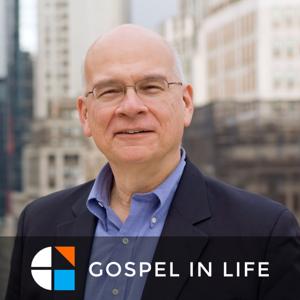
Sermons by Timothy J. Keller (1950-2023), founding pastor of Redeemer Presbyterian Church in New York City, co-founder of Redeemer City to City, and the author of numerous books, including The Reason for God, The Prodigal God, Making Sense of God and The Meaning of Marriage. His thirty-one books have sold more than six million copies and have been translated into twenty-nine languages.
For more sermons and resources, visit www.gospelinlife.com.
Ranked by our users in the last 21 days
1,652 Listeners
1,124 Listeners
3,943 Listeners

2,265 Listeners

19,478 Listeners
1,455 Listeners

1,127 Listeners
1,479 Listeners

6,009 Listeners

2,187 Listeners

2,054 Listeners

340 Listeners

220 Listeners
1,816 Listeners
739 Listeners