
Sign up to save your podcasts
Or



Based on Podcast App listening data
The Lord’s Prayer is quite a workout. You’re asking for a lot of things: daily bread, deliver us from evil. But at the end, you rest in God.
The last phrase in the Lord’s Prayer is, “For thine is the kingdom and the power and the glory forever and ever, amen.” Is that just a rhetorical flourish? After all, it doesn’t seem to be a prayer. But ancient commentators have said this is a prayer of repose. You realize all the things you’ve been looking for are already there in God.
In Psalm 27 we have an example of a prayer of repose, and it’s exactly what the end of the Lord’s Prayer embodies. This is a psalm of David, and we learn 1) what he’s facing, 2) what he does about it, 3) how he does it, and 4) why he’s confident it will work.
This sermon was preached by Dr. Timothy Keller at Redeemer Presbyterian Church on November 16, 2014. Series: The Prayer of Prayers. Scripture: Psalm 27:1-14.
Today's podcast is brought to you by Gospel in Life, the site for all sermons, books, study guides and resources from Timothy Keller and Redeemer Presbyterian Church. If you've enjoyed listening to this podcast and would like to support the ongoing efforts of this ministry, you can do so by visiting https://gospelinlife.com/give and making a one-time or recurring donation.
We don’t see that envy is as terrible as it really is. Envy is wanting somebody else’s life. Do you know what that does? It sucks the joy out of the life you actually have.
In Psalm 73, the psalmist is living as good a life as he can, and everything is going wrong. And on top of that, he sees a lot of other people who are corrupt and they’re having a great life. What is the solution? A particular kind of prayer.
There are four things the psalmist does in prayer that can only be done in prayer: 1) he admits the worst, 2) he sees the whole, 3) he grasps God’s grace, and 4) he reorders the loves of his heart.
This sermon was preached by Dr. Timothy Keller at Redeemer Presbyterian Church on November 9, 2014. Series: The Prayer of Prayers. Scripture: Psalm 73:1-3, 13-26.
Today's podcast is brought to you by Gospel in Life, the site for all sermons, books, study guides and resources from Timothy Keller and Redeemer Presbyterian Church. If you've enjoyed listening to this podcast and would like to support the ongoing efforts of this ministry, you can do so by visiting https://gospelinlife.com/give and making a one-time or recurring donation.
What if I told you there was a process and no matter how much you blew up your life, if you used this process, there would be a way to come out the other side whole?
Well, here it is. It’s what the Bible calls repentance. You say, “You mean just saying I’m sorry?” But that reveals you don’t understand the power of this kind of prayer. This kind of prayer, if you do it in an ongoing way, will finally enable you to change deeply from the inside out.
Looking at Psalm 51, we’ll see 1) what one thing must you stop doing, 2) what two things must you start doing, and 3) where you get the power to do those two things.
This sermon was preached by Dr. Timothy Keller at Redeemer Presbyterian Church on November 2, 2014. Series: The Prayer of Prayers. Scripture: Psalm 51:1-19.
Today's podcast is brought to you by Gospel in Life, the site for all sermons, books, study guides and resources from Timothy Keller and Redeemer Presbyterian Church. If you've enjoyed listening to this podcast and would like to support the ongoing efforts of this ministry, you can do so by visiting https://gospelinlife.com/give and making a one-time or recurring donation.
We need every bit of help we can get to learn to pray, “Thy will be done,” because we’re going right into the teeth of our culture.
The essence of American culture is the belief that the more free we are to decide for ourselves, the happier we’ll be. But Jesus Christ says every time you pray to God, you need to say to him, “Thy will be done.” That goes right against probably everything you’ve been taught in our culture.
To understand this phrase, we need to see that when Jesus himself prayed it, he was in the midst of terrible agony. Let’s reflect on 1) the magnitude of that agony, 2) the immediacy of that agony, and then 3) how that helps us understand what it means to pray, “Thy will be done” in a life-transforming way.
This sermon was preached by Dr. Timothy Keller at Redeemer Presbyterian Church on October 19, 2014. Series: The Prayer of Prayers. Scripture: Matthew 26:36-46.
Today's podcast is brought to you by Gospel in Life, the site for all sermons, books, study guides and resources from Timothy Keller and Redeemer Presbyterian Church. If you've enjoyed listening to this podcast and would like to support the ongoing efforts of this ministry, you can do so by visiting https://gospelinlife.com/give and making a one-time or recurring donation.
What does it mean to pray, “Thy kingdom come”?
Jesus gave us his instruction on how to pray in the Lord’s Prayer, and it’s filled with concepts you need to know from the rest of the Bible. There are two places—Matthew 5 and Luke 6—where Jesus tells us a lot about the kingdom of God and the blessedness of the kingdom.
I want to show you 1) what the kingdom of God is, 2) what it’s not, 3) what it’s like, 4) how you enter it, and 5) how that relates to prayer.
This sermon was preached by Dr. Timothy Keller at Redeemer Presbyterian Church on October 12, 2014. Series: The Prayer of Prayers. Scripture: Luke 6:20-26, 46-49.
Today's podcast is brought to you by Gospel in Life, the site for all sermons, books, study guides and resources from Timothy Keller and Redeemer Presbyterian Church. If you've enjoyed listening to this podcast and would like to support the ongoing efforts of this ministry, you can do so by visiting https://gospelinlife.com/give and making a one-time or recurring donation.
Hallowed is an old English word that means to treat something as sacred. It means to be captivated, astonished, melted with grateful joy for who God is and what he has done.
For many years, I felt I didn’t know how to praise God, because nobody ever gave me specifics. As we look now at one phrase in the Lord’s Prayer, “Hallowed be thy name,” we’ll look at five aspects that are all needed if we’re going to praise.
There are five aspects to praise and adoration: 1) thinking, 2) expressing, 3) appraising, 4) beholding, and 5) resting.
This sermon was preached by Dr. Timothy Keller at Redeemer Presbyterian Church on October 5, 2014. Series: The Prayer of Prayers. Scripture: Psalm 63:1-11.
Today's podcast is brought to you by Gospel in Life, the site for all sermons, books, study guides and resources from Timothy Keller and Redeemer Presbyterian Church. If you've enjoyed listening to this podcast and would like to support the ongoing efforts of this ministry, you can do so by visiting https://gospelinlife.com/give and making a one-time or recurring donation.
What does it mean to pray, “Our Father”? It’s much more complicated than you think.
Everything Jesus Christ came to do—the reason he came, the purpose of his salvation—was that we might receive adoption. We can pray “Our Father” because we’ve been adopted into the family of God.
Let’s look briefly at 1) the gift of adoption, 2) what it means to be adopted, 3) the reason we can be adopted, and 4) how it applies to prayer.
This sermon was preached by Dr. Timothy Keller at Redeemer Presbyterian Church on September 28, 2014. Series: The Prayer of Prayers. Scripture: Galatians 3:26-4:3.
Today's podcast is brought to you by Gospel in Life, the site for all sermons, books, study guides and resources from Timothy Keller and Redeemer Presbyterian Church. If you've enjoyed listening to this podcast and would like to support the ongoing efforts of this ministry, you can do so by visiting https://gospelinlife.com/give and making a one-time or recurring donation.
If you’re going to deal with the brutal realities of life, the writer of Hebrews says you have to have shepherds in your life.
Hebrews is written to people whose lives are filled with problems. And here, in the last passage of Hebrews, the writer tells us if we’re gonna make it, we have to have shepherding in our lives.
The text tells us 1) our insulting need for shepherds, 2) the surprising identity of shepherds, and 3) the secret power of the shepherds.
This sermon was preached by Dr. Timothy Keller at Redeemer Presbyterian Church on May 8, 2005. Series: Christ: Our Treasury (The Book of Hebrews). Scripture: Hebrews 3:13; 10:24-25; 13:17-25.
Today's podcast is brought to you by Gospel in Life, the site for all sermons, books, study guides and resources from Timothy Keller and Redeemer Presbyterian Church. If you've enjoyed listening to this podcast and would like to support the ongoing efforts of this ministry, you can do so by visiting https://gospelinlife.com/give and making a one-time or recurring donation.
When you embrace God by faith two things come into your life: a transforming power and a deep tension. It’s a duality. If you try to resolve the deep tension, you lose the transforming power.
The writer of Hebrews says the great believers in history were resident aliens on earth. In Greco-Roman society, a resident alien was a permanent resident but not a citizen. That is the tension that anyone who wants the transforming power of God must live with.
If we want to understand the message, we need to see four things we learn in this passage: 1) there are two cities, 2) each city has a conflict with the other, 3) only one city is for the other, and 4) how to become citizens of the one city that’s for the other.
This sermon was preached by Dr. Timothy Keller at Redeemer Presbyterian Church on May 1, 2005. Series: Christ: Our Treasury (The Book of Hebrews). Scripture: Hebrews 11:13-16; 13:10-16.
Today's podcast is brought to you by Gospel in Life, the site for all sermons, books, study guides and resources from Timothy Keller and Redeemer Presbyterian Church. If you've enjoyed listening to this podcast and would like to support the ongoing efforts of this ministry, you can do so by visiting https://gospelinlife.com/give and making a one-time or recurring donation.
This passage in Hebrews seems like an anti-climax. Throughout the book, the writer gives us something to help us face the brutal realities of life. But then, Hebrews 13 seems different. At first it looks like a to-do list, like miscellaneous ethical prescriptions, but that’s wrong.
This is not an anti-climax. What we’re being told is that we’ll never make it in life without being deeply embedded in a robust community of people who have experienced the grace of God.
This passage tells us about 1) the importance of that community, 2) the intensity of the community, 3) the openness of the community, and 4) where we get the power to create it.
This sermon was preached by Dr. Timothy Keller at Redeemer Presbyterian Church on April 24, 2005. Series: Christ: Our Treasury (The Book of Hebrews). Scripture: Hebrews 12:28-13:9.
Today's podcast is brought to you by Gospel in Life, the site for all sermons, books, study guides and resources from Timothy Keller and Redeemer Presbyterian Church. If you've enjoyed listening to this podcast and would like to support the ongoing efforts of this ministry, you can do so by visiting https://gospelinlife.com/give and making a one-time or recurring donation.
From the publisher's feed
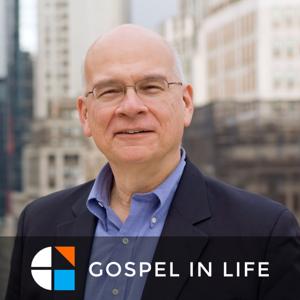
Sermons by Timothy J. Keller (1950-2023), founding pastor of Redeemer Presbyterian Church in New York City, co-founder of Redeemer City to City, and the author of numerous books, including The Reason for God, The Prodigal God, Making Sense of God and The Meaning of Marriage. His thirty-one books have sold more than six million copies and have been translated into twenty-nine languages.
For more sermons and resources, visit www.gospelinlife.com.
Ranked by our users in the last 21 days
1,653 Listeners
1,124 Listeners
3,945 Listeners

2,265 Listeners
19,473 Listeners
1,454 Listeners

1,125 Listeners
1,477 Listeners

6,011 Listeners
2,186 Listeners

2,054 Listeners
340 Listeners

220 Listeners
1,816 Listeners
739 Listeners