
Sign up to save your podcasts
Or



Based on Podcast App listening data
One of the great questions of history is, “Why in the world did the early Christians adopt the cross as their main symbol?” Do you realize why that is so odd? On the cross, Jesus died at age 33 in agony, abandoned by everyone in his life. All the other founders of religions died old and “successful.” For example, Buddha lived to be 80 years old and achieved enlightenment. And Muhammad lived into his 60s during which he united all of Arabia under one faith. There is a vivid contrast with the picture of Jesus. Why in the world would anyone look at Jesus dying on a cross and say, “That’s the life I want to live. That’s the one I want to follow. That’s the faith for me”?
On the night before he died, Jesus gave his disciples the explanation of the meaning of his death in the upper room. When it was all over, they remembered it and they accepted it. It changed them. If you see what Jesus says to them and you take it in, it will change you too. There are four things which are life-changing about Jesus’ death: 1) it is the center of history; 2) it is the foundation for a radically new, profoundly different community; 3) it is the solution to the great mystery; and 4) it is appropriated personally.
This sermon was preached by Dr. Timothy Keller at Redeemer Presbyterian Church on April 6, 2003. Series: "The Meaning of Jesus Part 3; Seeing Him." Scripture: Luke 22:14-34; Deuteronomy 26:5-9; Deuteronomy 16:3; Luke 2.
Today's podcast is brought to you by Gospel in Life, the site for all sermons, books, study guides and resources from Timothy Keller and Redeemer Presbyterian Church. If you've enjoyed listening to this podcast and would like to support the ongoing efforts of this ministry, you can do so by visiting https://gospelinlife.com/give and making a one-time or recurring donation.
Today’s sermon comes from a series on the life of Jesus described in the gospel of Luke. The first part of the gospel (the first nine chapters) has to do mainly with the question, “Who is this Jesus?” The second part of the gospel of Luke (the nine chapters in the middle) addresses the question, “What does it mean to follow Jesus?” Now we’re going to look at a passage from the last part of Luke which gives us an existential encounter with Jesus.
In Luke 19, the Triumphal Entry into Jerusalem marks the beginning of the last week of Jesus’ life. The central theme here is that Jesus is king. We’re going to look at four ways that he reigns: the real king, the transformational king, the paradoxical King, and the confrontational King.
This sermon was preached by Dr. Timothy Keller at Redeemer Presbyterian Church on March 30, 2003. Series: "The Meaning of Jesus Part 3; Seeing Him." Scripture: Luke 19:28-40; 45-48.
Today's podcast is brought to you by Gospel in Life, the site for all sermons, books, study guides and resources from Timothy Keller and Redeemer Presbyterian Church. If you've enjoyed listening to this podcast and would like to support the ongoing efforts of this ministry, you can do so by visiting https://gospelinlife.com/give and making a one-time or recurring donation.
Today’s sermon comes from a series on the life of Jesus described in the gospel of Luke. Jesus says in today’s passage that his disciples should have a particular regard for money and possessions. In other words, coming into a relationship with Jesus will change how one sees the world, including money and possessions.
Jesus says, “Watch out for greed.” Greed is a money sickness that can take over one’s life — it’s like a spiritual cancer. It’s something money causes, but it doesn’t necessarily have to come from money. It can take over someone who is wealthy or poor. There are three headings under which we will learn about this sickness: how to beware of money blindness, understand the nature of money sickness, and how to acquire money wellness.
This sermon was preached by Dr. Timothy Keller at Redeemer Presbyterian Church on March 9, 2003. Series: "The Meaning of Jesus Part 2; Following Him." Scripture: Luke 12:13-34.
Today's podcast is brought to you by Gospel in Life, the site for all sermons, books, study guides and resources from Timothy Keller and Redeemer Presbyterian Church. If you've enjoyed listening to this podcast and would like to support the ongoing efforts of this ministry, you can do so by visiting https://gospelinlife.com/give and making a one-time or recurring donation.
Today’s sermon comes from a series on the life of Jesus described in the gospel of Luke. The passage comes from chapters 10 and 13 which help us answer the question, “What does it mean to be his disciple” In verse 39 we learn that Mary sat at the Lord’s feet which is the technical way of saying that she was a disciple of a rabbi. Now historians will tell us it was extremely rare for a rabbi at that time to take a woman as a formal disciple, but Jesus does it. From a modern point of view, here’s a woman being told, “Send her back into the kitchen; she has no place at your feet as a disciple,” and Jesus says, “Yes, she does.”
Through Mary we learn something for all of us. Disciples are called into an extraordinarily personal relationship with Jesus. Let’s look more closely at these two questions: What is that extraordinary personal relationship, and secondly, how can we cultivate it?
This sermon was preached by Dr. Timothy Keller at Redeemer Presbyterian Church on March 2, 2003. Series: "The Meaning of Jesus Part 2; Following Him." Scripture: Luke 10:38-11:13.
Today's podcast is brought to you by Gospel in Life, the site for all sermons, books, study guides and resources from Timothy Keller and Redeemer Presbyterian Church. If you've enjoyed listening to this podcast and would like to support the ongoing efforts of this ministry, you can do so by visiting https://gospelinlife.com/give and making a one-time or recurring donation.
Today’s sermon comes from a series on the life of Jesus described in the gospel of Luke. The passage comes from the second half of chapter 10 which helps us answer the question, “What does it mean to be his disciple?”
The first part of chapter 10 says all disciples are given the gospel as a message which is to be communicated to everyone. In this last part of the chapter, we’re given the other side of being a disciple; instead of just being called messengers, we’re also called to be neighbors. We’re called to meet the needs of all the people around us, whether they believe the message or not. There are four things we learn: 1) it is required, 2) it has magnitude, 3) the motivation for doing it, and 4) how to do it.
This sermon was preached by Dr. Timothy Keller at Redeemer Presbyterian Church on February 16, 2003. Series: "The Meaning of Jesus Part 2; Following Him." Scripture: Luke 10:25-37.
Today's podcast is brought to you by Gospel in Life, the site for all sermons, books, study guides and resources from Timothy Keller and Redeemer Presbyterian Church. If you've enjoyed listening to this podcast and would like to support the ongoing efforts of this ministry, you can do so by visiting https://gospelinlife.com/give and making a one-time or recurring donation.
The first nine chapters of Luke are mainly concerned with the question, “Who is Jesus?” Starting in chapter 9 and stretching over the next few chapters, the theme switches, as it were, and asks, “If he’s the Son of God, how should we live?”
The general answer is that we should be disciples, but there are many facets to being a disciple. Starting in chapter 10, Jesus gives us specific ways we are to be his disciples. Today we’re going to look more specifically at being a messenger. Disciples are messengers. Every disciple of Jesus is given a message to publicly communicate, urging everyone to believe it. There are three things Jesus gives every single disciple: a mission, a message, and a motivation.
This sermon was preached by Dr. Timothy Keller at Redeemer Presbyterian Church on February 16, 2003. Series: "The Meaning of Jesus Part 2; Following Him." Scripture: Luke 10:1-21.
Today's podcast is brought to you by Gospel in Life, the site for all sermons, books, study guides and resources from Timothy Keller and Redeemer Presbyterian Church. If you've enjoyed listening to this podcast and would like to support the ongoing efforts of this ministry, you can do so by visiting https://gospelinlife.com/give and making a one-time or recurring donation.
“What is truth?” is the famous question Pilate asks Jesus before the crucifixion. Did he sincerely believe that truth was something that could be grasped or was he a skeptic that doubted the existence of truth? “We must understand Pilate to understand ourselves, for he may have represented the very modern view that truth is after all a relative and subjective affair, an agreed-upon convention, a matter of expedience — and that therefore we are justified in doing anything that seems expedient, even as Pilate” (Joy Davidman, Smoke on the Mountain).
The Gallup poll reports 66 percent of Americans say there is no such thing as absolute truth, but historic Christianity says there is — moral absolutes, absolute truths, truths about God and eternal things that everybody and every culture needs to bow to and submit to. Let’s look at it more closely under these three headings: 1) how we deny truth, 2) why we deny it, and 3) how we use it anyway (that you can’t avoid living your life as if there is absolute truth).
This open forum with Dr. Timothy Keller took place at Redeemer Presbyterian Church on March 5, 1995. Series: "Redeemer Open Forums".
Today's podcast is brought to you by Gospel in Life, the site for all sermons, books, study guides and resources from Timothy Keller and Redeemer Presbyterian Church. If you've enjoyed listening to this podcast and would like to support the ongoing efforts of this ministry, you can do so by visiting https://gospelinlife.com/give and making a one-time or recurring donation.
The Apostles’ Creed is one of the oldest summaries of the basic beliefs of Christianity. Today’s sermon comes from a series that follows the outline of the Creed, wherein it says, “I believe in the resurrection of the body and the life everlasting.”
Ancient cultures and philosophies and religions all believed that history was cyclical and that it wasn’t going anywhere. However, the very idea that history is making progress and that we’re moving toward an end goal comes from the Bible. We’re going to look more closely at the original readers of today’s passage from Revelation: 1) the hope they needed, 2) the hope they got, and 3) how you and I can take hold of that hope ourselves.
This sermon was preached by Dr. Timothy Keller at Redeemer Presbyterian Church on November 22, 2015. Series "What We Believe: Foundations". Scripture: Revelation 21:1-6; 22:1-5.
Today's podcast is brought to you by Gospel in Life, the site for all sermons, books, study guides and resources from Timothy Keller and Redeemer Presbyterian Church. If you've enjoyed listening to this podcast and would like to support the ongoing efforts of this ministry, you can do so by visiting https://gospelinlife.com/give and making a one-time or recurring donation.
The Apostles’ Creed is one of the oldest summaries of the basic beliefs of Chrsitianity. Today’s sermon on the church comes from a series that follows the outline of the Creed. As Christians we believe in the importance of the church that was established by Jesus Christ 2,000 years ago.
We’ve chosen a passage from Ephesians 2 that gives us one very important truth about the church that is very relevant for our world in which there is so much disunity. Here it is, the members of the church get both the resources and the power to get along with people who are radically different than themselves. There are three things that we will highlight in this passage: 1) the gospel creates a supernatural community; 2) this is through spiritual heart surgery; and 3) this results in a radical new identity.
This sermon was preached by Dr. Timothy Keller at Redeemer Presbyterian Church on November 15, 2015. Series "What We Believe: Foundations". Scripture: Ephesians 2:11-22.
Today's podcast is brought to you by Gospel in Life, the site for all sermons, books, study guides and resources from Timothy Keller and Redeemer Presbyterian Church. If you've enjoyed listening to this podcast and would like to support the ongoing efforts of this ministry, you can do so by visiting https://gospelinlife.com/give and making a one-time or recurring donation.
Today’s sermon on salvation comes from a larger series on the basic beliefs of the Christian faith. In this series, we’re following the outline of the Apostles’ Creed, the oldest summary of biblical doctrine. It says, “I believe in the forgiveness of sins, the resurrection of the body, and life everlasting.” This is encapsulated by the doctrine of salvation.
We’re going to do a survey of all that the Bible says about salvation in Jesus Christ, which is actually right here in our passage from Ephesians. Paul says that Jesus Christ has “blessed us” with “every spiritual blessing.” This is what we mean by salvation. We’re going to learn how we get every spiritual blessing, what those spiritual blessings are, why we can have those spiritual blessings, and how to know whether you have them.
This sermon was preached by Rev. Timothy Keller at Redeemer Presbyterian Church on November 1, 2015. Series "What We Believe: Foundations". Scripture: Ephesians 1:3-10.
Today's podcast is brought to you by Gospel in Life, the site for all sermons, books, study guides and resources from Timothy Keller and Redeemer Presbyterian Church. If you've enjoyed listening to this podcast and would like to support the ongoing efforts of this ministry, you can do so by visiting https://gospelinlife.com/give and making a one-time or recurring donation.
From the publisher's feed
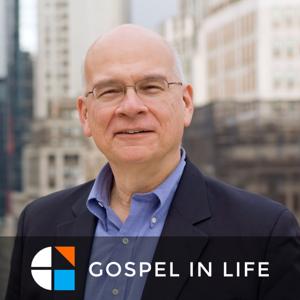
Sermons by Timothy J. Keller (1950-2023), founding pastor of Redeemer Presbyterian Church in New York City, co-founder of Redeemer City to City, and the author of numerous books, including The Reason for God, The Prodigal God, Making Sense of God and The Meaning of Marriage. His thirty-one books have sold more than six million copies and have been translated into twenty-nine languages.
For more sermons and resources, visit www.gospelinlife.com.
Ranked by our users in the last 21 days
1,653 Listeners
1,122 Listeners
3,945 Listeners

2,266 Listeners

19,471 Listeners

1,454 Listeners

1,125 Listeners
1,476 Listeners

6,011 Listeners

2,186 Listeners

2,056 Listeners
340 Listeners

219 Listeners
1,814 Listeners
739 Listeners