
Sign up to save your podcasts
Or



Based on Podcast App listening data
Today we’re going to look at a fundamental belief of the Christian faith — the doctrine of the incarnation. It’s a belief that’s unique to the Christian faith, that the eternal, infinite God became a human being in Jesus Christ — a physical, limited, vulnerable, mortal being in history. The implications of this doctrine are vast and many, but we’re going to focus on something specifically astounding in Philippians 2.
Paul takes a basic practical human problem, the problem of fighting, and he brings to bear on it the doctrine of the incarnation. He says in order to solve the problem you need to understand the incarnation. So let’s see how he does it in these three parts: 1) the heart that fights, 2) the heart that makes peace, and 3) he shows us how to get that kind of peaceful heart.
This sermon was preached by Rev. Timothy Keller at Redeemer Presbyterian Church on October 25, 2015. Series "What We Believe: Foundations". Scripture: Philippians 2:1-11.
Today's podcast is brought to you by Gospel in Life, the site for all sermons, books, study guides and resources from Timothy Keller and Redeemer Presbyterian Church. If you've enjoyed listening to this podcast and would like to support the ongoing efforts of this ministry, you can do so by visiting https://gospelinlife.com/give and making a one-time or recurring donation.
We’re looking at the basic beliefs of the Christian faith, and there’s no way to do that without getting to what the Bible says is wrong with us. It’s really obvious to everyone that human beings can do an awful lot of very bad things, really evil things. But why? Sociologists will say unjust social conditions and that oppression will result in violence. But the real problem is what made the oppressors oppressors. The Bible tells us that the root problem is inside of us.
Have you faced yourself? Do you know what’s in your heart? Do you know what you’re capable of? If you grasp the biblical doctrine of sin, you will be forced to answer all of these questions. Today we’re going to look more closely at the story of Adam and Eve in the garden and learn about 1) the root of sin, 2) the essence of sin, 3) the signs of sin, and 4) the solution for sin.
This sermon was preached by Rev. Timothy Keller at Redeemer Presbyterian Church on October 18, 2015. Series "What We Believe: Foundations". Scripture: Genesis 2:16-17; 3:1-9.
Today's podcast is brought to you by Gospel in Life, the site for all sermons, books, study guides and resources from Timothy Keller and Redeemer Presbyterian Church. If you've enjoyed listening to this podcast and would like to support the ongoing efforts of this ministry, you can do so by visiting https://gospelinlife.com/give and making a one-time or recurring donation.
This sermon is part of a series on the basic beliefs of the Christian faith. The outline we’re using is the Apostles’ Creed, and today we come to God. Many people believe in God, but they don’t know him personally.
Moses believed in God, but it really wasn’t until the event with the burning bush in Exodus 3 that Moses came to see who God was and encountered him. The central metaphor is fire in this famous story. God could have appeared as anything, but he chose fire. This is very significant because it shows us three things: God is a real God; he can be known; and he is a God who seeks and sends.
This sermon was preached by Rev. Timothy Keller at Redeemer Presbyterian Church on October 4, 2015. Series "What We Believe: Foundations". Scripture: Acts 17:16-34.
Today's podcast is brought to you by Gospel in Life, the site for all sermons, books, study guides and resources from Timothy Keller and Redeemer Presbyterian Church. If you've enjoyed listening to this podcast and would like to support the ongoing efforts of this ministry, you can do so by visiting https://gospelinlife.com/give and making a one-time or recurring donation.
In the Western world every year we hear more and more people say something like, “I don’t believe in God. I don’t have religious beliefs. I don’t have a religious preference.” This is a growing sentiment in our world today. So what is the future of Christian belief in a world in which fewer and fewer believe?
We’re going to answer this question by going to Acts 17 where Paul gives a sermon to Athens, which was the intellectual center of the Roman world. It was famous as being a place where the philosophers didn’t believe in the gods anymore. It was very skeptical and it was not unlike some parts of our skeptical society today. We’re going to learn three things: first, everyone is deeply religious; secondly, your beliefs must have a God-sized God big enough for your moral intuitions; and thirdly, your beliefs must have a heart-shaped hope that can fulfill your deepest desires.
This sermon was preached by Rev. Timothy Keller at Redeemer Presbyterian Church on October 4, 2015. Series "What We Believe: Foundations". Scripture: Acts 17:16-34.
Today's podcast is brought to you by Gospel in Life, the site for all sermons, books, study guides and resources from Timothy Keller and Redeemer Presbyterian Church. If you've enjoyed listening to this podcast and would like to support the ongoing efforts of this ministry, you can do so by visiting https://gospelinlife.com/give and making a one-time or recurring donation.
Nothing is more foundational to the way in which you live than how you regard the Bible — how you approach it and how you understand it. This has a direct influence on how you actually live. When the Bible tells you something happened, it really happened. This has to do with the truth of the Bible. But even if you believe it, what role should that have in your life? This has to do with the authority of the Bible.
Today we’re going to look at the authority of the Bible in the second letter of Peter. There are three things to learn: why the Bible has authority, why that’s a good thing, and how that authority works in our lives.
This sermon was preached by Rev. Timothy Keller at Redeemer Presbyterian Church on September 20, 2015. Series "What We Believe: Foundations". Scripture: 2 Peter 1:12-21.
Today's podcast is brought to you by Gospel in Life, the site for all sermons, books, study guides and resources from Timothy Keller and Redeemer Presbyterian Church. If you've enjoyed listening to this podcast and would like to support the ongoing efforts of this ministry, you can do so by visiting https://gospelinlife.com/give and making a one-time or recurring donation.
There’s nothing more foundational to who you are as a Christian than how you regard the Bible itself. How do you approach the Bible? How do you understand the Bible? These are fundamental questions to everything else you do as a Christian.
Today we’re looking at the bookends of the book of Luke, which is one of the four gospels in the New Testament. At the very beginning and the very end, there are important statements that help us understand what the Bible is and what it’s about. We’re going to learn that 1) the Bible is truth, 2) it’s truth about a man, and 3) it’s truth not just for the mind but for the heart.
This sermon was preached by Rev. Timothy Keller at Redeemer Presbyterian Church on September 13, 2015. Series "What We Believe: Foundations". Scripture: Luke 1:1-4, Luke 24:25-32.
Today's podcast is brought to you by Gospel in Life, the site for all sermons, books, study guides and resources from Timothy Keller and Redeemer Presbyterian Church. If you've enjoyed listening to this podcast and would like to support the ongoing efforts of this ministry, you can do so by visiting https://gospelinlife.com/give and making a one-time or recurring donation.
This talk was given by Rev. Timothy Keller at Redeemer Presbyterian Church on March 1, 2014 for the conference "S1NGLE: God’s Gifts — Our Plans".
Today's podcast is brought to you by Gospel in Life, the site for all sermons, books, study guides and resources from Timothy Keller and Redeemer Presbyterian Church. If you've enjoyed listening to this podcast and would like to support the ongoing efforts of this ministry, you can do so by visiting https://gospelinlife.com/give and making a one-time or recurring donation.
This sermon was preached by Rev. Timothy Keller at Redeemer Presbyterian Church on April 18, 2004. Series "Living in Hope". Scripture: 1 Corinthians 6:13-20; 7:27-31.
Today's podcast is brought to you by Gospel in Life, the site for all sermons, books, study guides and resources from Timothy Keller and Redeemer Presbyterian Church. If you've enjoyed listening to this podcast and would like to support the ongoing efforts of this ministry, you can do so by visiting https://gospelinlife.com/give and making a one-time or recurring donation.
What we have here is Paul on trial. He had been charged with sedition, causing a riot, undermining the public peace. He had been charged with heresy.
At the very top of chapter 26, Paul gives a defense. He tells the story of his conversion, meeting Jesus on the road to Damascus. But it’s here at the end that Paul shows the real goal of his speech, what he’s really after, and it’s surprising.
He’s not really out to defend himself, because if his primary goal was to get himself off the hook, he would never have made the bold move he makes. He would have played it safe, but he doesn’t. What was Paul’s goal, how does he get to that goal, and where does he get the power and poise and boldness to try that?
This sermon was preached by Rev. Timothy Keller at Redeemer Presbyterian Church on June 16, 2013. Series "Acts: The Gospel in the City". Scripture: Acts 26:15-27.
Today's podcast is brought to you by Gospel in Life, the site for all sermons, books, study guides and resources from Timothy Keller and Redeemer Presbyterian Church. If you've enjoyed listening to this podcast and would like to support the ongoing efforts of this ministry, you can do so by visiting https://gospelinlife.com/give and making a one-time or recurring donation.
Our passage comes from Acts chapter 5 where things begin to look dim for the followers of Christ. Beginning around this time and spanning to around AD 300, the history of the early church is filled with persecution and suffering. Christians were systematically imprisoned, plundered, tortured, and killed. In this particular incident in Acts, we see Christians facing danger and the possibility of death with heroic courage.
Where did they get that heroic courage? We’re going to focus on the reply of the apostles in just four verses, 29-32. There are three questions to guide our time together: 1) What was that heroic courage? 2) Where did it come from? 3) How can we get it?
This sermon was preached by Rev. Timothy Keller at Redeemer Presbyterian Church on February 3, 2013. Series "Acts: The Gospel in the City". Scripture: Acts 5:27-42.
Today's podcast is brought to you by Gospel in Life, the site for all sermons, books, study guides and resources from Timothy Keller and Redeemer Presbyterian Church. If you've enjoyed listening to this podcast and would like to support the ongoing efforts of this ministry, you can do so by visiting https://gospelinlife.com/give and making a one-time or recurring donation.
From the publisher's feed
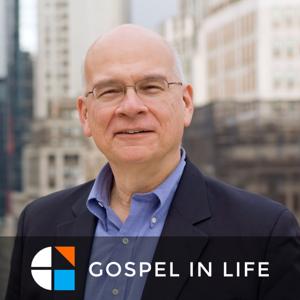
Sermons by Timothy J. Keller (1950-2023), founding pastor of Redeemer Presbyterian Church in New York City, co-founder of Redeemer City to City, and the author of numerous books, including The Reason for God, The Prodigal God, Making Sense of God and The Meaning of Marriage. His thirty-one books have sold more than six million copies and have been translated into twenty-nine languages.
For more sermons and resources, visit www.gospelinlife.com.
Ranked by our users in the last 21 days
1,653 Listeners
1,122 Listeners
3,945 Listeners
2,266 Listeners
19,471 Listeners
1,454 Listeners

1,125 Listeners
1,476 Listeners
6,011 Listeners
2,186 Listeners

2,056 Listeners
340 Listeners
219 Listeners
1,814 Listeners
739 Listeners