
Sign up to save your podcasts
Or

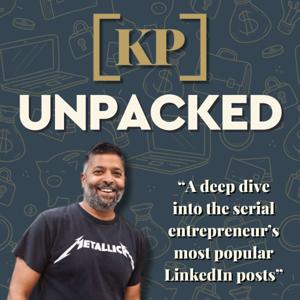

What if tracking how much AI your team uses tells you more than tracking their hours?
In this episode of KP Unpacked, KP Reddy and Nick reveal a controversial management shift happening at Zero RFI: KP monitors enterprise Claude analytics and reaches out to employees with low token usage, not high spenders. The new performance metric isn't billable hours or output volume. It's curiosity, commitment to learning, and willingness to experiment. Someone burning through credits is building, iterating, testing limits. Someone avoiding the tools is resisting change. And if the CEO isn't in the top third of token usage on their team, they're failing at leadership.
The conversation unpacks Zero RFI's first internal hackathon: seven hours, cross-functional teams pulled out of silos, non-engineers shipping production code by end of day. One team built a preventative maintenance prediction system for a business they knew nothing about. Another deployed a Slack-to-Notion content aggregation engine an hour after presenting. The philosophy? More is better until better is better. Give people space, support, and freedom to build. Then track whether they're actually using it. Nick raises the scar tissue transfer problem: how do senior execs pass decades of decision-making lessons to junior associates without endless meetings? The answer lives in skills files, transcribed Notion calls, and treating Claude as a training partner, not just a task executor.
Key questions answered:
If you're managing a team wondering whether to limit AI spend or incentivize experimentation, trying to scale institutional knowledge beyond senior leadership, or questioning what productivity measurement looks like when timesheets become irrelevant, this episode will reframe how you think about performance in an AI-first organization.
Listen now.
 View all episodes
 By KP Reddy
5
44 ratings
What if tracking how much AI your team uses tells you more than tracking their hours?
In this episode of KP Unpacked, KP Reddy and Nick reveal a controversial management shift happening at Zero RFI: KP monitors enterprise Claude analytics and reaches out to employees with low token usage, not high spenders. The new performance metric isn't billable hours or output volume. It's curiosity, commitment to learning, and willingness to experiment. Someone burning through credits is building, iterating, testing limits. Someone avoiding the tools is resisting change. And if the CEO isn't in the top third of token usage on their team, they're failing at leadership.
The conversation unpacks Zero RFI's first internal hackathon: seven hours, cross-functional teams pulled out of silos, non-engineers shipping production code by end of day. One team built a preventative maintenance prediction system for a business they knew nothing about. Another deployed a Slack-to-Notion content aggregation engine an hour after presenting. The philosophy? More is better until better is better. Give people space, support, and freedom to build. Then track whether they're actually using it. Nick raises the scar tissue transfer problem: how do senior execs pass decades of decision-making lessons to junior associates without endless meetings? The answer lives in skills files, transcribed Notion calls, and treating Claude as a training partner, not just a task executor.
Key questions answered:
If you're managing a team wondering whether to limit AI spend or incentivize experimentation, trying to scale institutional knowledge beyond senior leadership, or questioning what productivity measurement looks like when timesheets become irrelevant, this episode will reframe how you think about performance in an AI-first organization.
Listen now.
386 Listeners

1,993 Listeners
1,105 Listeners

113,121 Listeners

56,944 Listeners
8,876 Listeners
9,556 Listeners
65,964 Listeners
46,368 Listeners
10,254 Listeners

29,272 Listeners

16,525 Listeners
10 Listeners

16,982 Listeners