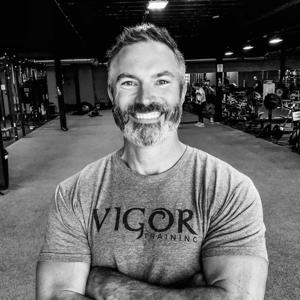
Tom Nikkola | VIGOR Training

Tom Nikkola | VIGOR Training

By Tom Nikkola | VIGOR TrainingHealth & FitnessNutritionMental HealthFitness
Download on the App Store

Tom Nikkola | VIGOR Training episodes

  • Adrenal Fatigue: Signs, Symptoms, and Solutions
    Worn out. Unmotivated. Achy. So tired. Depressed. These are just some of the words people use to describe adrenal fatigue. Others are wired, anxious, and overstimulated.
    The most frustrating part is that those with adrenal fatigue are often ambitious, driven, and hard-working. Yet, exhaustion makes it difficult to function.
    Don't be surprised if you have all the symptoms, but your doctor hesitates in making an adrenal fatigue diagnosis. Many conventional doctors don't recognize the term adrenal fatigue. However, most understand the concept and see numerous patients with its symptoms.
    Had I not seen the effects of adrenal fatigue first hand in my wife, I might not comprehend how debilitating it can be.
    What is adrenal fatigue?
    Your adrenal glands act in concert with the hypothalamus and pituitary glands. This relationship is called the hypothalamic–pituitary–adrenal (HPA) axis. 
    Many practitioners prefer the term HPA Axis Dysfunction instead of adrenal fatigue when discussing a patient's symptoms.
    Your adrenal glands produce and secrete four stress-related adrenal hormones:
    CortisolAldosteroneNoradrenalineEpinephrine
    The pituitary and hypothalamus produce additional hormones, too. However, cortisol plays the most significant role in adrenal fatigue.
    Your adrenal glands secrete cortisol according to circadian rhythm and in response to mental or physical stress.
    Normal Cortisol Rhythm
    Naturally, cortisol peaks in the morning to wake you up. The rise in cortisol provides a jolt of energy to get you up and out of bed so you don't feel the need to hit the snooze button repeatedly.
    From the time you wake up until around noon, cortisol levels drop significantly. As the afternoon and evening progress, the remaining cortisol continues to decline, reaching a low point around bedtime. The low level of cortisol and peak in melatonin helps you get to sleep and stay asleep.
    Cortisol and Stress
    Stress stimulates the release of cortisol, noradrenaline, adrenaline, and aldosterone. 
    Cortisol, noradrenaline, and adrenaline increase heart rate, blood flow, energy, and mental acuity, and enhance your reflexes. Aldosterone increases fluid retention, raising blood pressure. These effects are helpful when dealing with a threat.
    Once the threat is neutralized or avoided, the hormones and their metabolic effects return to normal.
    However, issues arise when stress is chronic, and you don't have sufficient time to recover from it.
    Stress and Recovery
    Stress is part of life. It is necessary for growth, learning, and physical and mental adaptation.
    The stress of intimate relationships makes you adapt and develop empathy. Without it, you'd remain a selfish person who thinks the rest of the world should believe what you do.
    Your business or career's stress causes you to think differently, develop new strategies, and communicate your ideas differently, so others listen. Without that stress and the adaptation to it, your career or business would flatline.
    The stress of weight training causes your bones to get denser, your muscles get stronger, and your nervous system becomes more coordinated. Without the stress of weight training and the adaptation that follows, you'd be more likely to develop diabetes, osteoporosis, and multiple other diseases.
    As good as these stressors may be, their benefit only comes to fruition through the recovery that follows the stress.
    Without the ability to recover, your body can become overloaded by stress, leading to adrenal fatigue.
    Adrenal fatigue is a state of diminished resilience.
    Adrenal fatigue is a state of diminished resilience, not necessarily an excess of stress. The solution isn't to escape from stress, but it is to rebuild your resilience.
    With the combination of constant stress and insufficient time or ability to recover, your cortisol rhythm changes, leaving you feeling like one of the three descriptions below.
    24 min
  • 6 Fatitudes You Need To Fix If You Want To Get Fit
    A fatitude is a belief or attitude that keeps you fat and unhealthy. In today's other-blaming victimhood culture, many people point their fingers at others for their personal and professional problems, including their health.
    They cling to beliefs that harm, not help. I call these beliefs "fatitutdes."
    Even if you have the best fitness program in the palm of your hand, and know what diet is best, clinging to these fatitutdes will keep you stuck in a perpetual state of poor health and fitness.
    The following are six of the most common fatitudes steering people into the ditch on the path from fat to fit.
    Fatitude 1: Nobody supports me
    What does it even mean when someone says, "Nobody supports me?"
    Your health is your responsibility.
    Everyone has their own individual responsibilities and priorities, especially when it comes to something as personal as health and fitness. It isn't fair to them that you'd make them responsible for you.
    If you believe your current state of fitness is the fault or responsibility of others, you're playing the victim. You'll never thrive in fitness, your career, relationships, or anything else by playing the victim.
    Those who succeed with their health and fitness don’t wait for someone else to haul them out of bed, cook their meals, give them their supplements, schedule their doctor appointments, drive them to the gym, or make sure they go to sleep on time.
    If you have people in your life, who cheer you on and check in on you, awesome! Be grateful.
    But don't depend on them to do what you need to do. They could be gone tomorrow, and that shouldn't affect your ability to care for yourself.
    Once you take 100% responsibility for your health and fitness, you take action. You do whatever it takes to improve your health all by yourself.
    What if a friend doubts your ability to do what you need to do?
    What if a family member rolls their eyes at your new attempt to get fit? Maybe...just maybe it's because they've heard this from you before. How many times have you started over on a diet? How many times have you joined a gym?
    Sometimes, it isn’t that the other person doesn’t want you to succeed. It’s just that they’ve had their hopes up for you so many times before, that they don’t want to get their hopes up again.
    A victim makes someone else's disapproval become an excuse to give up. Someone who takes responsibility uses that disapproval as motivation to make it happen.
    You need to show them that you’ll follow through this time. Rather than seeing their supposed lack of support as a slight against you, look at it as a challenge to prove them wrong.
    Don’t put the burden of your responsibilities on the shoulders of someone else. Take ownership of your health and fitness.
    Fatitude 2: It’s Too Hard
    Resistance is the force you feel pushing back when you attempt something important.
    In the gym, resistance is visible. You measure it in pounds or kilograms. It’s an objective measure of the force pressing against you. Week after week, you overcome greater resistance, which improves your strength and stamina.
    In life, resistance (or struggle) is subjective. Your perception determines the force of the resistance.
    Resistance shows itself when the desires and expectations of your boss, spouse, kids, customers, even the server at a restaurant, conflict with yours.
    Your alarm rings an hour earlier so you can get to the gym, and the warmth of your bed and your tired head remind you that it's more comfortable to sleep in for 60 more minutes. Your boss schedules a meeting over lunch and brings sandwiches in, tempting you to eat those instead of the healthier meal you brought with you. Your spouse wants to order pizza for dinner instead of eating something better.
    Then, frustration fills your mind and complaints enter your conversations. You tell yourself, and others, how hard it is to wake up early to train,
    14 min
  • 6 Fatitudes You Need To Fix If You Want To Get Fit

    A fatitude is a belief or attitude that keeps you fat and unhealthy. I know...you thought it was all about nutrition and exercise. It still is, but you won't do what you know you should on a diet and exercise program with a fatitude getting in the way.


    All the knowledge available about nutrition and exercise is useless when it's in the mind of someone with limiting beliefs and attitudes. The following are six of the most common fatitudes steering people into the ditch on the path from fat to fit.


    Fatitude 1: Nobody supports me


    What does it even mean when someone says, "Nobody supports me?"


    Your health is your responsibility. Everyone has their own individual responsibilities and priorities, especially when it comes to something as personal as health and fitness. It isn't fair to them that you'd make them responsible for you.


    If you believe your current state of fitness is the fault or responsibility of others, you're playing the victim. You'll never thrive in fitness, your career, relationships, or anything else by playing the victim.


    Those who succeed with their health and fitness don’t wait for someone else to haul them out of bed, cook their meals, give them their supplements, schedule their doctor appointments, drive them to the gym, or make sure they go to sleep on time.


    If you have people in your life, who cheer you on and check in on you, awesome! Be grateful. But never depend on them to do what you need to do. They could be gone tomorrow, but that shouldn't affect your ability to care for yourself.


    Once you take 100% responsibility for your health and fitness, you take action. You do whatever it takes to improve your health all by yourself.


    What if you have someone who doubts your ability to do what you need to do? What if you have a family member or friend who rolls their eyes at your new attempt to get fit?


    A victim makes someone else's disapproval become an excuse to give up. Someone who takes responsibility uses that disapproval as motivation to make it happen.


    You might even have a loving spouse who's recently rolled their eyes at what you're doing. Maybe...just maybe it's because they've heard this from you before. How many times have you started over on a diet? How many times have you joined a gym?


    Sometimes, it isn’t that the other person doesn’t want you to succeed. It’s just that they’ve had their hopes up for you so many times before, that they don’t want to get their hopes up again.


    You need to show them that you’ll follow through this time. Rather than seeing their supposed lack of support as a slight against you, look at it as a challenge to prove them wrong.


    Don’t put the burden of your responsibilities on the shoulders of someone else. Take ownership of your health and fitness.


    Fatitude 2: It’s Too Hard


    Resistance is the force you feel pushing back when you attempt something important.


    In the gym, resistance is visible. You measure it in pounds or kilograms. It’s an objective measure of the force pressing against you. Week after week, you overcome greater resistance, which improves your strength and stamina.


    In life, resistance is subjective. Your perception determines the force of the resistance.


    Resistance shows itself when the desires and expectations of your boss, spouse, kids, customers, even the server at a restaurant, conflict with yours.


    15 min
  • 6 Fatitudes You Need To Fix If You Want To Get Fit
    A fatitude is a belief or attitude that keeps you fat and unhealthy. In today's other-blaming victimhood culture, many people point their fingers at others for their personal and professional problems, including their health.
    They cling to beliefs that harm, not help. I call these beliefs "fatitutdes."
    Even if you have the best fitness program in the palm of your hand, and know what diet is best, clinging to these fatitutdes will keep you stuck in a perpetual state of poor health and fitness.
    The following are six of the most common fatitudes steering people into the ditch on the path from fat to fit.
    Fatitude 1: Nobody supports me
    What does it even mean when someone says, "Nobody supports me?"
    Your health is your responsibility.
    Everyone has their own individual responsibilities and priorities, especially when it comes to something as personal as health and fitness. It isn't fair to them that you'd make them responsible for you.
    If you believe your current state of fitness is the fault or responsibility of others, you're playing the victim. You'll never thrive in fitness, your career, relationships, or anything else by playing the victim.
    Those who succeed with their health and fitness don’t wait for someone else to haul them out of bed, cook their meals, give them their supplements, schedule their doctor appointments, drive them to the gym, or make sure they go to sleep on time.
    If you have people in your life, who cheer you on and check in on you, awesome! Be grateful.
    But don't depend on them to do what you need to do. They could be gone tomorrow, and that shouldn't affect your ability to care for yourself.
    Once you take 100% responsibility for your health and fitness, you take action. You do whatever it takes to improve your health all by yourself.
    What if a friend doubts your ability to do what you need to do?
    What if a family member rolls their eyes at your new attempt to get fit? Maybe...just maybe it's because they've heard this from you before. How many times have you started over on a diet? How many times have you joined a gym?
    Sometimes, it isn’t that the other person doesn’t want you to succeed. It’s just that they’ve had their hopes up for you so many times before, that they don’t want to get their hopes up again.
    A victim makes someone else's disapproval become an excuse to give up. Someone who takes responsibility uses that disapproval as motivation to make it happen.
    You need to show them that you’ll follow through this time. Rather than seeing their supposed lack of support as a slight against you, look at it as a challenge to prove them wrong.
    Don’t put the burden of your responsibilities on the shoulders of someone else. Take ownership of your health and fitness.
    Fatitude 2: It’s Too Hard
    Resistance is the force you feel pushing back when you attempt something important.
    In the gym, resistance is visible. You measure it in pounds or kilograms. It’s an objective measure of the force pressing against you. Week after week, you overcome greater resistance, which improves your strength and stamina.
    In life, resistance (or struggle) is subjective. Your perception determines the force of the resistance.
    Resistance shows itself when the desires and expectations of your boss, spouse, kids, customers, even the server at a restaurant, conflict with yours.
    Your alarm rings an hour earlier so you can get to the gym, and the warmth of your bed and your tired head remind you that it's more comfortable to sleep in for 60 more minutes. Your boss schedules a meeting over lunch and brings sandwiches in, tempting you to eat those instead of the healthier meal you brought with you. Your spouse wants to order pizza for dinner instead of eating something better.
    Then, frustration fills your mind and complaints enter your conversations. You tell yourself, and others, how hard it is to wake up early to train,
    14 min
  • 7 Body and Mind Benefits of Building Muscle


    Lift your arm out to your side. Now, bend your elbow and squeeze your bicep as hard as you can. Do you feel or see something, or is your upper arm pretty squishy?


    Try another one. Stand up and squeeze your butt cheeks as though you're trying to keep from breaking wind (hold in a fart). Is there anything back there, or has your butt become as flat as an IHOP pancake?


    While everyone is worried about which diet is best...Paleo, Keto, low-carb, low-fat (yes, some people still buy into low-fat diets)...I'm over here shaking my head, knowing people are missing a big part of the health and fitness puzzle.


    Nutrition alone is not the answer to reclaiming your health, getting rid of excess body fat, and feeling your best. Nutrition provides the building blocks for your body, but you need strength training to tell your body what to do with that nutrition.


    The average person starts losing muscle as early as age 25! More and more millennials haven't even left home by age 25. From 40 to 70 years old, muscle loss averages 8% per decade and then accelerates to 15% after age 70.


    Your muscle tissue is a significant factor in the function of your metabolism. Muscle loss causes physical and cognitive decline.


    Of course, much of this muscle loss, especially in younger and middle-aged adults, can be slowed, prevented, and even reversed. Unfortunately, the average lifestyle today, along with people’s low testosterone and low growth hormone, high levels of stress, and prevalence of type II diabetes, only accelerates muscle loss.


    At some point, the rate you lose muscle exceeds the rate you can gain it, even in someone like Arnold Schwarzenegger. You cannot escape the effects of aging, but you can delay them.


    Besides aging, injuries, cancer and other diseases, and chronic stress also cause muscle loss. Our eventual physical decline is inevitable. But the more muscle we have when our bodies start rapidly breaking down, the longer we last with our physical function.


    Muscle looks good, but its value goes well beyond how it looks. My hope is, by the end of this article, you’ll drop whatever excuse you have in your head for not strength training and eating enough protein, and make them both nonnegotiables.


    Here are seven ways muscle supports your body and mind.


    1. Muscle Helps Manage Blood Sugar


    High-carb diets combined with sedentary lifestyles created an epidemic of diabesity (obesity and diabetes). About two-thirds of the population is overweight or obese, and pre-diabetic or diabetic.


    If you look down at your stomach and you don’t see a bulging belly, don’t assume you’re in the clear. About 20% of those with diabetes or pre-diabetes are at a healthy weight.


    To fix the blood sugar problem, you could eliminate carbs entirely by following a ketogenic diet. Or, you could eat a more moderate amount of carbs and create space to store them by building muscle.


    In my opinion, your mental and physical health will be better off with some carbs in your diet.


    Your liver and skeletal muscle store glucose as glycogen. However, if you don’t exercise regularly, and more specifically, train with weights, you lose your ability to store carbs.
    17 min
  • The Most Important Factor in Long-Lasting Health and Fitness
    This could be the most important health and fitness article you read this year. It's also one of those articles that everyone (including me) needs to read and reread, but most skip over. They think they "know it" already, or they believe the content doesn't apply to them.
    Your willingness to live out this single commitment is key to your current and future health. Your refusal to accept it will leave you physically and mentally far from your best.
    I am 100% responsible for my health and fitness.
    Stare at that statement. Let it sink in. Hold the full weight of 100% responsibility in your hands until its meaning seeps into your soul.
    100% means 100%. Total. It leaves no room for anyone or anything else to be responsible. No other person or company is responsible for your health and fitness. Just you.
    Responsibility is Action
    Talking about taking 100% responsibility is easy and exciting. You can probably find hundreds of feel-good memes to share on social media that sound sweet until you have to put substance behind the sayings.
    Taking 100% responsibility is something else entirely. Taking responsibility means taking action. Not only when it’s easy or convenient. Not just when you feel like it. Taking responsibility is taking action whenever it’s necessary. 
    Most of the time, you won’t feel like doing what you should do, and you will feel like doing what you shouldn’t.
    When I Googled the definition of responsibility, I got three definitions. Each is applicable in the context of your health and fitness.
    Responsibility:
    the state or fact of being accountable or to blame for something.the opportunity or ability to act independently and make decisions without authorization.the state or fact of having a duty to deal with something.
    Can you see how responsibility requires action? When you take 100% responsibility for your health and fitness, you find a way to:
    Weight train at least three times per week every week.
    Move frequently throughout the day.
    Eat plenty of protein with every meal.
    Get at least seven hours of sleep each night.
    Avoid foods and alcohol that wreak havoc on your health.
    Take your supplements.
    Get a full metabolic assessment each year.
    Notice how each of those bullet points starts with an action verb? You cannot sit on your rear and claim to be responsible. A responsible person always “has a duty" to do what needs to be done, and avoid what ought not to be done.
    Victimhood Chic
    Every day, food companies get blamed for making people fat. Doctors get blamed for not knowing what their patients' ailments are early enough. Spouses get blamed for not making the other partner happy. Bosses get blamed for not promoting their employees. Parents get blamed for setting and holding boundaries with their children (especially those who are 25 years old and still living at home without a job). Pharmaceutical companies get blamed for everything else (sometimes it’s warranted, sometimes not).
    Side note on that one: I’m not one to chastise the pharmaceutical industry. Like any other industry, there’s some shady stuff that goes on, sometimes as the result of greed. But it would be stupid of me to make a blanket statement about “Big Pharma” when some of their drugs cured my childhood leukemia.
    Heck, I often hear people talk about how an injury to one limb made them gain 30 pounds. As if their banged-up body part forced them to eat food they shouldn't have eaten, and kept them from using their other limbs. The way I see it, with one limb out of commission, they have three others with which to do strength training and cardio. And the injury doesn't cause them to eat poorly. In fact, the injury should be the reason to eat well, so they recover faster. The lame limb is just a convenient excuse.
    Let’s say you blame a food company for your never-ending craving for carb-filled snacks. You post complaints on social media about the ingredients they use.
    11 min
  • The Most Important Factor in Long-Lasting Health and Fitness

    This could be the most important health and fitness article you read this year. It's also one of those articles that everyone (including me) needs to read and reread, but most skip over. They think they "know it" already, or they believe the content doesn't apply to them.


    Your willingness to live out this single commitment is key to your current and future health. Your refusal to accept it will leave you physically and mentally far from your best.


    .ugb-01a9262-wrapper.ugb-container__wrapper{border-radius:12px !important;background-color:#f1f1f1 !important}.ugb-01a9262-wrapper.ugb-container__wrapper:before{background-color:#f1f1f1 !important}.ugb-01a9262-content-wrapper > h1,.ugb-01a9262-content-wrapper > h2,.ugb-01a9262-content-wrapper > h3,.ugb-01a9262-content-wrapper > h4,.ugb-01a9262-content-wrapper > h5,.ugb-01a9262-content-wrapper > h6{color:#222222}.ugb-01a9262-content-wrapper > p,.ugb-01a9262-content-wrapper > ol li,.ugb-01a9262-content-wrapper > ul li{color:#222222}@media screen and (min-width:768px){.ugb-01a9262-content-wrapper.ugb-container__content-wrapper{width:100% !important}}
    VIGOR(ESS) Commitment #1


    I am 100% responsible for my health and fitness.


    Stare at that statement. Let it sink in. Hold the full weight of 100% responsibility in your hands until its meaning seeps into your soul.


    100% means 100%. Total. It leaves no room for anyone or anything else to be responsible. No other person or company is responsible for your health and fitness. Just you.


    Responsibility is Action


    Talking about taking 100% responsibility is easy and exciting. You can probably find hundreds of feel-good memes to share on social media that sound sweet until you have to put substance behind the sayings.


    Taking 100% responsibility is something else entirely. Taking responsibility means taking action. Not only when it’s easy or convenient. Not just when you feel like it. Taking responsibility is taking action whenever it’s necessary. 


    Most of the time, you won’t feel like doing what you should do, and you will feel like doing what you shouldn’t.


    When I Googled the definition of responsibility, I got three definitions. Each is applicable in the context of your health and fitness.


    Responsibility:


    the state or fact of being accountable or to blame for something.the opportunity or ability to act independently and make decisions without authorization.the state or fact of having a duty to deal with something.


    Can you see how responsibility requires action? When you take 100% responsibility for your health and fitness, you find a way to:


    * Weight train at least three times per week every week.* Move frequently throughout the day.* Eat plenty of protein with every meal.* Get at least seven hours of sleep each night.* Avoid foods and alcohol that wreak havoc on your health.* Take your supplements.* Get a full metabolic assessment each year.


    Notice how each of those bullet points starts with an action verb? You cannot sit on your rear and claim to be responsible. A responsible person always “has a duty" to do what needs to be done, and avoid what ought not to be done.


    Victimhood Chic


    Every day, food companies get blamed for making people fat. Doctors get blamed for not knowing what their patient...
    12 min
  • The Most Important Factor in Long-Lasting Health and Fitness
    This could be the most important health and fitness article you read this year. It's also one of those articles that everyone (including me) needs to read and reread, but most skip over. They think they "know it" already, or they believe the content doesn't apply to them.
    Your willingness to live out this single commitment is key to your current and future health. Your refusal to accept it will leave you physically and mentally far from your best.
    .ugb-01a9262-wrapper.ugb-container__wrapper{border-radius:12px !important;background-color:#f1f1f1 !important}.ugb-01a9262-wrapper.ugb-container__wrapper:before{background-color:#f1f1f1 !important}.ugb-01a9262-content-wrapper > h1,.ugb-01a9262-content-wrapper > h2,.ugb-01a9262-content-wrapper > h3,.ugb-01a9262-content-wrapper > h4,.ugb-01a9262-content-wrapper > h5,.ugb-01a9262-content-wrapper > h6{color:#222222}.ugb-01a9262-content-wrapper > p,.ugb-01a9262-content-wrapper > ol li,.ugb-01a9262-content-wrapper > ul li{color:#222222}@media screen and (min-width:768px){.ugb-01a9262-content-wrapper.ugb-container__content-wrapper{width:100% !important}}
    VIGOR(ESS) Commitment #1
    I am 100% responsible for my health and fitness.
    Stare at that statement. Let it sink in. Hold the full weight of 100% responsibility in your hands until its meaning seeps into your soul.
    100% means 100%. Total. It leaves no room for anyone or anything else to be responsible. No other person or company is responsible for your health and fitness. Just you.
    Responsibility is Action
    Talking about taking 100% responsibility is easy and exciting. You can probably find hundreds of feel-good memes to share on social media that sound sweet until you have to put substance behind the sayings.
    Taking 100% responsibility is something else entirely. Taking responsibility means taking action. Not only when it’s easy or convenient. Not just when you feel like it. Taking responsibility is taking action whenever it’s necessary. 
    Most of the time, you won’t feel like doing what you should do, and you will feel like doing what you shouldn’t.
    When I Googled the definition of responsibility, I got three definitions. Each is applicable in the context of your health and fitness.
    Responsibility:
    the state or fact of being accountable or to blame for something.the opportunity or ability to act independently and make decisions without authorization.the state or fact of having a duty to deal with something.
    Can you see how responsibility requires action? When you take 100% responsibility for your health and fitness, you find a way to:
    Weight train at least three times per week every week.Move frequently throughout the day.Eat plenty of protein with every meal.Get at least seven hours of sleep each night.Avoid foods and alcohol that wreak havoc on your health.Take your supplements.Get a full metabolic assessment each year.
    Notice how each of those bullet points starts with an action verb? You cannot sit on your rear and claim to be responsible. A responsible person always “has a duty" to do what needs to be done, and avoid what ought not to be done.
    Victimhood Chic
    Every day, food companies get blamed for making people fat. Doctors get blamed for not knowing what their patients' ailments are early enough. Spouses get blamed for not making the other partner happy. Bosses get blamed for not promoting their employees. Parents get blamed for setting and holding boundaries with their children (especially those who are 25 years old and still living at home without a job). Pharmaceutical companies get blamed for everything else (sometimes it’s warranted, sometimes not).
    Side note on that one: I’m not one to chastise the pharmaceutical industry. Like any other industry, there’s some shady stuff that goes on, sometimes as the result of greed. But it would be stupid of me to make a blanket statement about “Big Pharma” when some of their drugs cured my childhood leukemia.
    Heck,
    11 min
  • Sleep: The Ultimate Guide For Your Health


    When I was a young and inexperienced personal trainer, I used to think diet, supplementation, and a solid exercise program were all you needed to get and stay in shape. I overlooked the importance of sleep.


    With experience, I've come to realize that sleep is often the deciding factor in whether or not someone succeeds.


    You'll spend more of your life sleeping than doing any other activity, so you have to get it right if you want to maintain your health.


    Here's everything you need to know to master the art of sleep.


    How Sleep Works


    You aren't conscious of it, but your body is hard at work while you sleep, physically and mentally rebuilding and repairing itself.


    Like the foreman on a job site, who directs and organizes electricians, carpenters, and plumbers in a methodical process, so they don't interferes with one another's work, your body divides sleep into different segments, so it can effectively address one part of the body, and then move onto another.


    Throughout the night, your brain cycles through three stages of sleep: light, deep, and rapid eye movement (REM) sleep.


    Each cycle lasts about 90 minutes, so with normal sleep, you go through four to six cycles per night. Your sleep quality is determined by the amount of time you’re in deep and REM sleep, not just by the time you spend with your eyes shut.


    Most adults sleep in one, large block of time, which is also called a "monophasic" sleep pattern.


    Children and the elderly do best with a “biphasic” sleep pattern, meaning they need a nap in the middle of the day to complement their nighttime slumber.


    How Much Sleep Do You Need?


    GroupAgesIdeal SleepOlder Adult65+7-8Adult18-647-9Teenager14-178-10School Age6-139-11Preschool3-510-13Toddler1-211-14Infant4-11 months12-15Newborn0-3 months14-17


    Light Sleep


    During light sleep, you’re semi-conscious. You’re aware of your environment, but only respond to something unexpected, such as the creaking of a door or your spouse whispering seductively in your ear.


    You have enough awareness to make sense of what’s happening, but are asleep enough that you're often unmotivated to move unless you sense a threat, or you're a newlywed.


    When you're under a heavy amount of stress, you can spend most of your night in this phase, and miss out on the benefits of the next two phases.


    Deep Sleep


    Deep sleep supports growth and repair of your body.


    Provided you remain in light sleep without interruption, 10-30 minutes later, you enter deep sleep.


    Deep sleep supports your body’s physical recovery, whereas REM sleep supports your brain and mind.


    A burglar would have the best chance of stealing something in this stage because you don't hear anything, and your muscles are temporarily paralyzed.


    You even lose your ability to regulate your body temperature, which is why it’s so important to sleep in a cool bedroom whenever possible.


    During deep sleep, growth hormone rises, supporting tissue repair, fat metabolism, and a number of other positive health effects.


    Though dreams sometimes occur during deep sleep, it is rare.


    In a typical night, you enter deep sleep three to five times.


    Rapid-Eye Movement (REM) Sleep


    REM sleep supports growth and repair of your brain.


    30 min
  • Beauty in Her Badassness
    No matter her shape, size, age, or position, there is something beautiful about a woman who unleashes her honest and authentic self to the world.
    To be clear, I always find my wife, Vanessa, to be beautiful. But just as cookie dough ice cream has different layers of deliciousness, there’s the ice cream, the dough, the chocolate chips, I see different layers of beauty in my wife as well…
    “You just woke up, and your breath isn’t that great, but I’d still love to kiss you.”“Looking hot in your workout gear.”“Dressed up and ready to go on a date.”“Loving and tender grandma Banessa.”
    And of course, there’s also the “I’m pretending to brush my teeth, but I’m actually watching you take a shower.” I’m the only one that gets to see that though.
    However, there’s one layer of beauty that trumps them all.
    It’s the beauty she radiates when she lets go of her fear of offending others and lovingly and authentically shares her unfiltered wisdom and insights with the world.
    Unapologetically Authentic
    I watched Vanessa share a FB Live with her team. As I watched, I found myself thinking, “Holy s#|t! That’s my wife! She is beautiful! What a badass!”
    As someone experienced in social media, one of Vanessa’s greatest pains has been to watch women misuse social media to build a home-based business. They litter their news feeds with ads for their products. They copy and paste each others’ words. They easily fall into the habit of doing what they see others doing online.
    They miss the opportunity to authentically share their own wisdom and add value to those they influence, and instead interrupt and irritate their friends and followers.
    Vanessa had reached a point where her level of frustration was far greater than the fear of offending a few of her followers.
    I watched the passion, certainty, strength, power, heart, sincerity, and yes…beauty, burst out of her.
    For those who took her words to heart, I have no doubt she helped them. I’m also confident that she pissed a few people off.
    You influence people who love you, and you move people who hate you. But you do little for the people who just like you.
    Women often have so much more of themselves they could share, but they get hung up by the fear of someone getting upset, or unliking, unfriending, or talking poorly about them.
    As a result, they live their lives like they’re vanilla ice cream.
    Vanilla Ice Cream
    Have you ever experienced an emotional response to vanilla ice cream? I doubt it. You probably didn’t leave a restaurant, cafe, or a dinner party and say, “I have to get more of that.” Almost anybody will eat it, but nobody talks about it.
    Offer an ice cream that’s off the charts in how it tastes, like Black, Toasted Coconut, or LSD from Milkjam Creamery in Minneapolis, and you’ll have a line of people down the sidewalk wanting to experience what you offer.
    Some might give Milkjam a try and say, “That was awful!” Most will say, “That was amazing!” And they all go home and talk about it, and probably come back again.
    But there’s no vanilla on the menu, ’cause let’s get real. Who would want to come back for that?
    Get To The Good Stuff
    I have replayed the experience of watching Vanessa over and over in my head. On the one hand, I feel blessed, fortunate…lucky even that she’s my wife.
    On the other hand, I feel bummed that she doesn’t feel the freedom to be herself all the time. And she’s a powerful woman.
    Which makes me even sadder knowing that there are many other women without the strength she has, who get by every day, playing it safe; being vanilla ice cream.
    What wonderful flavor are you hiding from the world? I’m sure it’s nothing short of beautiful badassness.

    6 min

About Tom Nikkola | VIGOR Training

From the publisher's feed

Tune into the audio version of my written articles found at tomnikkola.com, read by yours truly. I candidly cover health and fitness,…