TonioTimeDaily

TonioTimeDaily

By Antonio MyersSociety & Culture
Download on the App Store

TonioTimeDaily episodes

  • Final episode on crime (I freestyled most words) & I do discuss the womanizing & manizing in crime.
    “What Is a Womanizer?
    A womanizer is someone who has multiple sexual encounters or relationships with more than one woman on a regular basis. While single people can sometimes live this lifestyle without hurting anyone, womanizers may pose as wanting a monogamous relationship but lie to their partner about who they’re seeing on the side.
    Sometimes, womanizers will lead women on, allowing them to think that they want something serious or are in love with them. In reality, the womanizer simply wants as many women as possible, whether for sex or just attention.” -WedMD. “What Is a Manizer?
    A manizer is someone who has multiple sexual encounters or relationships with more than one man on a regular basis. While single people can sometimes live this lifestyle without hurting anyone, manizer may pose as wanting a monogamous relationship but lie to their partner about who they’re seeing on the side.
    Sometimes, manizers will lead men on, allowing them to think that they want something serious or are in love with them. In reality, the manizer simply wants as many men as possible, whether for sex or just attention.” -Antonio Myers.
    ---
    Support this podcast: https://podcasters.spotify.com/pod/show/antonio-myers4/support
    1 hr 4 min
  • Final episode on my past serial womanizing out of trauma, and my mom’s brother's monstrous womanizing. I freestyled every word.
    “Hypermasculinity is a psychological and sociological term for the exaggeration of male stereotypical behavior, such as an emphasis on physical strength, aggression, and human male sexuality. In the field of clinical psychology, this term has been used ever since the publication of research by Donald L. Mosher and Mark Sirkin in 1984. Mosher and Sirkin operationally define hypermasculinity or the "macho personality" as consisting of three variables:
    Callous sexual attitudes toward women
    The belief that violence is manly
    The experience of danger as exciting
    They developed the Hypermasculinity Inventory (HMI) designed to measure the three components.[1] Research has found that hypermasculinity is associated with sexual and physical aggression towards women[2][3][4] and perceived gay men.[2] Prisoners have higher hypermasculinity scores than control groups.[5]” -Wikipedia.
    ---
    Support this podcast: https://podcasters.spotify.com/pod/show/antonio-myers4/support
    1 hr 6 min
  • Final episode of sexual sickness (sexual sociopathy and sexual psychopathy.) Sexual personality-disordered individuals exist. I used choosing therapy.com to help me out.
    “Impacts of Sex With a Narcissist
    If you’re intimate with a sexual narcissist, you may chronically feel “not good enough,” regardless of how you perform sexually. You may develop a negative body image, have patterns of self-invalidation, and experience shame and low self-worth. Long-term, sex with a narcissist may lead to difficulty trusting future sexual partners, trauma symptoms, or even the development of PTSD.
    Impacts of sex with a narcissist include:
    Low self-esteem
    Body image issues
    Self-invalidation (e.g., telling yourself you’re selfish for having sexual needs)
    Shame and secret-keeping from loved ones
    Decrease in sexual desire (specifically with the sexual narcissist, or in general)
    Consequences of blackmail
    Difficulty trusting future sexual partners
    Trauma symptoms and/or PTSD
    How to Respond to Sexual Narcissism
    How you respond to sexual narcissism depends largely on the nature of the relationship. Is this a one-night stand or a long-term relationship? Are you committed to this person or want to exit the relationship? As a rule of thumb, partners of sexual narcissists should be careful not to reinforce unwanted behaviors while engaging in sex; avoid giving the indication that the sexual narcissist’s behavior is wanted or enjoyable when possible (e.g., by moaning or smiling).
    You may try setting boundaries around sex, in which case it’s important that you’re firm in asserting your needs, as wavering may invite a sexual narcissist to violate and push your limits. Name the unacceptable behavior clearly (“Do not choke me during sex”) and restate the assertion as many times is needed. If the sexual narcissist tries to make it about their needs (“But this is what turns me on”), redirect the attention back to yourself.
    Boundaries are helpful with a sexual narcissist outside of the bedroom as well. Because sexual narcissists often cheat to avoid the intimacy and vulnerability that comes with a committed relationship, you may want to express to your partner your limits around infidelity. Individual therapy or couples counseling are both helpful resources for discussing sexual narcissists’ patterns and determining how and whether to proceed in the relationship.
    Ultimately, it may be in your best interest to walk away, in which case it’s worth educating yourself on what a narcissist does at the end of a relationship. Regardless of how you choose to proceed, it’s important as a first step to consider your safety. Some sexual narcissists may become aggressive or retaliatory when confronted about their behavior.” -https://breakthesilencedv.org/9-signs-of-narcissistic-sexual-behavior/.
    ---
    Support this podcast: https://podcasters.spotify.com/pod/show/antonio-myers4/support
    1 hr 35 min
  • Final mainstream porn episode (I freestyled some off of the top of my head and I used the dictionary as well.) The 14 different types of sexual narccissism are real.
    “Symptoms
    Researchers developed the sexual narcissism scaleTrusted Source to highlight important components of narcissism that are typically active in sexual domains. These patterns of behavior usually include:
    sexual exploitation
    sexual entitlement
    low sexual empathy
    inflated sense of sexual skills
    In addition to the above, sexual narcissists may also display the following characteristics:
    high level of sexual self-esteem
    preoccupation with sex and sexual sensation seeking
    promiscuous nature (the reckless kind, not the ethical kind.)
    high levels of infidelity
    sensitivity to perceived criticism. Problematic relationship patterns
    If a person thinks they may be in a relationship with a sexual narcissist, there are behavior patterns to be aware of, including:
    Sexual entitlement: A sexual narcissist may feel that others owe them sex and that they have a right to sex on demand.
    Sexual exploitation: They may be willing to manipulate or coerce others into having sex.
    Lack of empathy: They may feel that a partner’s feelings or needs do not concern them.
    Need for admiration: They may have an excessive need for admiration, especially for their sexual abilities.
    Infidelity: Higher rates of infidelity occur with sexual narcissists.
    Charming pickup artist: Sexual narcissists will initially be charming and employ manipulative dating techniques designed specifically to get a potential partner into bed.
    Sexual aggression: High levels of sexual narcissism and entitlement may beTrusted Source a predictor of sexual aggression.
    Convincing a potential sexual narcissist to get help may escalate their behavior since they may not perceive they have a problem and may attempt to put the blame on others.” -Medical News Today.
    ---
    Support this podcast: https://podcasters.spotify.com/pod/show/antonio-myers4/support
    1 hr 30 min
  • My rich, full, smooth, soothing, soft-spoken, orgasmic, mezzo-soprano bass voice type, my medium vocal range (I mostly freestyled off of top of my head, little Wikipedia.) Final episode on my voice.
    “I overcame hypermasculinity, toxic masculinity, and stereotypical masculinity regarding voice and voice types. I no longer try to sound like anybody else and the guys who clowned me tried their best to sound like other people. Vocal competitions between males is a vocal trauma complex. I no longer engage in those competitions.” -Antonio Myers
    ---
    Support this podcast: https://podcasters.spotify.com/pod/show/antonio-myers4/support
    44 min
  • Social media’s corporate greed (I totally freestyled this whole episode off of the top of my head.)
    “Social media has a history of death threats, violent threats, catfishing, scammers creating duplicate accounts of original accounts, spammers attempting financial crimes, paternity suits and paternity tests, child support custody spats, negative comments, people liking 👍 negative comments with the thumbs up, virtually argumentative commenting against one another, child abuse, adult abuse, victim blaming, organized crime activities, dislike feature on videos 👎, gossip, scandals, scandalous cover ups, blood feuds, body-shaming, sex-shaming, slut-shaming, prude-shaming, kink-shaming, and consent-shaming, etc.” -Antonio Myers.
    ---
    Support this podcast: https://podcasters.spotify.com/pod/show/antonio-myers4/support
    46 min
  • I am a diversity, equity, and inclusion (DEI) type of public figure. I totally freestyled this whole episode off of the top of my head.
    “The underlying structure of the Universal Declaration was influenced by the Code Napoléon, including a preamble and introductory general principles.[14] Its final structure took form in the second draft prepared by French jurist René Cassin, who worked on the initial draft prepared by Canadian legal scholar John Peters Humphrey.
    The Declaration consists of the following:
    The preamble sets out the historical and social causes that led to the necessity of drafting the Declaration.
    Articles 1–2 establish the basic concepts of dignity, liberty, and equality.
    Articles 3–5 establish other individual rights, such as the right to life and the prohibition of slavery and torture.
    Articles 6–11 refer to the fundamental legality of human rights with specific remedies cited for their defence when violated.
    Articles 12–17 set forth the rights of the individual towards the community, including freedom of movement and residence within each state, the right of property and the right to a nationality.
    Articles 18–21 sanction the so-called "constitutional liberties" and spiritual, public, and political freedoms, such as freedom of thought, opinion, expression, religion and conscience, word, peaceful association of the individual, and receiving and imparting information and ideas through any media.
    Articles 22–27 sanction an individual's economic, social and cultural rights, including healthcare. It upholds an expansive right to an adequate standard of living, and makes special mention of care given to those in motherhood or childhood.
    Articles 28–30 establish the general means of exercising these rights, the areas in which the rights of the individual cannot be applied, the duty of the individual to society, and the prohibition of the use of rights in contravention of the purposes of the United Nations Organization.[15]
    Cassin compared the Declaration to the portico of a Greek temple, with a foundation, steps, four columns, and a pediment.[16] Articles 1 and 2—with their principles of dignity, liberty, equality and brotherhood—served as the foundation blocks. The seven paragraphs of the preamble, setting out the reasons for the Declaration, represent the steps leading up to the temple. The main body of the Declaration forms the four columns. The first column (articles 3–11) constitutes rights of the individual, such as the right to life and the prohibition of slavery. The second column (articles 12–17) constitutes the rights of the individual in civil and political society. The third column (articles 18–21) is concerned with spiritual, public, and political freedoms, such as freedom of religion and freedom of association. The fourth column (articles 22–27) sets out social, economic, and cultural rights. Finally, the last three articles provide the pediment which binds the structure together, as they emphasize the mutual duties of every individual to one another and to society.[16]” -Wikipedia
    ---
    Support this podcast: https://podcasters.spotify.com/pod/show/antonio-myers4/support
    1 hr 1 min
  • My erotic and sensual past (I totally freestyled this whole episode off of the top of my head.)
    “Green Flag: The Right Questions
    Having a sexual history conversation is a chance to explore what works and then bring that magic into your relationship. The following list of questions can be helpful starting points for learning more about your partner.
    Can you tell me about your most intense, exciting sexual experiences and what they were like?
    What were your favorite moments, and what made them stand out to you?
    What drew you to others, sexually?
    What did you find attractive about former lovers at first?
    How did the sexual relationship begin?
    Did it make any difference to you if they initiated or you did?
    Were you able to be more present in your body during sex in different relationships, and if so, why was that possible?
    Remember: The goal of the conversation is not to gather intel on your partner’s former lover but rather to help you understand who your partner was inside of that relationship. You can listen here for more about this conversation.
    Red Flag: Judgment, Jealousy, Inadequacy
    Discussing sexual histories requires emotional intelligence, and there are three emotional red flags to look out for before approaching this topic with your partner.
    Judgment: If shared information leads to judgment, the discussion will be cut short.
    Jealousy: If you or your partner are jealous people, this is not the conversation for you. In fact, it could be dangerous.
    Inadequacy: A sexual history review can encourage feelings of inadequacy. For example, one partner might worry that past lovers are superior in some way: a bigger penis, a better body, youth, stamina, etc. Green Flag: Emotional Safety
    Preparing to review your sexual histories requires that each partner is granted time to self-assess their readiness for the conversation. Both partners should have total control over if they want to have the conversation, when they want to have it, and what they want to share and not share.
    Create safety by reassuring the partner answering that you would love to understand their mind, heart, body, and spirit in this intimate experience as fully as possible.
    Offer lots of positive regard for your current partner's desirability.
    Let the vulnerability of sharing untold secrets and experiences strengthen the intimacy between the two of you.
    If you decide to share, remember that what you did is much less important than how it impacted you. For example, maybe your partner did something wild they would never do with you. Without context, it’s easy to create a false story around the why but perhaps the why is as simple as they were young and drunk. Asking curious questions can fill out the story: What was in your body? What was in your heart? What did your spirit feel afterward? What did it feel like in the moment versus now that you’re looking back? For those brave enough to do a sexual history, there’s a wealth of information to be absorbed. Listen to your partner’s stories or experiences and apply what you can to make your current relationship steamier, stronger, and sexier.” -https://www.psychologytoday.com/us/blog/married-and-still-doing-it/202201/how-and-why-talk-about-our-sexual-past#:~:text=Red%20Flag%3A%20Judgment%2C%20Jealousy%2C,discussion%20will%20be%20cut%20short.
    ---
    Support this podcast: https://podcasters.spotify.com/pod/show/antonio-myers4/support

    1 hr 3 min
  • The media is like a dull knife, just ain’t cutting, the media's talking loud and saying nothing. I totally freestyled this whole episode off of the top of my head.
    “I notice that media is has fear of being wrong, most media figures will act like there is no need to apologize to their viewers for their misstatements. The media makes it wealth off of learned helplessness and learned hopelessness.” -Antonio Myers.
    ---
    Support this podcast: https://podcasters.spotify.com/pod/show/antonio-myers4/support
    1 hr 2 min
  • Autism moms and autism dating part 2 (final part)
    “Abroromantic / aro flux: someone who fluctuates between experiencing romantic attraction and not experiencing it, and/or experiencing romantic attraction to different strengths.
    Abrosexual / ace flux: someone who’s experiences of sexual attraction fluctuate; they may go through periods of asexuality and periods of experiencing sexual attraction. The strength of their attraction could also fluctuate, going through phases of weakness and intensity.
    Ace: an abbreviated term for ‘asexual’.
    Akoiromantic/lithromantic: a person who experiences romantic attraction but has no desire or need to have their feelings reciprocated. Sometimes an akoiromantic person’s attraction may fade if a romantic relationship is established.
    Akoisexual/lith(o)sexual: someone who experiences sexual attraction to people but has no desire to have those feelings reciprocated. For some, if the attraction is reciprocated, their feelings may fade and they will no longer be attracted to that person. ‘Lithsexual’ is also sometimes used to describe someone who does not like to receive sexual contact but may be happy to give it.
    Alloromantic/zedromantic: someone who does experience romantic attraction. An alloromantic person may be allosexual as well, but not necessarily.
    Allosexual/zedsexual: someone who does experience sexual attraction, and therefore not on the ace spectrum.
    Apothisexual: someone who is asexual and sex-repulsed.
    Aro: an abbreviated term for ‘aromantic’.
    Aromantic: someone who does not experience romantic attraction.
    Asexual: someone who does not experience sexual attraction.
    Autochorissexual/aegosexual: someone who is aroused by sex that does not involve themself; it is a disconnection between oneself and the sexual object/activity. Someone who is autochorissexal might have sexual fantasies, or enjoy reading erotica or watching porn, but will have no desire to be involved in the activities themselves. This identity did not arise within the ace community and isn’t necessarily an ‘ace’ identity.
    Cupioromantic: someone who does not experience romantic attraction but has a desire to be in a romantic relationship.
    Cupiosexual: someone who desires a sexual relationship, but does not experience sexual attraction.
    Demi: an abbreviation for demisexuality and demiromanticism.
    Demi(a)romantic: someone who only experiences romantic attraction after establishing a strong emotional connection to someone.
    Demi-(a)sexual: someone who only experiences sexual attraction after establishing a close emotional and/or romantic connection with another person/persons.
    Frayromantic: someone who experiences romantic attraction, but this attraction fades after getting to know the object of attraction.
    Fraysexual: someone who initially experiences sexual attraction upon meeting someone, but this attraction fades after getting to know them.” -https://www.oulgbtq.org/acearo-spectrum-definitions.html#:~:text=Aromantic%3A%20someone%20who%20does%20not,and%20the%20sexual%20object%2Factivity.
    ---
    Support this podcast: https://podcasters.spotify.com/pod/show/antonio-myers4/support
    41 min

About TonioTimeDaily

From the publisher's feed

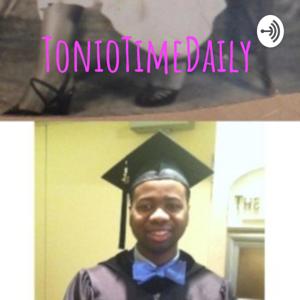
Autism is my super blessing! I'm a high-school valedictorian, college graduate, world traveler, disability advocate. I'm a Unitarian Universalist. I'm a Progressive Liberal. I'm about equal rights, human rights, civil & political rights, & economic, social, &cultural rights.