
Sign up to save your podcasts
Or

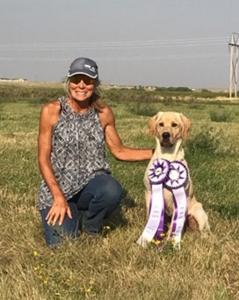


In today's Troubleshooting episode, we discuss the problem of a young dog that doesn't always return or doesn't directly return on a retrieve. As with many problems, this is a symptom of a larger problem, and often as simple as the dog was never taught the expectation. This will show up in different places, but is solved in the same manner..
Julie
www.Batesworks.net
In this episode, I take a question about "How do I get my dog to quit pulling on the leash?" and break down addressing what appears to be a single problem. Most of the time, these behaviors are symptoms of a more systemic problem, and in correctly diagnosing the problem, the problem can be addressed, in all the places it occurs. Join in on the discussion....
Happy 2024!
Julie
www.batesworks.net
In the first episode of 2024, we talk about how much you and your dog can advance when you quit directing their every move and turn responsibility for the work - over to them. Constant commands, cues, reminders are often more nagging than instructing. And constant instructing teaches your animal to tune you out more than listen. Here's some food for thought to simply and optimize your work with your dog. And Happy New Year!
Julie
www.Batesworks.net
As a continuation of episode 284, starting to run blind retrieves, this describes how much actual teaching needs to be done before a dog is good at running blinds. There is much more to it in the dogs' mind, than we are often aware.
In today's episode, we breakdown the approach to teaching a dog with the appropriate fundamentals of going when sent and stopping when whistled - how to confidently learn to run any cold blind. It is less drill and trick-oriented, but more just time and work intensive. Join in....
In response to a number of trouble-shooting questions, I compile an answer to many by discussing how to keep from creating training problems and how to address some before they become big problems in your program.
In this holiday season trouble shooting series, we talk about things to think about when you bring your trained dog home for the hunting season, holiday season or because they've completed their work. If you've spent money on dog training, you certainly do not want to undo it when they come home and relax...
2nd in the series of questions and problems, I address the question of developing confidence in a canine, performance or pet. It's a pretty straightforward recipe, but it requires understanding your dog's fundamental programming and providing opportunities for the two of you to work on the project together.
In this second in the Problem Series, we talk about what to do when the young PL hasn't shown point. The upbringing of these little guys is important, birds are important, and maybe most of all, keeping the right balance between the control part of the brain and the 'Do the work yourself" part of the brain. What you do in training should be determined by what the dog is telling you, not necessarily by what someone tells you to do.
This episode's question is about choosing the best video, book, YouTube channel, to acquire your dog training information. Heaven knows there is a ton of 'stuff' out there. Which is best? How do you choose? It's a good question, but before getting the how-to's from someone, make sure you have the best teacher and a very prepared student before starting your training process. Listen in for some ideas.
From the publisher's feed
1,715 Listeners

38,060 Listeners
973 Listeners
631 Listeners

46,065 Listeners
262 Listeners
48 Listeners
81 Listeners