
Sign up to save your podcasts
Or

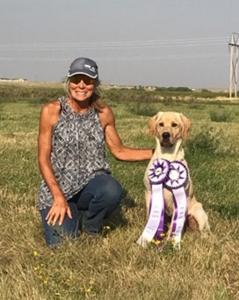


In this episode, we break down the important elements of little puppy mental and emotional development. Though formal training doesn't occur at these early weeks and months, beginning to develop and establish purpose and mental focus is super important. When ignored at the early stages, problems develop later when more formal training is started. It is very possible to not have separation anxiety, to not have dogs that get 'distracted' easily. It all comes down to what you invest of yourself at these short but precious stages.
In this episode, I break down what the force fetch actually is, and what is the idea behind it. There are a number of ways this behavior can be taught, some are a little easier on the dog than others, but it is an important tool to have on any retrieving dog having to bring back a cantankerous or injured bird, or just something they may not want to carry for you. This process does not have to be tough, does not have to do any physical or psychological damage to a dog. It does need to be clearly understood by its implementor, however.
www.batesworks.net
This is the first in a series of podcasts covering puppy raising, starting at 8 weeks. This will be carried through approximately the 6–10-month range of age for these little guys. Each episode will cover a distinct age and puppy development, with ideas with preventing problems, and teaching the pups what we need them to know in an age-appropriate manner. Puppy raising is my absolute favorite part of dog training, so join me in making this an adventure for you both. Generally applies to most breeds of dogs as well!
Batesworks.net
In this episode, we break down the fundamentals to teach a dog how to effectively become a partner in your upland work, hunting or competitive. Things are always easier and more thoroughly taught by teaching them one at a time, in a context that makes sense to an inexperienced dog. These dogs do not come to us understanding the complex upland game, and few learn by just watching other dogs. Approach this in a clear, methodical way based on how the dog perceives this work, and you'll have a dog that doesn't require "correction", whistling, yelling or frustration in the field.
In this episode, I breakdown the ways I've always evaluated my training process. How do you know how much of something to do, or when to start or stop it? It can be confusing at times to figure out the order of steps, how much to do and what comes next. Here are a few ideas to help design up your dog work..
www.Batesworks.net
In this episode we discuss how much our dogs, personal, training, hunting or competitive - reflect our inner workings, perspective, thoughts and anxieties. When they exhibit certain responses and behaviors that confuse us or become problematic, it is virtually never them having gone rogue or nuts on us. Instead, it is merely a reflection of what we thought or what signals we sent without even being aware of having sent the potentially confusing signals. It is a real skill to evaluate our own impact on our dog's behavior, but it important if we want to become better dog people.
Batesworks.net
In today's episode, we break down how to maintain a dog already trained to a high level, so they are game-day ready. In fact, you can't, but you can make a plan, so your dog builds with focus, confidence and trust so come game-day...... You are both ready. Listen in for some ideas....
Electric collar use is fairly widespread these days. You get one idea about how to use it from viewing the video that came with it or reading its instructions. You get another idea from watching local hunters or trainers use it with their dog. You can read things on forums and it's almost like politics, you can wildly swing from one side of the topic to the other. It isn't as much about the collar or the electricity, as it is about understanding your dog, how they think, how they react to training pressure, and how much fundamental work you're willing to put in before turning on the power. It isn't that the 'good' guys don't use it much and the 'bad' guys do. It is about understanding pressure, the goal of its use and how your dog processes all of this. Listen in to a slightly different idea about this tool...
In this episode, after some business updates, we talk about what to do when you bring the new guy home. How do you decide how to approach this pup, its behavior, its current and future training? How does anyone know what to begin with in a pup's life? Do you even train a baby dog? What does that look like? Shouldn't we just let "a puppy be a puppy?" Let's talk about all of this...
Bateworks.net
Trainingthepointinglabrador.com
On one of my favorite topics of all time, we break down the steps to go through with your litter of choice, and things to pay attention to. Some folks don't go through the selection process, and some of us have made a life study of it. Grab some ideas here before you go pick out that one in a lifetime pup!
From the publisher's feed
1,715 Listeners

38,060 Listeners
973 Listeners
631 Listeners

46,065 Listeners

262 Listeners
48 Listeners
81 Listeners