
Sign up to save your podcasts
Or



Want the latest news, analysis, and price indices from power markets around the globe - delivered to your inbox, every week?
Sign up for the Weekly Dispatch - Modo Energy’s unmissable newsletter
Delivering a decarbonised power system isn’t just about building more renewables and storage, it’s also about regulation. The rules that shape investment, protect consumers, and manage risk are critical to whether the UK can hit net zero on time.
But regulation comes with trade-offs. How do you keep bills affordable while ensuring enough capital flows into clean infrastructure? How do you encourage innovation without compromising reliability? And how can Ofgem strike the right balance between investor certainty and consumer protection in a period of huge change?
In this conversation, Ed speaks with Georgina Mills, Director of Energy Systems Management & Security at Ofgem about the regulator’s role in the UK’s energy transition. They discuss the frameworks that shape investment in networks, the need for agility in a fast-changing market, and what regulatory innovation might look like as we build a net zero system.
Key topics covered include:
About our guest
Georgina Mills is Director of Energy Systems Management & Security at Ofgem, where she leads reform of network charging and facilitates low-carbon investment across Great Britain’s electricity system. With experience spanning regulatory roles in both the UK and New Zealand, Georgina oversees initiatives that balance consumer protection with system resilience
About Modo Energy
Modo Energy helps the owners, operators, builders, and financiers of battery energy storage solutions understand the market - and make the most out of their assets.
All of our interviews are available to watch or listen to on the Modo Energy site. To keep up with all of our latest updates, research, analysis, videos, conversations, data visualizations, live events, and more, follow us on LinkedIn. Check out The Energy Academy, our bite-sized video series breaking down how power markets work.
Want the latest news, analysis, and price indices from power markets around the globe - delivered to your inbox, every week?
Sign up for the Weekly Dispatch - Modo Energy’s unmissable newsletter.
As renewables take a larger share of the power mix, the need for flexibility in electricity markets has never been greater. But while the technology exists. From batteries and demand response to interconnectors the challenge lies in creating the right market structures and incentives to bring it all together.
Today’s power markets were designed around centralised fossil generation. For flexibility to scale, they must evolve, ensuring that short-term trading, ancillary services, and long-term contracts all work in harmony. Without that, renewable integration will stall, and the cost of balancing the grid will rise.
In this episode of Transmission, Quentin is joined by Rasmus Rode Mosbæk to explore the future of energy trading and flexibility markets. They discuss how market design can enable faster renewable integration, why transparency and liquidity matter, and what lessons can be drawn from other European systems. Over the course of the conversation, they discuss:
About our guest
Rasmus Rode Mosbæk is the CEO and Founder of Hybrid Greentech, a Danish software company specialising in intelligent energy storage solutions. With an MSc and PhD in energy systems, Rasmus combines deep technical expertise with commercial insight to deliver smarter ways of integrating renewables into the grid. At Hybrid Greentech, he leads the development of HERA, an AI-powered platform that optimises virtual power plants and battery storage, helping asset owners maximise revenues, extend asset lifetimes, and strengthen grid stability. For more information on Hybrid Greentech, head to their website.
About Modo Energy
Modo Energy helps the owners, operators, builders, and financiers of battery energy storage solutions understand the market - and make the most out of their assets.
All of our podcasts are available to watch or listen to on the Modo Energy site. To keep up with all of our latest updates, research, analysis, videos, podcasts, data visualizations, live events, and more, follow us on LinkedIn. Check out The Energy Academy, our bite-sized video series breaking down how power markets work.
Want the latest news, analysis, and price indices from power markets around the globe - delivered to your inbox, every week?
Sign up for the Weekly Dispatch - Modo Energy’s unmissable newsletter.
Electricity grids worldwide need both the flexibility to adapt to renewable energy sources, and the resilience to cope with grid-stress events. Demand curtailment and other forms of demand-side response (DSR) play an increasingly fundamental role in supporting both these requirements, yet direct participation in these programmes can be complex, and is typically geared towards high-demand customers with single, centralised sites.
However smaller, decentralised organisations can still unlock the benefits of DSR and provide a crucial grid service by working with an aggregator. By bringing multiple demand customers and sites together in a virtual power plant (VPP), aggregators help businesses of all sizes become major contributors to grid stability, without the challenges of managing individual enrolment themselves.
In this episode, Michael Lynch, manager of Enel X’s global Network Operations Centre (NOC) in Dublin, joins Ed Porter to discuss the growing role of VPPs in helping stabilise global electricity grids. In conversation they discuss:
About our guest
Michael joined Enel X Global Retail in 2020 from an airline operations control centre, where he
gained hands-on experience planning, scheduling and managing disruptions in a fast-paced,
high-pressure environment.
Enel X Global Retail is Enel Group’s business line dedicated to customers around the world with the aim of effectively providing products and services based on their energy needs and encouraging them towards a more conscious and sustainable use of energy. Globally, it provides electricity, integrated and innovative energy services to more than 54 million customers worldwide, offering flexibility services aggregating 9.8 GW, managing around 3 million lighting points, and with 30,500 owned public charging points for electric mobility.
For more information on what Enel X Global Retail does, head to its website at https://www.enelx.com/uk/en/
About Modo Energy
Modo Energy helps the owners, operators, builders, and financiers of battery energy storage solutions understand the market - and make the most out of their assets.
All of our podcasts are available to watch or listen to on the Modo Energy site. To keep up with all of our latest updates, research, analysis, videos, podcasts, data visualizations, live events, and more, follow us on LinkedIn. Check out The Energy Academy, our bite-sized video series breaking down how power markets work.
To get the latest on energy storage, market movements, and revenue indices, straight to your inbox every week, sign up the Weekly Dispatch.
Want the latest news, analysis, and price indices from power markets around the globe - delivered to your inbox, every week?
Sign up for the Weekly Dispatch - Modo Energy’s unmissable newsletter
The United States is at a pivotal moment in its energy transition. Massive policy shifts like the Inflation Reduction Act (IRA) have unlocked unprecedented levels of clean energy investment, from wind and solar to hydrogen and carbon capture. But ambition alone doesn’t build projects the real challenge is how to finance, structure, and deliver gigawatts of new capacity at the speed net zero requires.
Tax credits, long-term offtake structures, and regulatory frameworks will determine which projects attract capital and which stall in development. Add in the complexity of interconnection queues, supply chain constraints, and regional market rules, and it’s clear that capital deployment in the US clean energy sector is as complex as it is urgent.
In this episode of *Transmission*, Quentin speaks with **Chris Taylor, CEO of GridStor**, to explore how capital is flowing into US energy storage, what investors are looking for, and why regulatory clarity is key to unlocking large-scale deployment. They discuss how storage fits into the wider clean energy build-out, and what it will take to turn climate ambition into bankable, shovel-ready projects.
Key topics covered include:
- How the Inflation Reduction Act is reshaping storage investment in the US.
- Why interconnection queues are one of the biggest barriers to deployment.
- What investors need to see to back large-scale storage projects.
- The balance between federal incentives and private capital.
- The impact of tariffs and domestic production incentives on supply chains.
About our guest
Chris Taylor is the CEO of GridStor, a US-based developer focused on large-scale battery energy storage. With a career spanning energy investment, infrastructure, and project development, Chris brings deep expertise in how capital, policy, and technology intersect to accelerate the clean energy transition. At GridStor, he leads efforts to deliver gigawatt-scale storage projects that help balance the grid, integrate renewables, and provide critical flexibility to the power system. His perspective combines hands-on development experience with an investor’s eye for risk, regulation, and long-term value creation in the rapidly evolving US energy market. For more information on what GridStor do, head to their [website.](https://gridstor.com/)
Want the latest news, analysis, and price indices from power markets around the globe - delivered to your inbox, every week?
Sign up for the Weekly Dispatch - Modo Energy’s unmissable newsletter.
Electric vehicles are no longer a niche technology. Costs are falling, ranges are increasing, and adoption is growing across the UK and beyond. But despite this progress, the EV transition is still battling misinformation, cultural resistance, and outdated narratives that slow down change.
The problem isn’t just about technology, it’s about how the story is told. From charging infrastructure myths to debates over grid capacity, the way we talk about EVs has a direct impact on how fast people adopt them. To accelerate the shift, the industry needs clear communication, positive examples, and a willingness to challenge entrenched scepticism.
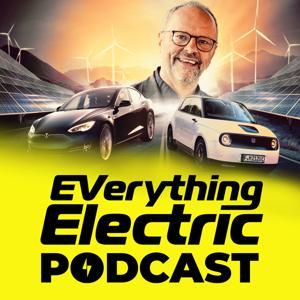
In this episode of Transmission, Ed is joined by Robert Llewellyn - actor, writer, and founder of Everything Electric - to explore how storytelling, education, and culture are shaping the clean transport revolution. Together, they dig into why better narratives matter just as much as better batteries in driving the shift to zero-carbon mobility. Over the course of the conversation they discuss:
⚡ Why EV myths still dominate the conversation and how to challenge them.
⚡ The role of media and storytelling in accelerating adoption.
⚡ How charging infrastructure is developing faster than public perception.
⚡ Why the grid can cope with electrification and what still needs work.
⚡ What’s next for EV culture as the transition goes mainstream.
About our guest
Robert Llewellyn is an actor, writer, presenter, and the creator of Everything Electric, one of the world’s leading channels dedicated to electric vehicles and clean energy. Best known to many as Kryten from Red Dwarf and host of Scrapheap Challenge, Robert has become a driving force in the public conversation around electrification and sustainability.
Through Everything Electric (and Fully Charged before it), he has built a global platform that champions EV adoption, renewable power, and smarter energy systems making complex topics accessible and inspiring millions to engage with the transition to net zero. Find Robert on LinkedIn: https://www.linkedin.com/in/robert-llewellyn-0a43992b/?originalSubdomain=uk
About Modo Energy
Modo Energy helps the owners, operators, builders, and financiers of battery energy storage solutions understand the market - and make the most out of their assets.
All of our podcasts are available to watch or listen to on the Modo Energy site. To keep up with all of our latest updates, research, analysis, videos, podcasts, data visualizations, live events, and more, follow us on LinkedIn. Check out The Energy Academy, our bite-sized video series breaking down how power markets work.
The energy grid is facing a new kind of challenge: enormous, fast-arriving demand from hyperscale data centres, driven by AI and digitalisation.
These “giga-campuses” are no longer talking about tens of megawatts they’re applying for a gigawatt of capacity in a single location.That’s the same scale of demand Portugal expects to add across the entire country over a decade - now requested in one UK town.
For National Grid, developers, and policymakers, the question is urgent: how do you connect this demand without waiting 15 years for traditional reinforcements?
It is increasingly clear that the future of large-scale demand isn’t just about building faster, it’s about building smarter. Flexible connections, real-time load management, and accurate grid modelling will be essential to connect AI-era demand without crippling the network or wasting resources.
In this episode of Transmission, Ed sits down with Paul Manning, Commercial Director at Novogrid, about how real-time data and control can transform grid operations. From improving renewable integration to reducing connection delays, they explore the technology, market design, and operational shifts needed to build a more dynamic and efficient electricity system.
⚡ Why hyperscale data centres break the old rules for grid planning and capacity allocation.
⚡The bottleneck: why firm connections could delay projects for over a decade.
⚡ Flexible (non-firm) connections as a faster route and what this means for data centre operations.
⚡ How to align computational load with grid availability to avoid stranded assets and wasted capacity.
⚡ The role of grid analytics in de-risking curtailment and speeding up the transition
About the Guest
Paul Manning is Co-Founder and Commercial Director at Novogrid, a grid analytics company acquired by Danish energy services firm Opora. Novagrid specialises in modelling the energy grid and helping clients plan projects from “time zero” before a single cable is laid, to secure the best possible connection strategy. For more information, check out their website.
About Modo Energy
Modo Energy helps the owners, operators, builders, and financiers of battery energy storage solutions understand the market - and make the most out of their assets.
All of our podcasts are available to watch or listen to on the Modo Energy site. To keep up with all of our latest updates, research, analysis, videos, podcasts, data visualizations, live events, and more, follow us on LinkedIn. Check out The Energy Academy, our bite-sized video series breaking down how power markets work.
Sign up to the Modo Energy Weekly Dispatch for expert insights on energy storage, market shifts, and policy updates - delivered straight to your inbox every week.
From the publisher's feed
1,248 Listeners
401 Listeners

641 Listeners
129 Listeners

216 Listeners
313 Listeners

7 Listeners

81 Listeners
283 Listeners

230 Listeners

167 Listeners
52 Listeners

191 Listeners
136 Listeners
0 Listeners