
Sign up to save your podcasts
Or

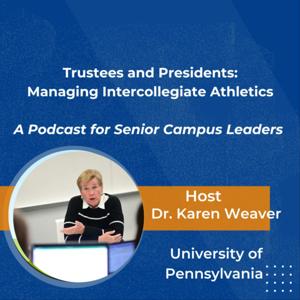


We're joined by journalist Eric Kelderman from the Chronicle of Higher Education. Erik has covered college administration for years, with a focus on the challenges facing campus leaders. From accreditation to finance to public perception, Eric brings deep insight into the forces shaping higher ed.
Eric has written many fine pieces for theChronicle; one of his recent pieces was on tiny Lourdes University in Ohio and their struggles with athletics and maintaining enrollment.
The title: “We have more athletes than fans”!
Karen Weaver sits down with the News & Observer higher education reporter Korie Dean to discuss a brewing governance battle within the University of North Carolina (UNC) System. They explore a recent controversy involving UNC System President Peter Hans, who called out campus trustees for overstepping their authority—particularly in the high-profile hiring of legendary NFL coach Bill Belichick as UNC Chapel Hill’s new football coach.
Dean unpacks the power struggles between trustees, chancellors, and the Board of Governors, shedding light on a pattern of trustees asserting influence beyond their advisory role. From athletic department budgets to the rollback of diversity, equity, and inclusion (DEI) policies, this episode examines how political and financial pressures are reshaping university leadership.
Tim Nevius, founder of Nevius Legal and FAIR Sports, discusses the evolving landscape of college athletics, NIL agreements, and revenue-sharing models.
He explains FAIR’s role in dispute resolution for athletes, universities, and stakeholders, offering insights on arbitration, mediation, and contractual complexities in college sports. FAIR’s website is https://fairsports.org/
In this insightful episode, Dr. Karen Weaver sits down with Michael LeRoy, a labor and employment relations professor at the University of Illinois, and dive into the implications of NIL contracts and the potential for privatization of collegiate sports. LeRoy reveals surprising details about Big Ten and SEC NIL agreements, the potential sub-licensing of athlete rights, and the looming challenges surrounding Title IX compliance.
We also explore why university presidents likely resist athlete unionization, why that may unwittingly benefit the athletes, and how shifting financial models may force mid-major schools to reconsider their place in Division I athletics.
This thought-provoking discussion challenges listeners to rethink the direction of college sports and higher education.
My guest is Thomas Ehrlich, Indiana University's president emeritus, former provost at the University of Pennsylvania and Dean of the Stanford Law School. Tom was a member of the Big Ten's COP/C council (Council of Presidents and Chancellors) when Penn State joined the Big Ten and Bobby Knight roamed the sidelines of Hoosier Basketball.
Our conversation dives into college athletics, campus politics, and Tom’s new book titled "The Search" which provides a fictional take on searching for a new head football coach as seen from a presidential perspective. We cover everything from leadership challenges, athletic directors, NCAA controversies, to how money in sports shapes decisions today.
Tom is now retired, but he still teaches at Stanford at the age of 90.
My guest is Robert Kelchen, Professor of Education Policy and an expert in higher education finance, from the University of Tennessee, Knoxville. We cover the Trump administration's "Dear Colleague" letter, to pressures to cut research funding; from retiring the old tropes of the "Flutie Factor" and the "Cinderellas in March Madness" many use to describe the benefits of athletics in driving applications and enrollment.
Join Dr. Karen Weaver as she speaks with sports media experts/consultants John Kosner and Ed Desser about the evolving landscape of college athletics. John and Ed authored the seminal 2021 NCAA Gender Equity Media analysis which identified $80 million of unrealized revenues the NCAA was leaving on the table in their media contracts. Why? Because the NCAA did not believe the women's basketball tournaments had any financial value. In 2025, it's stunning to think that campus and NCAA leaders were blind to the revenue possibilities back then.Today, we know the landscape has changed and John and Ed want to help presidents understand how use media opportunities to differentiate their campuses. They discuss media rights, gender equity, fan engagement, and the financial opportunities in this new world of college sports. From the rise of women's basketball to the impact of technology and private equity, this episode explores how universities can navigate and thrive in this rapidly changing environment.
With the 2025 NCAA Convention fast approaching, I wanted to visit with an attorney who is regular conversations with Division I campuses to navigate their futures. They ask my guest tough questions and she provides legal clarity (as best as is possible in this crazy upside down era).
Kelleigh Irwin Fagan is a former college athlete-she co-founded the Sports Law practice at Church Church Hittle + Antrim. 10 years ago. How does a university leader manage the legal unknowns for DI programs? What advice she might offer for trustees and presidents) at this tenuous time?
Hello, and welcome to the 150th episode of Trustees and Presidents! I’m Karen Weaver.
Today, we’re diving into a topic that’s at the center of the storm in college athletics—change. Why is it so challenging for college athletics to adapt to this new era of likely revenue sharing, NIL, and its evolving role in campus life? Change has become the defining word for both higher education and college sports, and navigating it successfully requires innovative thinking and strategic leadership.
My guest today, Dr. Julie Wollman, President Emerita of Widener University, brings a wealth of experience and fresh insights to this conversation. A nationally recognized innovator in higher education strategy, Dr. Wollman has spent her career leading change. During her presidency at Widener University, she developed a forward-thinking approach to strategy that embraced scenarios and possibilities, focusing on strategic direction rather than outdated tactical plans—a method now recognized as an emerging best practice.
Dr. Wollman also launched the Common Ground initiative, fostering respectful dialogue on challenging topics, which aligns perfectly with today’s need for thoughtful leadership in higher education and athletics.
And by the way, Julie is a University of Pennsylvania “professor of practice” and she is my colleague!
As we explore how to embrace resistance, manage friction, and fuel progress, I’ll also share lessons from my own experience leading strategic planning for an athletic departments. This discussion will challenge us to rethink what qualities we should seek in leaders tasked with guiding our institutions—and college athletics—through this era of accelerated change.
My guest today is a game-changer—both on the national stage and on his own campus.
He’s one of the leading voices in NCAA Division III governance and transformation. As the newly appointed chair of the NCAA Division III Presidents Council, he represents over 430 colleges and universities and 44 voting conferences, advocating for student-athletes and shaping the future of college sports. Oh, and did I mention? He’s also the DIII representative on the NCAA’s prestigious Board of Governors.
But that’s just the start. Back at Juniata College in Central Pennsylvania, where he’s the 12th president, he’s spearheading a renaissance in campus athletics. Under his leadership, Juniata has added five new athletic teams in the past four years, opened a cutting-edge $4 million sports facility, and remains the home of 3-time National Champions in Women’s Volleyball.
Balancing NCAA-level leadership with transformative campus innovations? That’s a story worth telling.
From the publisher's feed

31,925 Listeners
50 Listeners

147 Listeners

20,172 Listeners

152 Listeners

150 Listeners

9,061 Listeners

6,064 Listeners

195 Listeners
64 Listeners