
Sign up to save your podcasts
Or

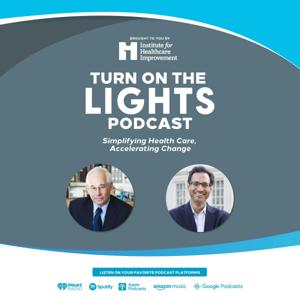


Health insurance policy is complicated, but the consequences are deeply human.
In this episode of Turn on the Lights, Professor Jonathan Gruber, Ford Professor of Economics and Chair of the Economics Department at MIT, joins Don Berwick and Kedar Mate to explore the history, structure, and future of health reform in the United States. Drawing on his work shaping Massachusetts health reform and the Affordable Care Act, Gruber explains the three-legged stool of reform: ending insurance discrimination, requiring broad participation, and making coverage affordable through subsidies. He also reflects on the political battles behind the ACA, the importance of Medicaid expansion, and the growing risks to health care coverage today. The conversation concludes with cautious optimism about biomedical innovation alongside serious concerns about affordability, rising costs, and the need for a more seamless health care system.
Tune in to hear why health reform is not just about policy design, but about whether people can get care when they need it.
Resources
Follow MIT on LinkedIn and explore the website.
Learn more about Professor Jonathan Gruber:https://economics.mit.edu/people/faculty/jonathan-gruber
AI may be the breakthrough that finally helps a deeply strained health care system do what clinicians and patients have needed all along.
In this episode, Dr. Bob Wachter, Professor and Chair of the Department of Medicine at UCSF, examines why artificial intelligence marks a pivotal shift in health care and what it means for clinicians, patients, and care delivery. He draws on past transformations, like hospital medicine and electronic records, to explain why AI stands apart as a fundamentally different force. The conversation highlights where AI is already adding value, including medical scribes, chart summarization, and clinical decision support. Dr. Wachter also explores key risks, including trust, bias, deskilling, security, and conflicts of interest, while considering how AI may redefine the physician’s role, medical education, and the doctor-patient relationship.
Tune in to hear why AI may be one of health care’s greatest opportunities and one of its most important tests.
Resources:
Connect with and follow Dr. Bob Wachter on LinkedIn.
Get a copy of A Giant Leap: How AI Is Transforming Healthcare and What That Means for Our Future here.
Public health is easiest to overlook when it is doing its job well, and hardest to defend when uncertainty is unavoidable.
In this episode, Dr. Rochelle Walensky, former CDC Director and infectious disease physician, reflects on the leadership challenges, pressure, and public scrutiny she faced during the height of the COVID-19 pandemic. She discusses the difficulty of communicating evolving science in real time, preparing for congressional hearings, and rebuilding morale within an agency under intense strain. Dr. Walensky also highlights lesser-known public health efforts, including the CDC’s work to prevent measles spread during the Afghan evacuation. She shares her perspective on the agency’s current challenges and emphasizes the importance of relationships, workforce trust, modern data systems, and her ongoing work with the Vaccine Integrity Project.
Tune in to hear why rebuilding trust in public health will require not only better systems, but better storytelling.
Resources
Follow Dr. Rochelle Walensky on LinkedIn.
Explore the CDC’s role in public health preparedness and response here.
Read about the Vaccine Integrity Project here.
Why does public health so often get neglected until a crisis makes its value impossible to ignore?
In this episode, Dr. Tom Frieden, President and CEO of Resolve to Save Lives, former CDC Director, and former New York City Health Commissioner, reflects on a career spent trying to close the gap between what we know saves lives and what we actually do. He shares how his father’s example shaped his commitment to evidence-based medicine and public service, and he explains the framework behind his new book, The Formula for Better Health, see, believe, create. The conversation explores major public health wins, such as reducing smoking in New York City, the challenges of leading the CDC, the damage to public health infrastructure today, and why prevention, primary care, and global health remain essential to a safer, healthier future.
Tune in to hear why better public health depends not only on science, but also on courage, communication, and the will to act.
Resources:
Connect with Dr. Tom Frieden on LinkedIn.
Follow Resolve to Save Lives on LinkedIn and visit the website here.
Learn more about The Formula for Better Health: How to Save Millions of Lives--Including Your Own here.
What if one of the biggest barriers in health care is not access to treatment, but access to your own data?
In this episode, Hugo Campos, patient advocate, creative strategist, and participant ambassador, shares how his diagnosis with hypertrophic cardiomyopathy led him to advocate for patient agency and access to personal health data. After receiving an implantable cardioverter defibrillator, he discovered that data from his own body was shared with clinicians and manufacturers, but not with him. This realization sparked his work in data liberation and his challenge to traditional health care models. He explores how withholding data undermines trust, how patient communities drive change, and how AI can support patients by helping them ask better questions.
Tune in to hear why better health care starts with giving people more visibility, more voice, and more control over their own lives.
Resources:
Connect with and follow Hugo Campos on LinkedIn.
Visit AI Patients at aipatients.org.
Read the National Academy of Medicine commentary on critical AI health literacy and patient empowerment here.
Learn more about Turn on the Lights here.
What happens when a practicing surgeon, health economist, and federal policymaker brings all those perspectives into one leadership role?
In this episode, Dr. Meena Seshamani, Secretary of Health for Maryland, discusses how her journey across clinical care, health system leadership, and public service has shaped her approach to health care transformation. She reflects on leading Medicare during a time of major change, including expanding support for caregivers and community health, improving prescription drug affordability, and advancing drug price negotiation. Dr. Seshamani also explains how Maryland’s unique global budget model is helping shift hospital incentives toward keeping people healthy, and why states now have an even more important role in navigating public health uncertainty. Throughout the conversation, she shares how practical problem-solving, cross-sector collaboration, and optimism continue to guide her work.
Tune in to hear how policy, practice, and purpose can come together to build a more effective and people-centered health care system.
Resources:
Connect with and follow Dr. Meena Seshamani on LinkedIn.
Learn more about the Maryland Department of Health here.
If public health is the foundation for individual health, why is it still treated like a “nice to have” until a crisis hits?
In this episode, Michelle Williams, an epidemiologist and public health leader, and Linda Marsa, a health care journalist, discuss what public health actually is, why it matters for human thriving, and how it differs from medical care that treats one patient at a time. They unpack how incentives often push resources toward reactive, profit-driven care instead of prevention, even though social determinants like housing and clean air drive most health outcomes. The conversation traces recurring patterns of “willful blindness,” in which commerce and ideology trump evidence, from historical outbreaks to today’s fights over air pollution. They also spotlight reasons for hope: rigorous data, public health heroes across generations, real grassroots and legal efforts protecting public health wins, and practical protocols that have cut maternal deaths.
Tune in and learn how public health can move from stepchild to foundation, and what it takes to leave no population behind.
Resources:
Connect with and follow Michelle Williams on LinkedIn.
Connect with and follow Linda Marsa on LinkedIn and visit her website!
Follow Harvard T.H. Chan School of Public Health on LinkedIn and explore their website!
Read The Cure for Everything: The Epic Struggle for Public Health and a Radical Vision for Human Thriving
Blame rarely makes care safer, but understanding the system usually does.
In this episode, Professor Charles Vincent, a clinical psychologist and leading patient safety researcher, explains how harm often emerges from a chain of small breakdowns, not from a single “bad” decision, and why the better question is “what in the system allowed this to happen?” He unpacks how the fixation on individual error can miss deeper contributors, such as fatigue, poor supervision, weak monitoring, clunky equipment design, noise, distraction, and communication that is not truly heard. You will hear why disrespectful behavior and hierarchy are safety risks, how simple routines like surgical safety checklists can change whether people speak up, and why healthcare struggles to name the trade-off between pushing volume and protecting safety.
Tune in and learn how a systems lens, respectful teamwork, and real trade-offs can make care safer.
Resources:
Stories can help people understand why health care keeps failing both patients and clinicians.
In this episode, Shantanu Rai, a primary care physician and novelist, discusses how his medical thriller, A Dangerous Diagnosis, became a way to explore moral injury, physician burnout, concierge medicine, worsening access to specialty care, fragmented treatment, and the financial and administrative pressures reshaping modern practice. He reflects on what he sees in safety-net primary care, why more physicians are considering escape routes from traditional medicine, and how payment models can make care feel rushed and transactional. Shantanu also explains why he chose fiction over academic writing, how storytelling can build empathy among clinicians, and why public engagement may be essential to meaningful reform. Along the way, he shares his thoughts on universal coverage, physician leadership, and the bigger structural changes needed to make health care more humane.
Tune in and learn why storytelling may be one of the strongest tools for exposing what is broken in health care and inspiring people to demand something better.
Resources:
Learn more about the book The Dangerous Diagnosis here.
How do we decide what “good care” looks like, and who gets to choose the scorecard?
In this episode of Turn on the Lights, Kedar Mate speaks with Dr. Michelle Schreiber of the Centers for Medicare & Medicaid Services and Brenna Rabel of Battelle about how quality measures are developed, adopted, and applied across Medicare and Medicaid programs. They explore why measurement is essential for accountability, patient choice, and improvement, while also acknowledging its vulnerability to politics, feasibility constraints, and “teaching to the test.” Using diabetes and sepsis as examples, they explain how performance cutoffs are established, why “all-or-none” measures often face resistance, and what makes complex measures difficult to report and score. The conversation also addresses efforts to reduce reporting burden, including CMS’s shift from broader MIPS reporting toward MIPS Value Pathways and the expansion of digital quality measurement through FHIR-enabled eCQMs. They conclude with a forward-looking discussion on how artificial intelligence could reduce manual chart abstraction and advance quality measurement, particularly as patient-reported outcomes play a larger role in shaping the future of value-based care.
Tune in to hear how measures shape what health systems prioritize, what gets improved, and what “value” could look like in the future.
Resources:
Connect with and follow Dr. Michelle Schreiber on LinkedIn.
Follow CMS on LinkedIn and explore their website!
Connect with and follow Brenna Rabel on LinkedIn.
Follow Battelle on LinkedIn and explore their website!
From the publisher's feed

31,912 Listeners

30,659 Listeners

43,333 Listeners

8,776 Listeners

56,403 Listeners

495 Listeners

9,508 Listeners

599 Listeners

202 Listeners

4,759 Listeners

389 Listeners

2,039 Listeners

4,228 Listeners

374 Listeners

112 Listeners