
Sign up to save your podcasts
Or

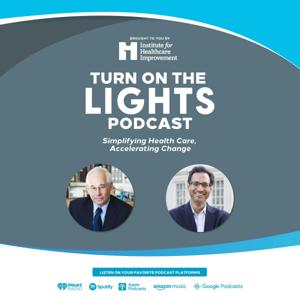


The energy is electric at the IHI Forum, even before the forum officially begins.
In this episode, co-hosts Kedar Mate and Don Berwick discuss how AI, patient safety, and administrative waste are shaping the future of health care. They explore the excitement and uncertainty around AI’s growing role in diagnostics, coordination, and clinical decision-making. They discuss why clinicians need real training to use AI safely and effectively, and how learning health networks are driving continuous improvement. They also delve into the persistent administrative burdens, especially in Medicaid and fee-for-service systems, that hinder true efficiency in health care.
Tune in to hear how innovation, policy, and technology are colliding at this year’s IHI Forum!
Resources
What happens when clinicians stop hearing the very people they’re trying to help?
In this episode, Dr. Rageshri Dhairyawan, a Consultant Physician in Sexual Health and HIV Medicine at Barts Health NHS Trust and Deputy Director of the SHARE Collaborative at Queen Mary University of London, discusses how patients are often disbelieved or dismissed in healthcare. She shares her own experience of being ignored during a painful hospitalization, which revealed how difficult it can be for even a senior doctor to speak up when vulnerable. Dhairyawan argues that medicine has a long-standing culture of skepticism toward patient testimony, which harms trust, exacerbates inequities, and undermines care. She urges systemic and educational reforms, more time, continuity, staff wellbeing, training in true listening, and structural support for patient voices. While acknowledging resource constraints, she emphasizes that listening is both therapeutic and essential to restoring humanity in healthcare.
Tune in to hear Dr. Rageshri Dhairyawan unpack why patients often feel unheard, and how listening might be healthcare’s most powerful, yet overlooked, tool.
Resources
The collapse of a major hospital system set off one of the most complex healthcare emergencies Massachusetts has ever faced.
In this episode, Dr. Gregg Meyer, Incident Manager for the Massachusetts Department of Public Health, discusses how the state responded to the unprecedented Steward Health Care crisis and worked to protect patients, communities, and hospital staff. He explains how years of debt, real estate deals, and private equity extraction destabilized the system and pushed it into bankruptcy. He shares what it took to manage a months-long VUCA public health emergency, including on-site monitoring, emergency closures, and the transfer of six hospitals to new nonprofit operators. He also reflects on the human and financial toll the crisis left behind, as well as why stronger oversight and policy reform are urgently needed.
Tune in to learn how Massachusetts led one of the most challenging hospital rescue operations in U.S. history!
Resources
Medicaid is a massive, life-sustaining program whose new work requirements and funding cuts risk stripping coverage from millions of people who can’t afford to lose it.
In this episode, Cindy Mann, partner at Manatt Health and former director of the Center for Medicaid and CHIP Services, explains how Medicaid was created alongside Medicare in 1965 and has grown into the nation’s largest public coverage program, serving nearly 80 million people across diverse populations. She details the state–federal financing structure, explains why match rates vary, and highlights how Medicaid remains foundational to the Affordable Care Act’s coverage continuum. Cindy breaks down the proposed Medicaid cuts in HR1 and the impact of work requirements, illustrating how administrative barriers lead to people losing coverage and increasing uncompensated care costs without improving employment outcomes. She also challenges the “deserving versus undeserving poor” narrative and highlights efforts by states and providers to protect coverage gains.
Tune in and learn how Medicaid’s design, politics, and future will shape health, budgets, and justice in America!
Resources
What if the biggest threat to our survival isn’t the next virus, but our failure to learn from the last one?
In this episode, Dr. Michael Osterholm, Regents Professor and Director of the Center for Infectious Disease Research and Policy (CIDRAP) at the University of Minnesota, explains why America’s public health system is dangerously underprepared for the next major outbreak. He shares how misinformation and political interference have eroded confidence in science, leaving critical institutions like the CDC and NIH struggling to fulfill their missions. Dr. Osterholm discusses lessons from COVID-19 and why failing to apply them could cost millions of lives in the future. He also explores the promise of universal vaccines, the need for sustained investment in pandemic defense, and how rebuilding public trust starts with humility, transparency, and truth-telling.
Tune in to hear what it will really take to prepare for “the big one.
Resources
A nation’s promise to those who served becomes a lesson in how health care can truly heal.
In this special Veterans Day episode, Dr. David Shulkin, the ninth Secretary of the U.S. Department of Veterans Affairs in the Trump Administration and VA’s Under Secretary of Health in the Obama Administration, talks about the mission, history, and transformation of the Veterans Health Administration, one of the nation’s largest and most innovative health systems. He shares how his time leading the VA changed his perspective on what effective, compassionate care looks like, highlighting the system’s holistic, population-based approach and its groundbreaking medical research. Dr. Shulkin also reflects on the challenges of government service, the importance of protecting the VA from privatization, and his continued advocacy for veterans and the workforce that serves them.
Tune in to hear how the VA’s model offers vital lessons for the future of American health care!
Resources:
Our information environment has become a social determinant of health.
In this episode, Joshua Sharfstein, a public health leader and professor at Johns Hopkins, and Joanne Kenen, journalist in residence at the Johns Hopkins Bloomberg School of Public Health, discuss how the collapse of local journalism, the design of social media algorithms, and politicization have created an “information sickness” that undermines personal and public health. They explain that traditional reporting once filtered out false claims through rules and accountability, while today’s engagement-driven platforms reward emotional misinformation that quickly becomes “sticky.” The guests explore the consequences of vaccine refusal, fractured families, and the urgent need for remedies, such as embedding misinformation experts in health agencies, utilizing trusted platforms, and fostering community trust. They emphasize that artificial intelligence will both fuel and fight misinformation, demanding institutional adaptation. Ultimately, they urge individuals to maintain an informed news diet and practice empathy across information divides, reminding listeners that public health must serve everyone, even those who disagree.
Tune in to learn practical ways to counter health misinformation, from rapid pre-bunking to community partnerships and smarter use of AI!
Resources:
Connect with and follow Joshua Sharfstein on LinkedIn.
Follow and connect with Joanne Kenen on LinkedIn.
Learn more about Johns Hopkins Bloomberg School of Public Health on their LinkedIn and website.
Buy Josh and Joanne’s book Information Sick here.
Listen to the What The Health podcast here.
Sign up for the Expert Insights Newsletter here.
“I just went there for a routine knee replacement, or so I thought.”
In this inspiring episode, Rosie Bartel, a patient partner and advocate, educator, and survivor, shares her journey from a devastating MRSA infection acquired during a routine knee replacement to becoming a global voice for patient safety and health care reform. After surviving 58 surgeries, more than 200 hospitalizations, and multiple amputations, she transformed her pain into a mission to prevent others from enduring the same experience. Rosie explains how being invited to her hospital’s root-cause investigation empowered her to advocate for systemic change and demonstrate the power of storytelling with purpose. She reminds health care professionals that patients seek healing, not lawsuits, urging both providers and patients to share their stories because, as she powerfully states, stories aren’t just anecdotes; they’re data that inspire action.
Tune in and learn how courage, compassion, and the patient’s voice can light the path toward a safer, more humane health care system!
Resources:
The healers we need now don’t stop at the exam room; they go upstream to the causes of suffering and make safety, dignity, and trust part of the clinical job.
In this episode, Dr. Sandeep Kapoor, a physician and academic leader, calls for a broader, more human-centered definition of health care, one that addresses substance use, firearm injuries, pain, and the social realities that shape well-being. Drawing on personal experiences and systemic insight, he advocates for harm reduction, trust-building, and courageous leadership that transforms stigma and obstacles into opportunities for progress.
Tune in and learn how broadening medicine’s scope saves lives and restores trust!
Resources:
The integrity of evidence-based policy is under threat when political agendas override scientific rigor.
In this episode, Dr. Robert Califf, former FDA Commissioner and cardiologist, reflects on his experience leading the FDA and the agency’s critical role in protecting public health through rigorous, science-based regulation across multiple sectors. He warns that political interference, disinformation, and mistrust threaten health outcomes but believes meaningful collaboration can still restore integrity and progress.
Tune in and learn how protecting science-based regulation may be one of the most important public health actions of our time!
From the publisher's feed

31,912 Listeners

30,659 Listeners

43,333 Listeners

8,776 Listeners

56,403 Listeners

495 Listeners

9,508 Listeners
599 Listeners
202 Listeners

4,759 Listeners

389 Listeners

2,039 Listeners

4,228 Listeners

374 Listeners

112 Listeners