
Sign up to save your podcasts
Or




The worship pathway. When you’re on the worship pathway, you resonate with the psalmist: ‘I was glad when they said to me, “Let us go into the house of the LORD.”’ Something deep inside you feels released when praise is given. Your heart opens up and you come alive. You find yourself in tears, sometimes in moments of deep joy, because God seems so close. But here are two cautions if you’re on this pathway: 1) Don’t judge people who are not as outwardly expressive as you. Some of them grew up in churches where no one raised a finger, let alone a hand in worship. 2) Guard against an experience-based spirituality that has you always looking for the next ‘worship high’. C.S. Lewis wrote about the fatal sin of saying, ‘Encore!’ by demanding that God reproduce an experience or an emotion. He said that of all prayers, this may be the one God is least likely to grant because it can lead us to worship an experience rather than the God to whom our experience points. Music, for instance, can be a great gift to worship. But because music affects our feelings so powerfully, we can grow dependent on it to produce a certain emotional response. In this case, you may need to spend some time worshipping God without music, so that your worship is based on who God is and not a matter of getting swept up in certain sounds. Also, you may need to engage more in Bible study so that your heart is deeply rooted in the knowledge of God.
© 2024. Written by Bob and Debby Gass. Used by permission under licence from UCB International.
The serving pathway. On the serving pathway, you find God’s presence seems most tangible when you’re helping others. You identify with the words of Jesus: ‘Inasmuch as you did it to one of the least of these…you did it to Me’ (Matthew 25:40 NKJV). And you may find that you are uncomfortable in a setting where you don’t have a role to play or a service to perform. An example of this would be Dorcas, whom the Bible says ‘was full of good works and charitable deeds’ (Acts 9:36 NKJV). Gladys Aylward could be considered a more recent counterpart to Dorcas. A humble housemaid from London, she didn’t let hardship or rejection by a missionary society silence Christ’s call on her life. In China, she cared for orphaned children, protected the vulnerable, and faced danger to help people in need. Her life was marked by humble service, obedience, and joy in serving God. President Jimmy Carter has probably inspired more people as an ex-president than he did while he was in office because of his passion for servanthood through such channels as Habitat for Humanity. People on this pathway find that if they’re just attending church but have no place to serve, God begins to feel distant. They need to be ‘plugged in’. Two dangers faced if you are in the serving pathway are: 1) You will be tempted to judge others who don’t seem to be serving as much as you do. 2) You can get caught up in being God’s servant and forget that you’re His beloved and redeemed child. Hence you have to stretch by learning to receive love as well as to offer it.
© 2024. Written by Bob and Debby Gass. Used by permission under licence from UCB International.
The relational pathway. People who follow the relational pathway find that they have a deep sense of God’s presence when they are involved in significant relationships. Jesus’ words, ‘For where two or three are gathered together in My name, I am there in the midst of them’ (Matthew 18:20 NKJV), makes perfect sense to the relational type. If you are on the relational pathway, you may feel guilty when you hear other people speak of long periods of solitude with God and think: ‘Solitude wouldn’t be so bad if I could just bring a bunch of other people along.’ You have often experienced key spiritual moments, such as being convicted of sin or being encouraged to persevere, as God speaks to you through other people. You are much more apt to practise prayer or acts of servanthood when you can do it in a relational context. When you are on the relational pathway, you tend to hear God speak to you more in a conversation than from a book. And you stagnate spiritually to the degree that you feel isolated. But there are two dangers you must guard against. One is superficiality – getting spread so thin relationally that no one gets past your external self to know you and love you and challenge you deeply. The second is becoming so dependent on the thoughts and counsel of others that you don’t develop the sensitivity and ability to hear God for yourself. ‘Your ears shall hear a word behind you, saying, “This is the way, walk in it,” whenever you turn to the right hand or whenever you turn to the left’ (Isaiah 30:21 NKJV).
© 2024. Written by Bob and Debby Gass. Used by permission under licence from UCB International.
A spiritual pathway has to do with the way you most naturally sense God’s presence and experience spiritual growth. We all have at least one pathway that comes most easily to us. And there’s enormous freedom in identifying and embracing your spiritual pathway. It means you can focus on relating to God in that way. For the next few days, let’s look at some different spiritual pathways and see which one’s yours. First let’s examine the intellectual pathway. When you are on this pathway, you draw closer to God as you learn more about Him. You love to study Scripture. When you go to church, you often find yourself marking time during the musical worship until the sermon starts. When you are faced with a crisis or a spiritual challenge, you tend to go into analytic, problem-solving mode. You identify with the words of Jesus when He said, ‘You shall love the LORD your God with all your…mind’ (Luke 10:27 NKJV). The danger of this pathway lies in becoming all head and no heart. Dallas Willard once observed that it is extremely difficult to be right and not to hurt everybody with it. That’s why Paul wrote: ‘Knowledge puffs up while love builds up’ (1 Corinthians 8:1 NIV). The New Living Translation says: ‘While knowledge makes us feel important, it is love that strengthens the church. Anyone who claims to know all the answers doesn’t really know very much. But the person who loves God is the one whom God recognises’ (1 Corinthians 8:1-3 NLT). So be sure your growth in knowledge is balanced with growth in humility and love.
© 2024. Written by Bob and Debby Gass. Used by permission under licence from UCB International.
God can deliver you from anything in a single day, but you’ve got to back it up with daily discipline. If you don’t practise spiritual discipline day in and day out, your deliverance will be short-lived. You’ll fall back into whatever it was that God delivered you from. Anybody can set a life goal; the hard part is going after it every day. You get into shape one workout at a time. You get out of debt one pay cheque at a time. Whatever goal you are going after, you have to take it one step at a time, one day at a time! Notice that Paul didn’t just say, ‘Walk not after the flesh’; he also said to walk ‘after the Spirit’ (see Romans 8:4). Deciding you are against something is only half the battle. The other half is deciding you are for something. Dallas Willard once said, ‘Not going to London or Atlanta is a poor plan for going to New York.’ That’s obvious, but that’s how many of us approach spiritual formation. We try to not sin by not sinning. But if you’re focused on what you shouldn’t do – you probably won’t do what you should. Jesus said, ‘I will build my church; and the gates of hell shall not prevail against it’ (Matthew 16:18 KJV). Jesus didn’t say you will build your church. It’s not yours; it’s His. And that goes for your business, your school, your family, etc. It’s not yours; it’s His. So, the pressure is off you. And if you’re focused on walking in obedience, He will fight your battles for you!
© 2024. Written by Bob and Debby Gass. Used by permission under licence from UCB International.
Much could be said about Rahab without mentioning her profession. She was a Canaanite. She provided cover for the spies of Joshua. She came to believe in the God of Abraham before she ever met the children of Abraham. She was spared in the destruction of her city. She married a contemporary of Joshua’s, bore a son named Boaz, had a great-grandson named Jesse, a great-great-grandson named David, and a descendant named Jesus. Yes, Rahab’s name appears on the family tree of the Son of God. Her CV needn’t mention her profession. Yet in five of the eight appearances in Scripture, she’s called a ‘harlot’. Five! It’s even attached to her name in the book of Hebrews’ Hall of Faith (chapter 11). The list includes Abraham, Isaac, Jacob, Joseph, Moses – and then, all of a sudden, ‘the harlot Rahab’. No asterisk, no footnote, no apology. Her history is part of her testimony. ‘By faith the harlot Rahab did not perish.’ Think about this carefully: her profession of faith mattered more than her profession as a harlot. Maybe your past is a chequered one. Maybe your peers don’t share your faith. Maybe your pedigree is one of violence and your ancestry one of rebellion. If so, then Rahab is your model. We don’t drop scarlet cords from our windows, but we trust in the crimson thread of Christ’s blood. We don’t prepare for the coming of a Hebrew army, but we live with an eye towards the second coming of our Joshua – Jesus Christ. And the God who redeemed and redirected Rahab will do the same for you if you surrender your life to Him.
© 2024. Written by Bob and Debby Gass. Used by permission under licence from UCB International.
In his classic book called Prayer, Dr O. Hallesby wrote: ‘Prayer and helplessness are inseparable. Only those who are helpless can truly pray…Prayer therefore consists simply in telling God day by day in what ways we feel helpless. We are moved to pray every time the Spirit of God…emphasises anew to us our helplessness, and we realise how impotent we are by nature to believe, to love, to hope, to serve, to sacrifice, to suffer, to read the Bible, to pray, and to struggle against our sinful desires.’ Now let’s be clear: feeling helpless is different from feeling hopeless or worthless; it’s simply acknowledging our total dependence on God. Jesus said, ‘Without Me you can do nothing’ (John 15:5 NKJV). God will never give you an assignment that does not require His input, His favour, and His enabling grace. Every action of God in your life is designed to increase, not decrease, your dependence on Him. If you can do it without God, you should stop and ask yourself, ‘Is this truly of God?’ Paul wrote: ‘We are confident of all this because of our great trust in God through Christ. It is not that we think we are qualified to do anything on our own. Our qualification comes from God. He has enabled us’ (2 Corinthians 3:4-6 NLT). David enjoyed all the privileges of being a king, yet he wrote: ‘I am poor and needy; yet the LORD thinks upon me. You are my help and my deliverer’ (Psalm 40:17 NKJV). So, the word for today is – never, ever, lose your sense of dependence on God.
© 2024. Written by Bob and Debby Gass. Used by permission under licence from UCB International.
After David killed Goliath, four other men, including his nephew Jonathan, killed giants that rose up against the Israelites. ‘In still another battle, which took place at Gath, there was a huge man with six fingers on each hand and six toes on each foot – twenty-four in all. He was also descended from Rapha. When he taunted Israel, Jonathan son of Shimeah, David’s brother, killed him’ (2 Samuel 21:20-21 NIV). David had raised the bar. Witnessing the defeat of what others had previously deemed impossible gave them the strength to overcome their own giants. Until 1954, no one had ever run a mile in under four minutes, and most people assumed it was virtually impossible. But on 6th May 1954, at an Oxford University track meet, Roger Bannister completed the distance in 3 minutes and 59.4 seconds. He had slain the giant. Two months later, Australian John Landy broke Bannister’s record, proving that the four-minute mile was as much a psychological as a physical barrier. In the first half of the twentieth century, many people attempted to climb Mount Everest and failed. It was the unconquerable giant in the world of mountain climbers. On 29th May 1953, Edmund Hillary and his Sherpa guide, Tenzing Norgay, were the first humans to reach the summit. Since then, over a thousand climbers, ranging from age sixteen to sixty, have completed the expedition. David, Bannister, and Hillary all conquered giants of their day and inspired others to match and excel in their feats. You do yourself and others a disservice when you run from your giant. You need to stop being afraid to tackle hard tasks and remind yourself, ‘If God did it before, He can do it again, and if He did it for others, He can do it for me.’
© 2024. Written by Bob and Debby Gass. Used by permission under licence from UCB International.
In 1985 Tim Burke saw his boyhood dream come true when the Montreal Expos baseball team took him on as a pitcher, giving him an annual salary of $600,000. (Back then, that was big money for a player.) After four years in the minor leagues, he was finally given a chance to play in the big leagues. And he quickly proved his worth by setting a record for the most relief appearances by any rookie pitcher. Along the way, however, Tim and his wife, Christine, adopted four children who needed additional support – two daughters from South Korea, a disabled son from Guatemala, and another son from Vietnam. All of the children were born with very serious illnesses or defects, and neither Tim nor Christine was prepared for the tremendous demands such a family would bring. And with the gruelling schedule of major-league baseball demands, Tim was seldom around to help. After searching his soul and deciding on his life’s true priorities, Tim did something that amazed everyone – he gave up his dream career in major league baseball. When reporters asked him to explain this unbelievable decision, he simply said, ‘Baseball is going to do just fine without me. But I’m the only father my children have.’ Heroes are in short supply these days. And Tim Burke is one of them. Dad, you can be another one. Most investments in life involve risk and can lead to regret. But you will never regret a moment of the love, time, and effort you invest in your children. So, be a father. (And if you don’t have children, why not pray for fathers who you know.)
© 2024. Written by Bob and Debby Gass. Used by permission under licence from UCB International.
From the publisher's feed
With daily readings based on Scripture, articles, and things to pray about, the UCB Word For Today is designed to help you get into the habit of spending time with God every day.
Ranked by our users in the last 21 days
3,443 Listeners
7,473 Listeners
1,410 Listeners

3,934 Listeners

971 Listeners
1,461 Listeners
24,207 Listeners

570 Listeners
385 Listeners

7,105 Listeners

5 Listeners
0 Listeners
6 Listeners
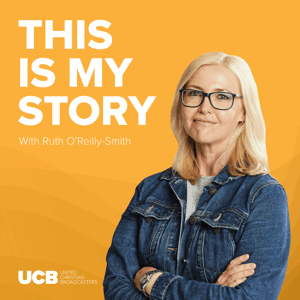
0 Listeners
0 Listeners

4,508 Listeners
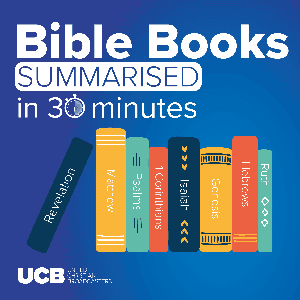
37 Listeners

18,831 Listeners
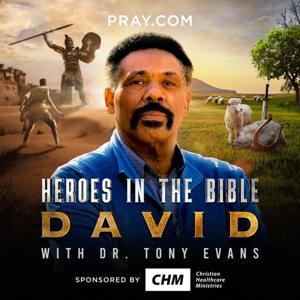
646 Listeners

8,452 Listeners
0 Listeners
2 Listeners
0 Listeners
3 Listeners
1 Listeners
0 Listeners
3 Listeners
0 Listeners
3 Listeners
0 Listeners
0 Listeners

0 Listeners
0 Listeners