
Sign up to save your podcasts
Or

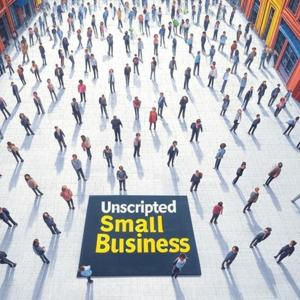


You can't scale chaos. Mitchell Wilson, founder of Coachbirds, coaches tradies and local service business owners, and he tells Jeremy Rivera what happens when a business grows without systems: the owner ends up with a busy job with overheads. His fix starts with the boring stuff, done consistently, and knowing your numbers.
Mitchell's framework is sales, systems and strategy. He gets the sales process producing the same result time and time again before chasing more leads, builds simple systems as the team grows, then sets the direction. The full episode recap walks through each step, and Mitchell lays out the same order in his BOSS system.
The biggest pitfall he coaches owners out of is the belief that "no one can do it as good as me." Be a leader, not just the best person in the business. Mitchell is opening The Business Nest, a paid group, and offered listeners a free pass - reach him on LinkedIn or at coachbirds.com.
Sponsor disclosure: Oleno, uSERP and ClearLead Digital are paid sponsors of the Unscripted podcast network. Links to them are marked as sponsored.
Unscripted Small Business is hosted by Jeremy Rivera.
Your gut is the wrong guide for rolling out AI to your team. Dr. Gleb Tsipursky, CEO of Disaster Avoidance Experts and author of The Psychology of AI Adoption at Work: From Resistance to Results (Georgetown University Press), tells Jeremy Rivera why owners get excited about AI while their employees get anxious, and how a small business closes that gap. Read the full episode recap.
Gleb is a behavioral scientist who runs an eight-person consulting firm and works mainly across the US, Canada and the UK. He opens with the research he cites on why rollouts stall: MIT found 95% of AI initiatives fail to scale, and Pew found 52% of people are more anxious than excited about AI tools, with only 9% more excited than anxious. Owners tend to sit in that 9%. Their teams usually don't.
Jeremy brings up his conversation with Keith Perhac of SegMetrics about AI adoption in Japan, and Gleb compares the US with other countries. For more owners on what is working, read what real founders are actually doing with AI. Gleb's earlier book, ChatGPT for Leaders and Content Creators, came out in January 2023. The new one is available from Georgetown University Press.
Unscripted Small Business is hosted by Jeremy Rivera.
Pamela Maria De La Luz spent twenty years selling tequila before she got tired of watching big brands cut corners, so she built AgaveLuz, a certified organic tequila made with two ingredients. Her rule for anyone launching a product: "We don't wanna do things right now. We wanna do things right. So everything takes time."
Pamela is from Mexico and has worked in spirits sales for over two decades, in direct contact with the people who buy the bottles. She watched mass producers rush the process with additives, colorants and sweeteners, and decided to make the tequila she remembered. AgaveLuz uses only organic agave and water - no yeast added, open fermentation, agave grown seven to eight years - distilled by Las Americas, a family of organic farmers in Amatitán, Jalisco. Getting certified organic took passing over seventy tests. The full conversation is written up in the episode recap, and you can watch the full episode on YouTube.
Every word on an AgaveLuz label had to clear the Consejo Regulador del Tequila (CRT), the body that certifies tequila in Mexico. Follow the brand on Instagram, find where to buy AgaveLuz, and read more from Pamela on the AgaveLuz blog.
Unscripted Small Business is hosted by Jeremy Rivera - real conversations with founders about what actually works.
Most buyers decide on emotion and justify it afterward. Rich M. Smith has been chief marketing officer of seven companies over 25 years, and at Rich M. Smith Growth Studio he helps founder-led businesses grow in a predictable, systematic way instead of by luck.
On this episode of Unscripted Small Business, Rich and Jeremy Rivera get into why behavioral science explains so much of marketing, how to turn "web traffic is up" into a number a CEO cares about, what Rich learned as CMO of AIG Bank during the 2008 financial crisis, and why AI engines now work as your outsourced customer service and your outsourced sales team.
Read the full recap: Growth Is Not an Accident. More from Rich on his blog. He also hosts The Revenue Science Podcast.
Unscripted Small Business is hosted by Jeremy Rivera. More episodes at unscriptedsmallbusiness.com.
Neil Thubron is an executive coach, the creator of the Whiteboard Value Selling methodology and the founder of XNRG. His last corporate role had 450 salespeople and a 1.6 billion target. Today he works with founders whose business can't run without them, and with sales teams stuck in product-led pitches.
Read the full write-up on the Unscripted Small Business recap of this episode.
Neil borrows from Aristotle. Logos value is the commercial benefit, the part that goes into the business case and the effect on EBITDA. Pathos value is how you make someone feel during the process and after they buy. Ethos is trust in you and your brand. B2B deals need all three; B2C purchases often skip the business case entirely.
Jeremy asks whether being honest with a client and getting paid are in conflict. Neil's answer: "If you're there to help someone and your genuine intent is to do that, then you will be successful." He wants money-motivated salespeople, but you can't sell something to someone who doesn't need it more than once.
Neil's advice to owners under pressure is to ask where AI can take over tasks so the team can focus on higher value work. Only 7% of communication is the words, and "AI can do 7%." The tone and the physiology are still yours.
Connect with Neil at neilthubron.com or on LinkedIn.
Melissa Denning had zero experience inventing anything when she found a gap in the market while breastfeeding her third child. Melissa Denning is the founder of Mom Aid, a luxury postpartum and baby care line, and she took the Boob Aid Nursing Pads from an idea to a patent. Read the full episode recap.
She tells Jeremy Rivera how she went from searching the internet for hours to a patent attorney, a university inventors program, a design firm in California and a manufacturer quote that jumped from $50,000 to $120,000. So she launched the Boob Aid Nipple Ointment and Tiny Tush Diaper Cream first, to build the brand while the pads wait on funding. She also shares how she makes animated product ads with AI, why she stays bootstrapped, and why her end game is to grow to help people, not to sell.
Melissa's open question is pricing strategy. Jeremy will bring it to an upcoming guest. Find Mom Aid at momaid.com, on Amazon and Walmart.com, and on Instagram, where Melissa answers every DM herself. Unscripted Small Business is hosted by Jeremy Rivera. More episodes at unscriptedsmallbusiness.com.
Put AI on top of a broken process and all you get is the same problem, faster. David Levine of I am Your Virtual Professional ran a brick-and-mortar candy and chocolate store for almost 20 years. Now he helps small businesses get found and keep customers coming back. Read the full episode recap.
He brings Jeremy Rivera three free fixes for getting found and a pen-and-paper habit that writes your best website content for you. David wrote Old School Service, New School Tools, and his case is that customer service is the old way of thinking. Customer experience starts at the first touch point, and the time AI saves you should go back into that experience. He keeps the tools that go with the book on his customer experience and AI tools page.
David's episode resources live on his podcast page. Unscripted Small Business is hosted by Jeremy Rivera. More episodes at unscriptedsmallbusiness.com.
Your business is an airplane, and most owners only watch the one or two parts that are on fire. Bruce Ashford of The Ashford Agency spent 19 years in the nonprofit sector, 14 of them in the C-suite, and now runs a certified Small Business Flight Plan practice for founder-led businesses. He walks Jeremy Rivera through all six parts: leadership is the cockpit, marketing and sales are the two engines, products are the wings, overhead and operations is the body, and cash flow is the fuel. Read the full episode recap.
Bruce explains why the quickest wins are usually meetings and messaging: a tight all-staff meeting, a leadership meeting about roadblocks and owners, and a 15-minute standup. First impressions may be visual, he says, but commitments to act are message based. That is the work of his Million Dollar Message intensive.
He answers a cash flow question left by Malith Gamage from a past episode: Profit First, lock down the home front before you invest, and give the business three critical economic objectives with a deadline and a reason. Then voice of customer data, and the throwaway client comment he turned into the centrepiece of his marketing.
They cover seasonality, why pain is the pathway to progress, and the legal basics every owner skips (Jeremy brings up his talk with Phil Crowley). Bruce closes on the trust economy: you now have to win the trust of the humans who buy from you and the AI models that recommend you, through three lanes that run from schema and NAP consistency to reviews, pricing transparency, case studies, about pages and author pages.
Bruce was first on the show in an episode on why your customer is the hero (his own write-up). Subscribe to his biweekly Executive Intelligence Files at theashfordagency.com or find him on LinkedIn. More from the network: Unscripted Small Business - Jeremy Rivera.
Peter S. Bergeron closed his family's business in 2020, a year after his father died, then went back for a doctorate at 50 to find out what went wrong. The author of The Trapped Operator joins Jeremy Rivera to name the second job every owner gets without warning: the business of running the business.
Peter explains why the best leaders are the ones who end up trapped, why most owners were never business trained, and how the accidental business owner goes from swinging a hammer to arguing with the bank about ratios. Read the full episode recap, or Peter's own take on why doing everything right can still feel like survival mode.
He keeps the finance plain: your lender wants your debt service ratio, your line of credit is your receivables and inventory, and no single customer should be more than thirty or forty percent of revenue. His six-question snapshot often shows owners who feel like they are in survival mode are actually doing fine. The simplest test is a tally sheet by the desk: count the questions you answer that belong to someone else's hat.
They get into fire prevention versus firefighting, why the exit plan belongs at the start (the same logic as writing the operating agreement before you need it), and why a second location is really a second company. Jeremy brings up Brandon Moon's end-of-business consulting and Peter answers a guest from an earlier episode on growth stages.
On AI, Peter sees a force multiplier for repetitive work, not a replacement for the thinking. His parting message: you are not alone, even when the business makes it feel that way.
Find Peter's diagnostics and playbooks at 12fatalissues.com and his IP library at wrestlingagainsttime.com. More from the network: Unscripted Small Business - Jeremy Rivera.
Tom Malesic started EZMarketing thirty-five seconds after quitting a boss who refused a client he disagreed with. Twenty-nine years later he runs the opposite kind of company. This one is about culture, client concentration and when to fire a customer. Read the full written recap.
EZMarketing deliberately runs a large number of small customers rather than a handful of large ones. It is less efficient, and it is the reason the company survives losing anybody. His test is blunt: if your top five clients all left tomorrow, would anyone lose their job? For most small businesses the honest answer is yes, which means those five clients are quietly running the company.
A customer once made an employee cry. That customer is no longer a customer. The revenue is replaceable and the employee is not. He treats it as coaching first: customers get told when their behaviour is a problem, the same as staff do, and most of them adjust.
The team is fully remote across three countries, run on an EOS cadence. Weekly rhythm, clear numbers, and accountability that does not require anyone to be watched.
Each client gets its own trained agent, built on Hats.ai across roughly seventy models. The point is not speed. The agent holds the client’s voice and history more completely than any one account manager, and it does not leave. He also flags the session-recording and accessibility demand letters now landing in small-business inboxes.
EZMarketing is in Lancaster, Pennsylvania, and offers free website audits.
From the publisher's feed