
Sign up to save your podcasts
Or

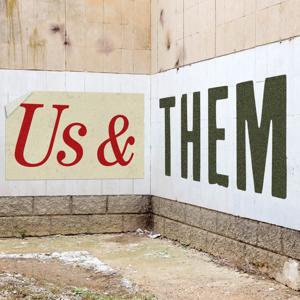


More than 12 percent of Americans, or 42 million people, need help getting enough food to eat. In West Virginia, that number is about 18 percent. That help comes from a federal program called SNAP - the Supplemental Nutrition Assistance Program, formerly called food stamps. The Mountain State is one of the top recipients of SNAP benefits - nearly 45 percent are older adults or families with someone who’s disabled while nearly 60 percent are families with children. The government’s food support program actually has its roots in McDowell County, West Virginia where it began as a pilot project in the 1960s. Since then the program has reduced poverty and hunger across the nation. Today, SNAP gets caught up in political debates and election cycles. On this Us & Them episode, host Trey Kay talks with three people, a retiree, a mom and a lawmaker who all say that nutritional support has made a difference in their lives.
West VIrginia’s state prisons and jails are overcrowded and understaffed. Just over half of those who are incarcerated have not yet been found guilty of a crime, they’re in a cell because they can’t make their bail. Many of those people are poor and a disproportionate number are Black. On this episode of Us & Them, host Trey Kay takes a look at what contributes to the racial disparities in our justice system. Black people make up about 3.5% of West Virginia’s population but 12% of the state’s incarcerated population. Why are people of color overrepresented in the criminal justice system? Join Kay for a visit to arraignment court where the choices made early on play a critical role in how a case proceeds. Bail options are an important point where racial disparities can be on display and when a person’s freedom depends on their access to cash or property, some say Black West Virginians are disproportionately harmed.
Larry Bellorín began making his living as a singer, multi-instrumental musician and music teacher when he was a teenager in Venezuela. His career was interrupted abruptly in 2013 when Venezuela’s state-run economy crashed and socialist President Nicholas Maduro cracked down on opponents and folks like Larry, who refused to choose sides. He and his family fled to Raleigh, North Carolina and have added their names to a huge backlog of asylum applicants. Larry worked construction and thought his musical career was behind him until he met Joe Troop, a GRAMMY-nominated musician and North Carolina native who introduced him to the folk music and traditions of Appalachia, which Larry found eerily similar to the joropo he played in Venezuela. Their duo, Larry & Joe, is the realization of a dream for both musicians. It’s also a reminder for Larry of what - and who - he had to leave behind. Us & Them host Trey Kay tells the story of Bellorín’s musical beginnings, his “magical” kinship and duo with Troop and the song he can’t yet bring himself to sing.
Across the nation, students of color and those from poor families are more likely to be suspended from school and data from West Virginia reflects this national trend. In fact, research shows when a teacher thinks a student of color is misbehaving on purpose, they’re more likely to get suspended or expelled. Missing just two days of school each month makes a student less likely to graduate which has a big impact on their prospects for the future. On this episode of Us & Them, host Trey Kay looks at discipline disparities in our schools - a new West Virginia law designed to get tough on misbehaving students - and the way one alternative Kanawha County school gives students the support to recover.
Phillip Bowen grew up playing the fiddle. The 38-year-old learned classical violin as well as how to improvise on the fiddle, combining musical styles and genres. Now, the West Virginia native has turned to song writing, becoming a phenomenon on social media. Bowen releases his first album soon, with a wide range of offerings. Us & Them host Trey Kay talks with Bowen about his music and the songs that focus on memories of things past as well as the Mountain State reality of today. Bowen sings about his small hometown of Montgomery along the Kanawha River; another song mourns the loss of family members, while yet another may just steal the show. “Vampire in Appalachia” offers a heartbreaking look at the ways his native state has become overshadowed by black lung illness from the coal industry and an opioid crisis that continues to take lives.
Us & Them was recently honored with a first place award for best documentary from Virginias Associated Press Broadcasters. Our episode called “The Gun Divide” looks at gun ownership in America, and the way our social, political and racial divisions fuel gun purchases. 2020 showed a historic rise in gun violence. Guns killed a record 45,000 people, the majority of them by suicide. Us & Them host Trey Kay explores the foundations of the Second Amendment and the cultural and historical beliefs and myths that contribute to our very American divide over guns. Gun ownership is at record levels across the country with 40 percent of adults saying they have at least one firearm in their home. But what rights does the Second Amendment give us? We’re sharing this award-winning episode with you again, from our archives.
Children are the future - it’s a common refrain. However, in isolated, rural communities across America, there are people traveling many miles from their home to deliver babies. Since 2010, nearly 150 rural hospitals have shut down - a victim of the financial stresses facing U.S. health care. One survey finds that about 40 percent of rural hospitals lose money offering obstetric care, since it costs $18,000 on average to have a baby. So, when small hospitals look at cost-cutting measures, delivery and obstetrics units are often casualties. Just under 10 percent of rural hospitals have shut down their delivery services. For this Us & Them episode, host Trey Kay hears from families facing that change, and how it’s affecting prospects for their rural cities and towns.
West Virginia often ends up at the bottom of national health reports — the rates of obesity and diabetes, conditions that can lead to cardiac and kidney disease. The region’s legacy of active, manual mining work has given way to a more sedentary lifestyle that relies on processed food to feed families quickly and cheaply. More than a decade ago, Huntington, WV made headlines as the “fattest city in the nation.” That spotlight led to some changes with doctors and dieticians focusing more on health and nutrition. On the new episode of Us & Them, host Trey Kay looks at continuing efforts around the Mountain State to teach new dietary habits and train the next generation a healthy approach to cooking and eating. In some counties without close access to full-service grocery stores, new farmer’s markets have sprung up and health clinics offer produce boxes with fresh fruits and vegetables.
Homelessness has been on the rise since 2016 and the pandemic only exacerbated an acute shortage of resources to help people living on the streets. Now, many communities are struggling to provide support as some homeless people turn away from emergency shelters and remain in outdoor encampments. In Charleston, West Virginia, the city’s opioid response program also now focuses on homelessness. Outdoor encampments have been a focus at the state legislature as debate continues over how best to help people living on the street. At the same time, some people say they’re more afraid of people living on the street than in the past. Providing sustained care for homeless people continues to elude and divide even well-meaning and determined communities.
America’s prison system incarcerates millions of people, but at least 95% of all state prisoners are released after they serve their sentence. Some struggle to navigate that transition successfully. On this Us & Them episode, host Trey Kay hears about the challenges of reentry. How do we want men and women coming back after prison? How do victim advocates feel about programs designed to help formerly incarcerated people succeed on the outside? Some suggest an important starting point is to recognize that many of the men and women serving time are victims themselves. Recognizing that trauma may be a powerful step to help people make a new life after they serve their time.
From the publisher's feed
We tell stories from the fault lines that separate Americans. Peabody Award-winning public radio producer Trey Kay listens to people on both sides of the divide.

90,968 Listeners

43,801 Listeners

38,014 Listeners

43,324 Listeners

26,806 Listeners

9,189 Listeners

4,018 Listeners

8,431 Listeners

1,248 Listeners

553 Listeners

7,672 Listeners
3,970 Listeners
14,658 Listeners
20,481 Listeners

16,352 Listeners