
Sign up to save your podcasts
Or

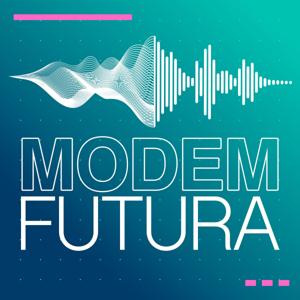

Something unexpected is happening in the world of software: it's becoming personal again. In this episode of Modem Futura, Sean and Andrew explore the rapidly expanding phenomenon of vibe coding—the practice of describing what you want in plain language and letting a generative AI build it for you. What starts as a practical conversation about creating web apps and custom tools quickly opens into something much richer: a reflection on what it means when anyone, regardless of technical background, can conjure software into existence with a sentence or two. The hosts trace a surprising thread from the Commodore 64 and early BASIC programming of the late 1970s and 80s to today's AI-powered coding environments, finding echoes of that original thrill—the moment you realized you could make a machine do something it hadn't done before. Sean walks through real experiments he ran using Claude, including a horizon-scanning web app and a futures-oriented uncertainty matrix tool, both created from single natural-language prompts in seconds. But the conversation doesn't shy away from the tensions. What happens when code is generated faster than anyone can understand it? What are the security implications of prompt injection, inherited power, and AI agents running on your personal machine? And where is the line between liberating personal tool-making and professional-grade software that people's lives depend on? This episode is part celebration, part caution, and entirely an invitation to think about what software becomes when it's shaped not by engineers alone, but by anyone with a question and a good description of what they need.
Get the book: AI and the Art of Being Human (Pocket edition) [Amazon US]
-----
Modem Futura is a production of the Future of Being Human initiative at Arizona State University. Be sure to subscribe on Apple Podcasts, Spotify, or wherever you listen to your favorite shows. To learn more about the Future of Being Human initiative and all of our other projects visit - https://futureofbeinghuman.asu.edu
Subscribe to our YouTube Channel: @ModemFutura
Follow us on Instagram: @ModemFutura
Host Bios:
Sean M. Leahy, PhD - ASU Bio
Sean is an internationally recognized technologist, futurist, and educator innovating humanistic approaches to emerging technology through a Futures Studies approach. He is the Executive Director for the Future of Being Human Initiative and Research Scientist for the School for the Future of Innovation in Society and Senior Global Futures Scholar with the Julie Ann Wrigley Global Futures Laboratory at Arizona State University.
Andrew Maynard, PhD - ASU Bio
Andrew is a scientist, author, thought leader, and Professor of Advanced Technology Transitions in the ASU School for the Future of Innovation in Society. He is the founder of the ASU Future of Being Human initiative, Director of the ASU Risk Innovation Nexus, and was previously Associate Dean in the ASU College of Global Futures.
-----
 View all episodes
 By Sean Leahy, Andrew Maynard
5
2929 ratings
Something unexpected is happening in the world of software: it's becoming personal again. In this episode of Modem Futura, Sean and Andrew explore the rapidly expanding phenomenon of vibe coding—the practice of describing what you want in plain language and letting a generative AI build it for you. What starts as a practical conversation about creating web apps and custom tools quickly opens into something much richer: a reflection on what it means when anyone, regardless of technical background, can conjure software into existence with a sentence or two. The hosts trace a surprising thread from the Commodore 64 and early BASIC programming of the late 1970s and 80s to today's AI-powered coding environments, finding echoes of that original thrill—the moment you realized you could make a machine do something it hadn't done before. Sean walks through real experiments he ran using Claude, including a horizon-scanning web app and a futures-oriented uncertainty matrix tool, both created from single natural-language prompts in seconds. But the conversation doesn't shy away from the tensions. What happens when code is generated faster than anyone can understand it? What are the security implications of prompt injection, inherited power, and AI agents running on your personal machine? And where is the line between liberating personal tool-making and professional-grade software that people's lives depend on? This episode is part celebration, part caution, and entirely an invitation to think about what software becomes when it's shaped not by engineers alone, but by anyone with a question and a good description of what they need.
Get the book: AI and the Art of Being Human (Pocket edition) [Amazon US]
-----
Modem Futura is a production of the Future of Being Human initiative at Arizona State University. Be sure to subscribe on Apple Podcasts, Spotify, or wherever you listen to your favorite shows. To learn more about the Future of Being Human initiative and all of our other projects visit - https://futureofbeinghuman.asu.edu
Subscribe to our YouTube Channel: @ModemFutura
Follow us on Instagram: @ModemFutura
Host Bios:
Sean M. Leahy, PhD - ASU Bio
Sean is an internationally recognized technologist, futurist, and educator innovating humanistic approaches to emerging technology through a Futures Studies approach. He is the Executive Director for the Future of Being Human Initiative and Research Scientist for the School for the Future of Innovation in Society and Senior Global Futures Scholar with the Julie Ann Wrigley Global Futures Laboratory at Arizona State University.
Andrew Maynard, PhD - ASU Bio
Andrew is a scientist, author, thought leader, and Professor of Advanced Technology Transitions in the ASU School for the Future of Innovation in Society. He is the founder of the ASU Future of Being Human initiative, Director of the ASU Risk Innovation Nexus, and was previously Associate Dean in the ASU College of Global Futures.
-----

43,628 Listeners
108 Listeners

189 Listeners

112,263 Listeners

56,657 Listeners
462 Listeners
5,561 Listeners

29,378 Listeners

16,331 Listeners

6,212 Listeners