
Sign up to save your podcasts
Or

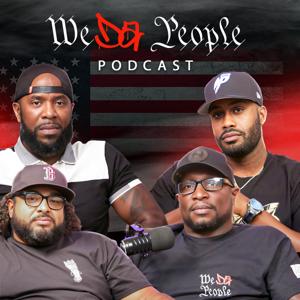


How much food can you really grow in your backyard, and could your neighbors be the key to becoming more self-reliant? On this episode of We Da People, Nature Boy of Seals Family Farm challenges the idea that preparedness means doing everything alone.
After serving two tours in Iraq as a combat medic, Nature Boy found a new direction through gardening. What began as a personal journey in 2010 became an educational farm in Riverdale, Georgia, where he learned that feeding a city takes more than one three-acre farm. His answer: teach people how to grow their own food and build stronger local food systems.
We dig into homesteading for beginners, urban farming without land, and why a simple 10-by-10 garden can be more useful than an ambitious plan you never start. Nature Boy breaks down the Roots Initiative, its community-supported garden installations, and how Collectively Sustainable connects growers, educators, and neighbors.
The conversation goes beyond backyard gardening into community preparedness, teaching kids practical skills, food preservation, and Farm Fresh 24/7, a digital marketplace designed to connect local growers and makers.
In this episode we cover:
A father drove past his daughters’ elementary school and witnessed an unfolding nightmare. When gunfire erupted at Silver Rail Elementary in Bend, Oregon, he intervened. But what happens when an armed civilian makes the decision to enter an active shooter situation?
In this episode of We Da People, Shelton, Colin, and Fred examine the Oregon school shooting, the courage of an armed parent, and a teacher who fought to protect her students. They discuss how personal stakes can change the decision to act, and why a person carrying a gun may still face dangerous confusion when police arrive.
The conversation shifts into the bigger gun rights and school safety debate: Should teachers be armed? Would secure firearm storage and training help? Should schools employ more armed security officers? The crew explores the risks of civilian intervention and the legal consequences that may follow.
They also compare everyday carry vs. truck guns, discuss firearm storage around children, and debate accountability, prevention, and punishment for mass violence. At the center of it all is a difficult question: How do we protect children without pretending there are simple answers?
In this episode we cover:
Black Rambo has millions of followers, massive reach, and one of the most recognizable personalities in firearms content. So why does he still feel like parts of the gun industry refuse to give him his respect?
In this episode of We Da People, Black Rambo sits down with Shelton, Fred, and Colin of Gunplay TV for a raw conversation about gun industry gatekeeping, creator hate, authenticity, brand relationships, and what it really takes to build an audience without changing who you are.
Rambo responds directly to claims that he is “a character,” talks about being criticized for his energy and style, and explains why he believes he helped bring new people into the firearms community. He also opens up about his Marine Corps background, his first viral gun video, his early SHOT Show experience, working with firearm brands, and learning how to turn attention into opportunity.
The conversation also gets into the business behind being a gun content creator. Millions of views do not always mean millions of dollars. Rambo breaks down product sales, monetization challenges, sponsorships, and why creators have to find multiple ways to make money.
In this episode we cover:
Key takeaway: You do not have to fit the industry mold to build influence.
What does it actually mean to be a capable man, and can you be dangerous without being reckless? In this episode of We Da People, Dr. Sam joins the crew for a direct conversation about masculinity and emotional control, martial arts mindset, confidence, ego, and what happens when pressure exposes who you really are.
The discussion starts with the difference between looking tough and actually having a usable skill set. The crew gets into why real capability often comes with restraint, why confidence doesn’t have to be loud, and why emotional intelligence for men matters even more when firearms, self-defense, family, and responsibility enter the picture.
Then the conversation shifts to social media. Dr. Sam breaks down how he handles internet trolls without letting them pull him off center, while the crew discusses rage bait, online disrespect, groupthink, and the pressure to prove yourself to strangers. They also challenge the gap between sport martial arts and real-world self-defense, including why training has to match the environment you may actually face.
In this episode we cover:
Want to start hunting but feel like you need thousands of dollars in gear before you can even step into the woods? This episode of We Da People breaks down what beginner hunters actually need, what they can skip, and how to get started without overcomplicating it.
Eric Morris joins the crew to walk through how to start hunting, from hunter education and getting a hunting license to choosing public land hunting versus private land hunting. He explains why new hunters should focus less on expensive equipment and more on fundamentals, experience, safety, and understanding the animal they plan to hunt.
The conversation also gets into beginner hunting gear, choosing a shotgun for hunting, hog hunting, squirrel hunting, trail cameras, blaze orange requirements, scouting, scent control, wind direction, and what you should realistically carry into the woods.
One of the biggest themes of this episode is simple: hunting does not have to be expensive. You don't necessarily need the newest rifle, premium camouflage, a lifted truck, or a backpack full of equipment to get started.
The Lindsay Clancy mistrial has become bigger than one courtroom. In this episode of We Da People, the crew debates the case, the lone holdout juror, postpartum psychosis, media framing, and a much harder question: does justice look different when money, resources, race, and public sympathy enter the picture?
We break down the Lindsay Clancy trial from the perspective of criminal responsibility, not whether the deaths occurred. The conversation focuses on the insanity defense, the role of mental health records, access to expert witnesses, and why one juror refusing to join the majority became a national story.
The crew also compares the attention around Clancy with the case of Latarsha Sanders, whose case raised its own questions about psychiatric evidence and equal treatment inside the justice system. From there, the discussion expands into media bias, the court of public opinion, online activism, and how headlines can shape what people believe before they ever examine the underlying facts.
In this episode we cover:
• Lindsay Clancy trial and mistrial
Key takeaway: the crew argues that morality, evidence, and legal standards should matter more than identity, politics, or online consensus.
A 72-hour emergency kit is a great starting point, but a long-term blackout changes everything. Water pressure can disappear, refrigeration becomes a problem, communication gets harder, fuel may become difficult to access, sanitation starts breaking down, and even basic routines become complicated.
We break down practical blackout preparedness, power outage survival, two-week emergency preparedness, and what a realistic grid-down survival plan should prioritize. The crew discusses water collection and purification, portable power stations, solar generators, emergency radios, Starlink, food storage, sanitation, neighborhood communication, cash, emergency lighting, go bags, and why actually testing your survival gear matters.
In this episode we cover:
How many guns are too many—and when does a firearms hobby start costing you more than money? In this episode of We Da People, the crew gets into gun addiction, gun consumerism, relationship problems, and the line between enjoying the culture and letting it control your life.
The conversation starts with a simple question: can buying guns, optics, gear, training, and range time become unhealthy? The crew breaks down what happens when firearm spending starts affecting bills, savings, family time, friendships, or your relationship. They also debate whether you should have to “ask permission” to go to the range, why communication matters, and how a partner may notice an unhealthy pattern before you do.
From gun collecting and firearms and finances to toxic relationships, accountability, personal growth, and building something bigger than yourself, this episode goes well beyond gear. The message is simple: responsible gun ownership also means being responsible with your money, your time, and the people around you.
In this episode we cover:
Key takeaway: If the hobby is damaging your finances, family, relationships, or day-to-day life, it is time to take inventory.
Suppressors are changing fast, and the recent NFA developments could reshape how American gun owners buy, transfer, and think about them. In this episode of We Da People, we sit down with Evan from Exigent Defense to break down what’s happening with suppressor regulations, 4473 transfers, and the technology pushing modern suppressors forward.
We get deep into 3D-printed suppressors, additive manufacturing, Inconel vs titanium suppressors, reduced back pressure designs, direct thread vs QD suppressors, flash suppression, heat management, barrel length, and why buying the “do everything” suppressor may not actually be the smartest move.
The conversation also moves beyond equipment. We discuss representation in the firearms industry, how social media algorithms shape perceptions of gun culture, why the 2A community needs room for different types of gun owners, and why more people need to move from simply consuming firearms products to designing, manufacturing, and building businesses of their own.
In this episode we cover:
Key takeaway: There is no perfect suppressor for every rifle — understand your application before buying.
Special thanks to SDI / Sonoran Desert Institute for supporting this episode: https://sdi.edu/we-da-people/
Life can change fast. Money dries up, relationships shift, careers end, identities get stripped away, and suddenly the version of yourself you depended on no longer works.
In this episode of We Da People, Shelton and the crew sit down with retired Special Forces veterans Renford Ligon and Quojuante Moreland for a raw conversation about men navigating life transitions. They unpack what happens when military identity gives way to civilian life, when financial success disappears, when marriage or relationships change, and when pride makes it harder to ask for help.
The conversation gets into military transition, veteran life after service, male friendship, brotherhood, ego and pride, financial setbacks, marriage, divorce, mental resilience, and rebuilding after failure. The guests also explain why leaving the military can feel isolating after years of living inside a high-performance team environment, and why the right circle of men can make the difference when life starts closing in.
In this episode we cover:
From the publisher's feed
We Da People is more than a podcast — it's a platform for raw, unapologetic conversations at the intersection of culture, firearms, freedom, and real life. Hosted by everyday Americans with…
12,852 Listeners

14,177 Listeners

1,379 Listeners

10,935 Listeners
7,411 Listeners
10,514 Listeners

7,047 Listeners
3,123 Listeners
712 Listeners
1,837 Listeners
581 Listeners

820 Listeners
84 Listeners

1,925 Listeners

470 Listeners