
Sign up to save your podcasts
Or


Send us Fan Mail
A county doesn’t feel “real” until paperwork can beat chaos, and Ford County’s origin story proves it. We head back to April 5, 1873, when Kansas Governor Thomas Osborne signs the proclamation that creates Ford County and forces Dodge City to start acting like a place with a future, not just a boomtown with a rail line and a trail of grudges.
We walk through why that signature matters: the Atchison, Topeka and Santa Fe Railroad has pushed west, money is moving in freight and buffalo hides, and businesses are rising on land that settlers can’t even prove they own. Without deeds, courts, or a way to record property, the frontier runs on fear and force. That’s the backdrop for Osborne’s calculated picks: Charles Wrath as the commercial muscle, J.G. MacDonald and Daniel Wolfe to build civic structure, and Herman J. Fringer to make the written record that turns a claim into a title.
From Fringer’s drugstore ledgers to the first convening of the provisional government on April 16, 1873, we connect the dots between Western history and practical governance: land records, local courts, taxes, roads, and the first steps toward law enforcement. Along the way, we also examine how historical memory can elevate louder names while quieter builders like MacDonald still shape the foundation.
If you care about Dodge City history, Kansas history, the Santa Fe Railroad, or how the American frontier became a governed place, this story delivers the turning point. Subscribe, share the show with a history-loving friend, and leave a review to help more people find it. What part of “order” do you think mattered most: courts, titles, or the people chosen to enforce them?
Support the show
If you'd like to buy one or more of our fully illustrated dime novel publications, you can click the link I've included.
 View all episodes
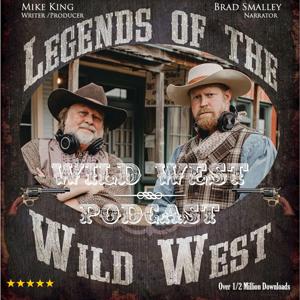
 By Michael King/Brad Smalley

4.5
125125 ratings
Send us Fan Mail
A county doesn’t feel “real” until paperwork can beat chaos, and Ford County’s origin story proves it. We head back to April 5, 1873, when Kansas Governor Thomas Osborne signs the proclamation that creates Ford County and forces Dodge City to start acting like a place with a future, not just a boomtown with a rail line and a trail of grudges.
We walk through why that signature matters: the Atchison, Topeka and Santa Fe Railroad has pushed west, money is moving in freight and buffalo hides, and businesses are rising on land that settlers can’t even prove they own. Without deeds, courts, or a way to record property, the frontier runs on fear and force. That’s the backdrop for Osborne’s calculated picks: Charles Wrath as the commercial muscle, J.G. MacDonald and Daniel Wolfe to build civic structure, and Herman J. Fringer to make the written record that turns a claim into a title.
From Fringer’s drugstore ledgers to the first convening of the provisional government on April 16, 1873, we connect the dots between Western history and practical governance: land records, local courts, taxes, roads, and the first steps toward law enforcement. Along the way, we also examine how historical memory can elevate louder names while quieter builders like MacDonald still shape the foundation.
If you care about Dodge City history, Kansas history, the Santa Fe Railroad, or how the American frontier became a governed place, this story delivers the turning point. Subscribe, share the show with a history-loving friend, and leave a review to help more people find it. What part of “order” do you think mattered most: courts, titles, or the people chosen to enforce them?
Support the show
If you'd like to buy one or more of our fully illustrated dime novel publications, you can click the link I've included.

44,968 Listeners
4,720 Listeners

1,789 Listeners

1,680 Listeners

2,781 Listeners

1,508 Listeners
4,030 Listeners

6,230 Listeners
19,280 Listeners
3,650 Listeners

19,168 Listeners
2,944 Listeners
793 Listeners
925 Listeners

1,591 Listeners