
Sign up to save your podcasts
Or

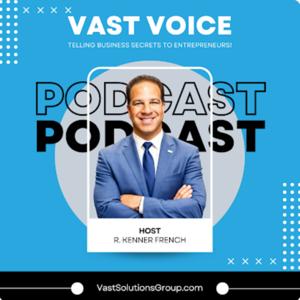


In this episode, R. Kenner French of VastSolutionsGroup.com
reveals how business owners — especially in the real estate and entrepreneurial space — can literally get paid by the government for using artificial intelligence in their business. He explains how combining AI and Research & Development (R&D) tax credits can turn innovation into real dollars, often money business owners didn’t even know they were entitled to. 💰
Kenner breaks down the fundamentals of R&D — what qualifies as “research,” what counts as “development,” and how simply experimenting with tools like ChatGPT, Claude, or Gemini to improve business systems may already qualify for federal tax credits. He highlights the four key criteria the government looks for: innovation that’s new or better, technical uncertainty, trial and error, and work involving science or technology.
He also shares real examples from VastSolutionsGroup.com, including how they built automated workflows , developed an AI phone system (“Einstein”), and launched their Vast Vault app and community — all driven by artificial intelligence. These innovations didn’t just save time and scale their business nationwide; they also earned substantial tax credits. 🚀
Listeners will learn the difference between deductions and R&D credits, the 3-year lookback rule for recovering missed credits, and how VastSolutionsGroup.com program AI Credit Max automates the entire process. Whether you’re a real estate investor, property manager, or solopreneur, this episode shows how AI and R&D can create both efficiency and profit — and why now is the time to take advantage. 💡
Takeaways
• You're going to get paid for watching this presentation.
• If you're doing anything technical to advantage your company, you're going to get paid for this.
• You're probably leaving money on the table if you're not utilizing AI.
• AI can help you make quicker decisions and gain a competitive advantage.
• R&D tax credits can provide significant financial benefits to businesses.
• You can automate processes to improve efficiency and reduce costs.
• It's essential to consult with a tax professional about R&D tax credits.
• You can go back three years to claim R&D tax credits.
• AI can help you grow your business and free up time.
• Embracing AI is crucial for staying competitive in today's market.
Sound Bites
• You're probably leaving money on the table.
• It's free money, right?
• It's not nearly as scary as you might think.
Listen & Subscribe for More:
🎧 The Vast Voice Podcast → Available on Spotify & Apple Podcasts
▶️ Subscribe on YouTube (@VastSolutionsGroup.com) for expert insights 🚀
📚 Don’t miss Modern Millions by R. Kenner French – the #1 BEST SELLING Amazon book (Entrepreneurship category) 👉 ModernMillions.ai
📚 Amazon Top Selling Author→ https://www.amazon.com/dp/B0FHBS32LG
Got Questions? Reach Us Anytime:
🌐 VastSolutionsGroup.com
📞 415-212-8189
🕗 Monday–Thursday | 8:00 AM – 5:00 PM (Pacific)
🙏 Thank you for listening & supporting!
In this episode, R. Kenner French sits down with Brad Englert, author of Spheres of Influence, to talk about the one thing that never goes out of style in business — authentic relationships. Brad shares wisdom from his 22 years at Accenture, where he learned that success isn’t just about strategy or systems — it’s about people. His simple yet powerful advice? “Get out of your office and tell people you give a damn.” 💬
Brad explains how genuine connection — not quick transactions — builds trust and long-term growth. He reveals that many leaders spend too much time behind their desks trying to guess what customers want, instead of simply asking them. By getting out there, listening, and showing care, business owners can transform relationships into partnerships and clients into advocates. 🤝
Drawing from his experience as Chief Information Officer at the University of Texas, Brad shares how he turned a reactive “firefighting” culture into one of transparency, consistency, and proactive service. He tells the story of sending a team member to apologize to a frustrated client — a move that later turned that same critic into one of their biggest supporters. It’s a reminder that leadership isn’t about titles, but about empathy and accountability. 💡
Brad also unpacks the core idea of his book, Spheres of Influence, which explores the networks that shape success — from colleagues and clients to vendors and partners. He illustrates how treating vendors as strategic allies can unlock opportunities, innovation, and mutual success. In business, as in life, influence isn’t about power — it’s about connection. 🌐
Whether you’re a small business owner, entrepreneur, or leader, this conversation is a powerful reminder that the greatest advantage you can build isn’t found in marketing budgets or complex systems — it’s found in trust, consistency, and genuine human connection.
Key Takeaways
• Get out and connect. Success happens when you leave your office and build genuine relationships.
• Client retention is gold. It’s cheaper — and smarter — to nurture existing clients than chase new ones.
• Lead with empathy. Transparency and trust turn critics into advocates.
• Partnerships create influence. Treat vendors and customers as strategic collaborators.
• Blueprint before execution. Plan your vision clearly before building or marketing anything.
Soundbites
• You can’t build influence from behind a desk — get out and tell people you care.
• Eighty to ninety percent of Accenture’s clients are repeat customers. That’s not luck, it’s trust.
• Leadership isn’t about heroics — it’s about consistency and care.
• Influence grows when everyone wins — clients, teams, and partners.
• Before you build the house, draw the blueprint. Before you lead, understand people.
Listen & Subscribe for More:
🎧 The Vast Voice Podcast → Available on Spotify & Apple Podcasts
▶️ Subscribe on YouTube (@VastSolutionsGroup.com) for expert insights 🚀
📚 Don’t miss Modern Millions by R. Kenner French – the #1 BEST SELLING Amazon book (Entrepreneurship category) 👉 ModernMillions.ai
📚 Amazon Top Selling Author→ https://www.amazon.com/dp/B0FHBS32LG
Got Questions? Reach Us Anytime:
🌐 VastSolutionsGroup.com
📞 415-212-8189
🕗 Monday–Thursday | 8:00 AM – 5:00 PM (Pacific)
🙏 Thank you for listening & supporting!
R. Kenner French interviews trader/author Chris Vermeulen about a practical approach to making money in both rising and falling markets. Chris’s core tip is simple: don’t hold assets that are declining, and don’t “over-diversify” across similar stock/bond assets that all sink together in bear phases. After trying nearly every trading style since age 16, he now focuses on a clean, rules-based approach using highly liquid ETFs and taking only a few high-probability trades each year.
His method blends two pillars: technical analysis and sentiment. Technically, he rides established trends (higher highs/higher lows) and treats markets like ocean sets—catch the strong wave, raise stops as momentum fades, then exit and wait. On sentiment, he tracks flows across ~11 asset classes to see where money is moving (risk-on vs risk-off). When both price and flows align, he enters; when they don’t, he steps aside.
The audience “avatar” is typically 45+ investors who prioritize capital protection and steady growth over thrill-seeking. Many are entrepreneurs and real-estate owners. Chris doesn’t manage client money directly; instead, subscribers can mirror his allocations via alerts. The team is distributed (operations, support, education) with daily videos and mentoring to keep members informed without complexity.
Results and resources: since the 2007–08 peak, Chris cites ~14.3% average annual returns with a max drawdown under 6%, compared with far larger declines for buy-and-hold benchmarks during crises. He trades instruments like SPY, QQQ, and TLT, and often sits in interest-bearing cash ~40% of the year when conditions aren’t favorable. He’s written two books—Technical Trading Mastery and Asset Revesting—the latter outlining the “own what’s rising; hold cash when nothing is” approach. Subscriptions run about $2,500/year and include a members area, mobile alerts, daily market videos, and twice-monthly live mentoring.
Takeaways
• Smart investing isn’t just about growing wealth — it’s about protecting what you already have, especially in bear markets.
• Move away from declining positions instead of hoping they recover — that mistake ruins portfolios.
• Spreading money across similar assets like stocks and bonds won’t save you if they crash together.
• Rather than reacting to news, focus on price trends that show where money is really flowing.
• Like surfing — wait for the right wave, ride it strong, then step off when it weakens.
• Tracking where money flows between assets helps spot fear or greed before big moves.
• Own what’s rising, shift to cash when nothing is — earn interest while waiting for better setups.
• Level-headed investors know chasing quick gains usually leads to losses.
• Steady discipline with low drawdowns outperforms risky, high-chase strategies.
• Don’t wait for a crash to act — prepare early to protect and grow your wealth.
Soundbites
• Don’t hold assets that are going down.
• When the tide rises, all boats go up — but you need to know when it’s going out.
• Technical analysis isn’t about predicting; it’s about reacting intelligently.
• It's not about making 50% a year — it’s about never losing 50% in one.
Listen & Subscribe for More:
🎧 The Vast Voice Podcast → Available on Spotify & Apple Podcasts
▶️ Subscribe on YouTube (@VastSolutionsGroup.com) for expert insights 🚀
📚 Don’t miss Modern Millions by R. Kenner French – the #1 BEST SELLING Amazon book (Entrepreneurship category) 👉 ModernMillions.ai
📚 Amazon Top Selling Author→ https://www.amazon.com/dp/B0FHBS32LG
Got Questions? Reach Us Anytime:
🌐 VastSolutionsGroup.com
📞 415-212-8189
🕗 Monday–Thursday | 8:00 AM – 5:00 PM (Pacific)
🙏 Thank you for listening & supporting!
R. Kenner French opens the discussion by introducing David Flores Wilson, a financial advisor and Wall Street veteran, to share insights on finance, retirement, and exit planning for entrepreneurs. Wilson emphasizes the importance of planning an exit strategy early—even years or decades before selling a business. He explains that thinking ahead allows business owners to align their personal, financial, and business goals, leading to a smoother and more profitable exit process.
David shares his personal background, explaining that his passion for financial planning came from witnessing his grandparents lose their business due to poor estate planning and risky real estate decisions. This experience motivated him to help entrepreneurs avoid similar pitfalls by guiding them through key areas such as tax, real estate, and estate planning. He eventually transitioned from investment banking to entrepreneurship, founding his own advisory firm during the pandemic.
The conversation dives into exit planning strategies—how entrepreneurs can prepare their businesses to be more valuable and attractive to potential buyers. David highlights that a crucial step in maximizing value is making the business less dependent on the owner. This involves developing management systems, defining roles, and establishing efficient processes for sales, marketing, and operations. Doing so increases the company’s valuation, whether it’s sold to private equity, a strategic buyer, or through family succession.
Both experts discuss the significance of financial literacy and tax strategy in wealth growth. Wilson outlines five key levers of financial literacy: saving, investing, protecting assets, managing debt, and minimizing taxes. He explains four major areas of tax efficiency—entity structure, tax deferral plans (like 401(k)s or cash balance plans), credits and deductions, and tax optimization across income types. These strategies, he says, can significantly reduce liabilities and boost long-term financial health.
David concludes by stressing the value of building a strong advisory team. As entrepreneurs grow, their financial needs evolve, and sometimes their current advisors may not grow with them. He encourages business owners to continually evaluate and “level up” their professional team—tax experts, financial planners, and legal advisors—to match their increasing sophistication. The discussion ends with French reminding viewers about resources like taxcreditintel.com for R&D tax credits, reinforcing their shared mission of helping entrepreneurs protect and grow wealth through smart planning and proactive strategy.
Takeaways
• Investing in crypto is a popular alternative to real estate.
• Real estate investments can be understood through simple math.
• Many millionaires have built their wealth through real estate.
• Tax strategies are crucial when considering investments.
• Working with CPAs can help maximize tax benefits.
• Timing your investment sales can impact tax liabilities.
• Real estate offers a common recipe for success.
• Understanding leverage is key in real estate investing.
• Cash balances can influence investment decisions.
• The entrepreneurial journey often begins with a desire for independence.
Sound Bites
• Work with your CPAs for tax credits.
• It's really seventh grade math.
• There is a common recipe for success.
Listen & Subscribe for More:
🎧 The Vast Voice Podcast → Available on Spotify & Apple Podcasts
▶️ Subscribe on YouTube (@VastSolutionsGroup.com) for expert insights 🚀
📚 Don’t miss Modern Millions by R. Kenner French – the #1 BEST SELLING Amazon book (Entrepreneurship category) 👉 ModernMillions.ai
📚 Amazon Top Selling Author→ https://www.amazon.com/dp/B0FHBS32LG
Got Questions? Reach Us Anytime:
🌐 VastSolutionsGroup.com
📞 415-212-8189
🕗 Monday–Thursday | 8:00 AM – 5:00 PM (Pacific)
🙏 Thank you for listening & supporting!
R. Kenner French in partnership with Xcel University and Jeff Lenning, explains that U.S. federal and many state governments offer Research & Development (R&D) tax credits—even for work involving artificial intelligence (AI) like ChatGPT, Claude, or custom models. VastSolutionsGroup.com has worked with AI since 2010/2018 and routinely helps small business owners reduce tax liabilities through these credits, noting that his own AI and quantum-computing research time has been effectively “paid for” via credits.
He defines R&D simply: research is investigating how to create something new; development is actually building it. To qualify, activities generally must meet four criteria: aim to make something new or substantially improved; be grounded in science/technology/engineering/math; involve a process of experimentation or trial-and-error; and address technical uncertainty or risk. These rules can apply to many Excel University–style projects and AI initiatives, and some states offer refundable benefits even without state income tax.
Kenner gives practical examples: building a new marketing or analysis system, creating a property/project management tool, and automating workflows. He shares Vast’s own use cases—AI-driven “causations” (workflows), an AI-enabled phone system, a Tax Projection Plus system that forecasts liabilities and suggests legal mitigations, new mobile apps, a client community, and AI-powered customer service/content—much of which earned R&D credits. Claims can often reach back up to three years.
The benefits extend beyond refunds: AI plus R&D credits can confer faster decision-making, competitiveness, time savings, professionalism, and better finances. In a simple illustration, qualifying R&D spending can produce larger savings than a standard deduction and may generate carryforwards. The practical process is: document R&D activities, identify eligible expenses, optimize going forward, and repeat annually. He expects R&D incentives to remain, with bipartisan support and periodic updates.
Kenner closes with a call to action: ask a tax professional whether you’ve been missing out on credits and consider Vast’s resources. He offers a free book to Xcel University participants via email, reiterates that the filing is paperwork-heavy but typically worth it, and emphasizes a broader mission—supporting U.S. competitiveness and human progress by rewarding innovation that many attendees are already doing.
Takeaways
• The government provides funding for innovative projects through R&D tax credits.
• Many businesses are unaware of the potential benefits of R&D tax credits.
• Qualifying for R&D tax credits requires demonstrating innovation and improvement.
• Trial and error in development can still qualify for R&D tax credits.
• Investing in R&D can lead to significant financial savings for businesses.
• Artificial intelligence plays a crucial role in modern business innovation.
• R&D tax credits can be claimed retroactively for up to three years.
• The financial benefits of R&D tax credits often outweigh standard deductions.
• The R&D tax credit is a permanent fixture in the tax code, encouraging ongoing innovation.
• Utilizing R&D tax credits can enhance a business's competitive edge in the market.
Sound Bites
• You could be getting paid by the government.
• Are you doing something new or better?
• The federal government has no cap on it.
Listen & Subscribe for More:
🎧 The Vast Voice Podcast → Available on Spotify & Apple Podcasts
▶️ Subscribe on YouTube (@VastSolutionsGroup.com) for expert insights 🚀
📚 Don’t miss Modern Millions by R. Kenner French – the #1 BEST SELLING Amazon book (Entrepreneurship category) 👉 ModernMillions.ai
📚 Amazon Top Selling Author→ https://www.amazon.com/dp/B0FHBS32LG
Got Questions? Reach Us Anytime:
🌐 VastSolutionsGroup.com
📞 415-212-8189
🕗 Monday–Thursday | 8:00 AM – 5:00 PM (Pacific)
🙏 Thank you for listening & supporting!
R. Kenner French delivers an insightful presentation on how entrepreneurs, real estate investors, and business owners can profit by combining Artificial Intelligence (AI) with Research and Development (R&D) tax credits. He emphasizes that many professionals are unknowingly leaving money on the table because they are not leveraging these government incentives. French explains that the U.S. government provides tax credits to businesses that innovate, experiment, and develop new technologies—including those using AI systems like ChatGPT and Claude.
He outlines the basic criteria for qualifying for R&D tax credits: creating something new or improved, taking measurable risks in development, and engaging in trial and error. These criteria apply broadly—from designing new marketing systems to building innovative property management tools or data analysis platforms. Essentially, any business improving its processes through AI could be eligible for these credits, allowing them to reduce taxable income and receive direct financial benefits for their innovation efforts.
Kenner also highlights how practices what it preaches. His company has developed its own AI systems, such as “Einstein,” which automates workflows, customer service, phone systems, and content creation. These innovations not only make operations more efficient but also qualify for significant R&D tax credits. He further shares that their AI tools—like Vast Vault and Vast Voice—are built to enhance both tax management and client engagement through automation and predictive analysis.
Beyond the tax savings, Kenner underscores the strategic advantages of AI for real estate investors and business owners. AI enables faster decision-making, scalability, and automation, creating competitive advantages over those not yet using the technology. He explains that adopting AI reduces costs, frees up time, and allows entrepreneurs to focus on growth and innovation. Businesses that integrate AI into their systems, he suggests, will be the ones leading their industries in efficiency and profitability.
In conclusion, Kenner reiterates that “AI + R&D = Profit.” By adopting artificial intelligence and documenting innovation efforts properly, businesses can claim tax credits for up to three years retroactively. He encourages entrepreneurs to consult with tax professionals—or VastSolutionsGroup.com directly—to explore their eligibility. Ultimately, this approach not only strengthens a business’s technological edge but also rewards innovation through tangible financial returns.
Takeaways
• AI and R&D can significantly increase profitability.
• Many entrepreneurs are unaware of available tax credits.
• The government incentivizes R&D in AI.
• Testing and innovation are key to qualifying for tax credits.
• AI tools can streamline business operations and decision-making.
• Real estate professionals can benefit greatly from AI.
• Automation can free up time for entrepreneurs.
• Consulting with tax professionals is crucial for maximizing benefits.
• R&D tax credits can lead to substantial tax savings.
• Continuous engagement with tech professionals is essential.
Sound Bites
• We're here to help you make money.
• AI plus R&D equals profit.
• R&D tax credits save more money.
Listen & Subscribe for More:
🎧 The Vast Voice Podcast → Available on Spotify & Apple Podcasts
▶️ Subscribe on YouTube (@VastSolutionsGroup.com) for expert insights 🚀
📚 Don’t miss Modern Millions by R. Kenner French – the #1 BEST SELLING Amazon book (Entrepreneurship category) 👉 ModernMillions.ai
📚 Amazon Top Selling Author→ https://www.amazon.com/dp/B0FHBS32LG
Got Questions? Reach Us Anytime:
🌐 VastSolutionsGroup.com
📞 415-212-8189
🕗 Monday–Thursday | 8:00 AM – 5:00 PM (Pacific)
🙏 Thank you for listening & supporting!
R. Kenner French sits down with Jim Sheils, a seasoned real estate investor and author of The Passive Income Playbook and The Family Board Meeting. Sheils shares his core philosophy on real estate success—“own less of better quality.” Over his 26 years in the industry, he’s learned that investing in fewer, higher-quality properties yields better cash flow, equity, and freedom than managing numerous low-end assets. His approach prioritizes time and lifestyle balance over quantity, emphasizing that true wealth comes from smarter—not harder—investing.
Jim explains how he transitioned from rehabbing foreclosures to new construction projects, which allowed him to scale efficiently and achieve more consistent returns. This partnership enables them to pre-buy mortgage rates and build thousands of homes in Florida without relying on bank financing—a major advantage in today’s uncertain lending environment. Their focus remains on affordable workforce housing, a sector still seeing strong demand due to Florida’s population and job growth.
For aspiring investors, Jim’s advice is clear: resist the temptation to chase cheap properties that look good on paper but come with high maintenance and turnover costs. Instead, he encourages beginners to save and invest in stable, mid-range markets with solid fundamentals and favorable landlord laws. Jim’s strategy aims to help investors avoid burnout and create lasting wealth through smarter property choices.
Beyond real estate, Sheils’ second book, The Family Board Meeting, highlights the importance of work-life balance for entrepreneurs. Drawing from his experience as a father of five, he promotes simple family-focused habits that prevent professionals from losing connection at home while building their businesses. The book’s success—even hitting #1 on the Wall Street Journal business list—proves that his message resonates with driven people seeking harmony between professional and personal success.
Throughout the conversation, Kenner and Jim align on the idea that real estate should serve as the foundation of a diversified wealth strategy. They discuss how its tangible nature, tax advantages, and leverage potential make it one of the most reliable paths to financial freedom. Jim concludes by encouraging investors to develop proficiency in whatever investment they choose—but reminds them that “eight out of ten millionaires made their wealth in real estate.” His story and philosophy together reveal a roadmap to wealth that balances profit, freedom, and family—an ethos both he and Kenner champion through their respective ventures.
Takeaways
• Investing in real estate is straightforward and accessible.
• Real estate has a proven track record of wealth creation.
• Eight out of ten millionaires in the US made their money in real estate.
• Understanding the basics of real estate can lead to success.
• Crypto investments come with higher volatility and risk.
• Real estate offers stability compared to other investment options.
• Entrepreneurship often begins with a desire to create something new.
• Financial literacy is crucial for successful investing.
• The market can be unpredictable, unlike real estate.
• A common recipe for success exists in real estate investing.
Sound Bites
• It's really seventh grade math
• The levers are very straightforward
• Crypto is a volatile investment
Listen & Subscribe for More:
🎧 The Vast Voice Podcast → Available on Spotify & Apple Podcasts
▶️ Subscribe on YouTube (@VastSolutionsGroup.com) for expert insights 🚀
📚 Don’t miss Modern Millions by R. Kenner French – the #1 BEST SELLING Amazon book (Entrepreneurship category) 👉 ModernMillions.ai
📚 Amazon Top Selling Author→ https://www.amazon.com/dp/B0FHBS32LG
Got Questions? Reach Us Anytime:
🌐 VastSolutionsGroup.com
📞 415-212-8189
🕗 Monday–Thursday | 8:00 AM – 5:00 PM (Pacific)
🙏 Thank you for listening & supporting!
Artificial intelligence (AI) has undoubtedly revolutionized the way we live, work, and interact with technology. However, November 30, 2022, marked a significant milestone in the history of AI, reshaping not only the field of computer science but also the entire human race. This article will explore the world of AI before and after this momentous date, highlighting the transformative impact it has had on our lives.
AI Before November 30, 2022: Building the Foundation
Before November 30, 2022, AI had already made significant strides in various fields, including machine learning, neural networks, and natural language processing. Some notable achievements and developments from this period include:
AI After November 30, 2022: A New Era
The turning point on November 30, 2022, marked the beginning of a new era for AI, leading to unprecedented advancements in technology and its integration into our daily lives. Key developments and achievements since this pivotal date include:
Conclusion: The Future of AI
The world of AI before and after November 30, 2022, is markedly different, with the turning point ushering in a new era of unprecedented technological advancements and human progress. As we continue to explore the vast potential of AI, we must remain mindful of the ethical and societal implications of these powerful technologies. The future of AI holds both incredible opportunities and challenges, and it is up to us to ensure that we harness its potential responsibly and for the benefit of all.
What is the “Blockchain?”
Blockchain is a relatively new technology that has the potential to change the way we do business. It’s taking over in some areas, like finance and government services, but what is it? Blockchain can be defined as an online ledger of transactions that are secured by cryptography. It’s essentially a decentralized database with records organized into “blocks” which cannot be altered without changing all subsequent blocks. If you do a transaction, it is recorded forever and can not be redone.
Is blockchain technology growing?
Blockchain technology is growing at an exponential rate. It’s projected that blockchain will be worth $60 billion by 2024. That’s a huge jump from about $1 billion in 2017! If you’re not familiar with blockchain, it can be daunting to try and wrap your head around what blockchain is — let alone why it matters for the future of our society. Don’t worry, in the not too distant future, your everyday life will be somewhat based upon the blockchain. You will see.
Are blockchain and cryptocurrency the same thing?
Blockchain is a type of database that can store digital data in a way that makes it difficult for people to tamper with it. Cryptocurrency is money created by encryption techniques as opposed to being printed or minted like regular currency. For example, Bitcoin was the first blockchain-based cryptocurrency ever made. Crypto uses the blockchain as a foundation. Without the blockchain, there is no cryptocurrency, generally speaking.
Can I get rich by investing in blockchain domains?
Just like getting into real estate can get you rich, buying blockchain domains are a great way to get rich.
Blockchain domains are the newest form of asset available on the blockchain. Not only do blockchain domains potentially provide high financial returns, but they also provide high utility returns for blockchain application developers, blockchain service providers and blockchain project owners. The number of blockchain projects is expected to grow dramatically in 2022 with an expected increase of more than $9 trillion market capitalization in 2022. Blockchain domain investors will benefit from this massive growth in blockchain services because it creates demand for blockchain domain names much the same way that internet domains were all the rage in the 1990s. The result was that some investors made tremendous amounts of money. It is not too late to be before the crowd.
Do I have to worry about taxes as it relates to cryptocurrency, blockchain, etc?
As an investor, one of the most important things you can do is to plan for your taxes especially when it comes to cryptocurrency, NFTs, etc. It’s not something that should be overlooked or ignored. With Tax Day coming up this spring, now is the time to start thinking about how you will approach this year’s tax season and what strategies may work best for you as a new blockchain-based company
R. Kenner French begins by challenging a common misconception among financial advisors — that qualified plans like 401(k)s, profit-sharing plans, and defined benefit plans cannot invest in alternative assets such as real estate, private offerings, or crypto. He clarifies that these investments are indeed allowed, provided they follow IRS and plan rules. Vast Solutions Group has been enabling this for decades and was among the first to allow crypto investments in defined benefit plans. The goal, he says, is to empower trustees to diversify their retirement portfolios beyond traditional markets.
He explains the process in detail: plan assets can be directed into alternative investments through proper custodianship and documentation. The ownership documents and investment paperwork should always reflect the plan—not the individual personally. This ensures the asset remains sheltered under the qualified plan umbrella and retains its tax advantages.
Kenner then outlines the key benefits of this strategy. Investing in alternatives offers diversification, potentially higher returns, inflation protection, and reduced exposure to stock market volatility. Assets like real estate, venture capital, or even gold can serve as inflation hedges while producing attractive, risk-adjusted returns. By broadening their portfolios, business owners can achieve a more balanced financial position, provided they approach these investments strategically and within compliance parameters.
However, Kenner cautions that alternative investing inside qualified plans comes with serious responsibilities and risks. Since the trustee is effectively their own financial advisor, they assume all responsibility for due diligence and outcomes. Administrative tasks are more complex and costly, and certain investments can be illiquid or volatile. He recounts examples where clients lost large sums due to poor real estate or crypto investments. Therefore, while VastSolutionsGroup.com can provide logistical and compliance support, it does not assume investment risk — that lies with the trustee.
In closing, Kenner emphasizes that alternative investments can be a powerful tool for diversification and tax efficiency, but they must be handled with care. Income or gains generated from these investments flow back into the qualified plan, maintaining their tax-deferred status until withdrawal. Just like an umbrella shields you from rain, the plan shields you from taxes — until you step outside it. Ultimately, he advises business owners to consult their actuaries, plan administrators, and compliance experts before proceeding. With the right structure and discipline, these investments can create significant long-term benefits within qualified retirement plans.
Takeaways
• You can invest qualified plans in alternative assets.
• Financial advisors may not be aware of all options.
• Clients have the authority to choose their investments.
• Alternative investments can provide diversification.
• Higher returns are possible with alternative assets.
• Investments must be held in the plan's name.
• Administrative responsibilities increase with alternative investments.
• There are risks involved in alternative investments.
• Compliance is crucial when investing in alternatives.
• Alternative investments can hedge against inflation.
Sound Bites
• You need compliance.
• It could totally backfire.
• A lot of people don't know.
Listen & Subscribe for More:
🎧 The Vast Voice Podcast → Available on Spotify & Apple Podcasts
▶️ Subscribe on YouTube (@VastSolutionsGroup.com) for expert insights 🚀
📚 Don’t miss Modern Millions by R. Kenner French – the #1 BEST SELLING Amazon book (Entrepreneurship category) 👉 ModernMillions.ai
📚 Amazon Top Selling Author→ https://www.amazon.com/dp/B0FHBS32LG
Got Questions? Reach Us Anytime:
🌐 VastSolutionsGroup.com
📞 415-212-8189
🕗 Monday–Thursday | 8:00 AM – 5:00 PM (Pacific)
🙏 Thank you for listening & supporting!
From the publisher's feed