
Sign up to save your podcasts
Or


Imagine a friend's face. How much detail do you see? Do you see the color of their hair? What about the curve of their smile? For many people, this mental image will be relatively vivid. A somewhat watered down picture, sure, but still a picture—still something similar to what they would see if that friend were sitting across from them. For other folks, though, there's no image there at all. There's just no way to will it into being. Such people have what is now known as "aphantasia"—the inability to generate visual imagery.
Today I talk with Dr. Rebecca Keogh, a cognitive neuroscientist at the University of New South Wales in Australia. Dr. Keogh is one of the leading researchers in the new, fast-evolving study of aphantasia. We talk about the work she and her colleagues are doing to explore the full spectrum of individual differences in visual imagery ability, how these differences arise in the brain, and how they impact different aspects of everyday life, from how we dream, to how we envision the future, to how we respond to trauma. We also talk about folks on the other end of the spectrum—those with so-called "hyperphantasia," who experience visual images in extraordinary detail. And we get a sneak preview of some of the questions that Rebecca and her colleagues are taking on next.
This episode takes us, for the first time on Many Minds, into the fascinating terrain of individual differences—into questions about how other human minds may differ from our own, often in ways that invisible and unexpected. This is terrain we definitely plan to revisit in future episodes. Had a blast with this one folks—hope you enjoy it, too!
A transcript of this episode is available here.
Notes and links
3:16 – The 2015 paper in Cortex that introduced the term "aphantasia," but the spectrum of visual imagery ability has been studied since the 1800s.
5:08 – In the 1980s Martha Farah and colleagues studied a case of acquired "aphantasia," though they didn't use the term at the time.
8:30 – The Vividness of Visual Imagery Questionnaire (VVIQ) was first introduced in 1973 by David Mark.
12:15 – The 2018 paper in Cortex by Dr. Keogh and Dr. Joel Pearson.
15:15 – A 2008 paper by Dr. Pearson introducing the binocular rival method of measuring mental imagery.
23:15 – An overview of the idea of separate "what" and "where" pathways in the brain.
27:23 – The 2020 paper—'A cognitive profile of multi-sensory imagery, memory and dreaming in aphantasia'—by Alexei Dawes, Dr. Keogh, and colleagues.
41:30 – The 2020 paper by Dr. Keogh and colleagues about the role of cortical excitability in visual imagery.
44:30 – Phosphenes are a kind of visual experience that is not induced by light entering the retina.
48:15 – A primer on Transcranial Direct Current Stimulation (tDCS).
51:45 – A pre-print by Marcus Wicken, Dr. Keogh, and Dr. Pearson using skin conductance to examine the level of fear experienced by aphantasic and control participants.
1:01:45 – A paper by Dr. Adam Zeman and colleagues titled 'Phantasia–The psychological significance of lifelong visual imagery vividness extremes,' which discusses vocational choices in people with extreme imagery.
Rebecca Keogh's end-of-show recommendations:
Aphantasia: Experiences, Perceptions, and Insights by Alan Kendle
The Cambridge Handbook of the Imagination by Anna Abraham
The best way to keep up with Dr. Keogh's work is to follow her on Twitter (@Becca_Keogh_PhD). To keep tabs on aphantasia research more broadly, you can follow other prominent aphantasia researchers such as Dr. Joel Pearson (@ProfJoelPearson) and Dr. Adam Zeman (@ZemanLab). You can also check out the Future Minds Lab and sign up for their mailing list: https://www.futuremindslab.com/.
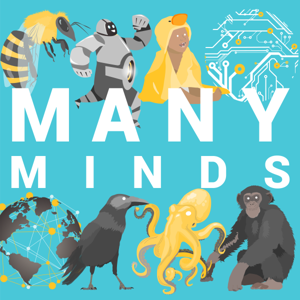
Many Minds is a project of the Diverse Intelligences Summer Institute (DISI) (https://www.diverseintelligencessummer.com/), which is made possible by a generous grant from the Templeton World Charity Foundation to UCLA. It is hosted by Kensy Cooperrider, with creative support from DISI Directors Erica Cartmill and Jacob Foster, and Associate Director Hilda Loury. Our artwork is by Ben Oldroyd (https://www.mayhilldesigns.co.uk/). Our transcripts are created by Sarah Dopierala (https://sarahdopierala.wordpress.com/).
You can subscribe to Many Minds on Apple, Stitcher, Spotify, Pocket Casts, Google Play, or wherever you like to listen to podcasts.
We welcome your comments, questions, and suggestions. Feel free to email us at: [email protected].
For updates about the show, follow us on Twitter: @ManyMindsPod.
 View all episodes
 By Kensy Cooperrider – Diverse Intelligences Summer Institute

4.9
6262 ratings
Imagine a friend's face. How much detail do you see? Do you see the color of their hair? What about the curve of their smile? For many people, this mental image will be relatively vivid. A somewhat watered down picture, sure, but still a picture—still something similar to what they would see if that friend were sitting across from them. For other folks, though, there's no image there at all. There's just no way to will it into being. Such people have what is now known as "aphantasia"—the inability to generate visual imagery.
Today I talk with Dr. Rebecca Keogh, a cognitive neuroscientist at the University of New South Wales in Australia. Dr. Keogh is one of the leading researchers in the new, fast-evolving study of aphantasia. We talk about the work she and her colleagues are doing to explore the full spectrum of individual differences in visual imagery ability, how these differences arise in the brain, and how they impact different aspects of everyday life, from how we dream, to how we envision the future, to how we respond to trauma. We also talk about folks on the other end of the spectrum—those with so-called "hyperphantasia," who experience visual images in extraordinary detail. And we get a sneak preview of some of the questions that Rebecca and her colleagues are taking on next.
This episode takes us, for the first time on Many Minds, into the fascinating terrain of individual differences—into questions about how other human minds may differ from our own, often in ways that invisible and unexpected. This is terrain we definitely plan to revisit in future episodes. Had a blast with this one folks—hope you enjoy it, too!
A transcript of this episode is available here.
Notes and links
3:16 – The 2015 paper in Cortex that introduced the term "aphantasia," but the spectrum of visual imagery ability has been studied since the 1800s.
5:08 – In the 1980s Martha Farah and colleagues studied a case of acquired "aphantasia," though they didn't use the term at the time.
8:30 – The Vividness of Visual Imagery Questionnaire (VVIQ) was first introduced in 1973 by David Mark.
12:15 – The 2018 paper in Cortex by Dr. Keogh and Dr. Joel Pearson.
15:15 – A 2008 paper by Dr. Pearson introducing the binocular rival method of measuring mental imagery.
23:15 – An overview of the idea of separate "what" and "where" pathways in the brain.
27:23 – The 2020 paper—'A cognitive profile of multi-sensory imagery, memory and dreaming in aphantasia'—by Alexei Dawes, Dr. Keogh, and colleagues.
41:30 – The 2020 paper by Dr. Keogh and colleagues about the role of cortical excitability in visual imagery.
44:30 – Phosphenes are a kind of visual experience that is not induced by light entering the retina.
48:15 – A primer on Transcranial Direct Current Stimulation (tDCS).
51:45 – A pre-print by Marcus Wicken, Dr. Keogh, and Dr. Pearson using skin conductance to examine the level of fear experienced by aphantasic and control participants.
1:01:45 – A paper by Dr. Adam Zeman and colleagues titled 'Phantasia–The psychological significance of lifelong visual imagery vividness extremes,' which discusses vocational choices in people with extreme imagery.
Rebecca Keogh's end-of-show recommendations:
Aphantasia: Experiences, Perceptions, and Insights by Alan Kendle
The Cambridge Handbook of the Imagination by Anna Abraham
The best way to keep up with Dr. Keogh's work is to follow her on Twitter (@Becca_Keogh_PhD). To keep tabs on aphantasia research more broadly, you can follow other prominent aphantasia researchers such as Dr. Joel Pearson (@ProfJoelPearson) and Dr. Adam Zeman (@ZemanLab). You can also check out the Future Minds Lab and sign up for their mailing list: https://www.futuremindslab.com/.
Many Minds is a project of the Diverse Intelligences Summer Institute (DISI) (https://www.diverseintelligencessummer.com/), which is made possible by a generous grant from the Templeton World Charity Foundation to UCLA. It is hosted by Kensy Cooperrider, with creative support from DISI Directors Erica Cartmill and Jacob Foster, and Associate Director Hilda Loury. Our artwork is by Ben Oldroyd (https://www.mayhilldesigns.co.uk/). Our transcripts are created by Sarah Dopierala (https://sarahdopierala.wordpress.com/).
You can subscribe to Many Minds on Apple, Stitcher, Spotify, Pocket Casts, Google Play, or wherever you like to listen to podcasts.
We welcome your comments, questions, and suggestions. Feel free to email us at: [email protected].
For updates about the show, follow us on Twitter: @ManyMindsPod.

15,255 Listeners
10,742 Listeners

5,534 Listeners

2,455 Listeners

770 Listeners

546 Listeners

824 Listeners
315 Listeners
4,181 Listeners

114 Listeners

5,541 Listeners

16,236 Listeners

357 Listeners
122 Listeners

44 Listeners