
Sign up to save your podcasts
Or

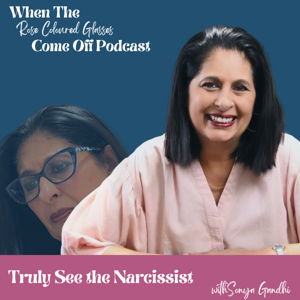


Have you ever wondered why people stay in toxic relationships despite the emotional abuse and manipulation they suffer?
In this podcast, we'll explore the 9 reasons why individuals tend to stay in abusive relationships, often sacrificing their mental health and well-being. From the signs of emotional abuse and narcissistic personality disorder to the complex psychological dynamics at play, we'll dive into the underlying factors that keep people trapped. By understanding these reasons, you'll gain insight into the complexities of toxic relationships and the emotional abuse that often accompanies them.
If you're struggling to break free from an abusive relationship or know someone who is, this video will provide you with the knowledge and awareness you need to take the first steps towards healing and recovery. Remember, recognizing the signs of emotional abuse and acknowledging the trauma it causes is the first step towards breaking free from the cycle of abuse. Take back control of your life and start your journey towards emotional healing today.
Launching January 2025
Program: Conscious Coupling - Breaking Patterns to find Healthy Relationships
Email [email protected] to enquire.
The reasons we stay are so complicated.
Do you find yourself stuck in a cycle of toxic relationships, wondering why you can't seem to break free? In this video, we're exploring the 10 reasons we get into toxic relationships in the first place. From the allure of narcissistic partners who shower us with attention in the beginning, to the fear of being alone and the desire for love and peace, we're diving deep into the psychology behind our choices. We'll discuss how narcissistic personality disorder can manifest in relationships, and the signs someone may be a narcissist. By understanding these reasons, we can begin to heal and recover from narcissistic abuse, and learn how to spot a narcissist before it's too late. If you're tired of feeling trapped and ready to take control of your relationships, watch until the end to discover the truth about why we get into toxic relationships and how to break the cycle for good.
New program launch: January 2025
Conscious Coupling - Breaking patterns so we can find healthy relationships.
Have you ever been asked what your boundaries are? Well don't be worried if you don't know what they are. When we have been raised in narcissistic households and/or living with a narcissist boundaries are just not tolerated, often breeched and deemed non-existent.
So we actually can't articulate what we don't actually have. This episode focuses on a few things to consider and steps to develop a few boundaries.
In part 1 we will get into a few steps. In the next episode, we will get a little deeper and get into a few examples that might help you identify and begin to practice boundaries, in a safe environment.
We're going to pull apart grief which is a subject that's incredibly important for survivors of narcissistic abuse. Understanding the types of grief you go through after breaking up with a narcissist can help put into context why it's so much worse than the ending of a relatively healthy relationship. This is a heavy subject, but understanding it is crucial for your healing journey.
Firstly, you grieve the partner that you lost. Even in relationships with narcissists, there are moments of genuine connection, happiness, and good memories. Losing your partner means losing these moments, which can be very painful. You might also feel a sense of failure, self-criticism, guilt, shame, or even stupidity for staying in the relationship as long as you did. These feelings are normal but can be incredibly harsh and self-punishing.
Secondly, you grieve the relationship itself. Every relationship, even toxic ones, creates a unique bond and routine. The end of this relationship means the end of a familiar part of your life, which can be disorienting and deeply sorrowful.
But with a narcissistic relationship, there are two additional layers of grief that make the process even more complicated. The first is Grieving the Narcissist as Your "Child" and the second layer of grief is Grieving Your Idealized Self.
Breaking up with a narcissist is a uniquely devastating experience, but understanding the different types of grief you're going through can help you on your path to healing. Remember, you're not alone, and it's okay to seek help and support during this time.
Join Sonya and Anita as they discuss how to navigate relationships after leaving a narcissist
Join Sonya and Anita as they discuss how to navigate through divorce with a narcissist
Join Sonia and Anita as they discuss what it was like growing up with a narcissistic parent and how it affected their adult lives.
Join Sonia as she speaks with one of her clients who has experienced narcissistic abuse in various relationships in her life.
Join Sonia as she speaks with one of her clients who has experienced narcissistic abuse in her relationship.
In this episode, we delve into the fascinating world of attachment theory, a concept that shapes how we connect with others from infancy through adulthood. Discover how psychologist John Bowlby's groundbreaking work on emotional bonds and Mary Ainsworth's research on attachment styles influence our relationships. We explore the four main attachment styles—secure, anxious, avoidant, and disorganized—and how they manifest in adult relationships, often leading to complex dynamics.
We'll also shed light on the nature of toxic relationships, how they differ from abusive ones, and the subtle signs that may indicate toxicity. Learn how early childhood experiences and attachment styles contribute to these patterns and why therapy can be a crucial tool for transforming toxic relationships into healthy, fulfilling ones.
Whether you're curious about your own attachment style, seeking to improve your relationships, or wanting to understand the roots of relationship trauma, this episode offers valuable insights and practical advice.
Join us as we unpack the intricate connections between attachment, relationship dynamics, and personal well-being.
From the publisher's feed