
Sign up to save your podcasts
Or



Based on Podcast App listening data
2011 - 2026
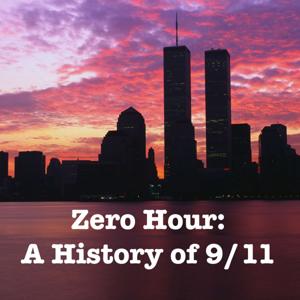
The final episode of the series examines how 9/11 has become a part of our history and collective memory. There are also updates on people and events since the killing of Osama bin Laden.
2001 - 2011
Osama bin Laden pulls off a disappearing act at the Battle of Tora Bora, and spends the rest of his life as the world's most wanted terrorist, on the run or in hiding.
After nearly a decade's worth of intelligence leads and special forces operations in Afghanistan and Iraq, the manhunt for the Al Qaeda leader culminates with a risky, top secret raid at a compound in Abbottabad, Pakistan.
2002 - 2009
With the Taliban ousted and Al Qaeda on the run, the United States begins to shift its attention and resources to Saddam Hussein and Iraq.
The United States and its allies topple the Hussein regime fairly quickly, and soon learn how difficult it is to assume responsibility for running the very fractured country.
Meanwhile, a new U.S. president orders the CIA to come up with a plan to find Osama bin Laden, who has not been sighted in years.
The renewed hunt leads to tragedy during one of the darkest days in the history of the agency.
2001 - 2002
In the aftermath of 9/11, the United States and its allies invade Afghanistan for the beginning of a decades-long stay. Al Qaeda and the Taliban are decisively routed in a matter of weeks, but Osama bin Laden manages to give the U.S. military the slip at Tora Bora.
Meanwhile, the United States and other countries around the world begin to face new security challenges, from the outside as well as within.
The events of September 11, 2001 are explored from almost every possible angle: the hijackers; the flights; inside the World Trade Center and the Pentagon; the first responders who risked their lives to save others in an unprecedented emergency; how the President of the United States and top White House officials reacted to the worst attack on American soil since Pearl Harbor.
It is a story of ordinary people forced to do extraordinary things; of the best of humanity responding to the deeds of the worst; and of people making life or death decisions with incomplete and even inaccurate information. But most of all, it is fundamentally a story about how one day literally changed everything, a day whose repercussions we are still living through more than two decades later.
2000 - 2001
While planning 9/11 and running Al Qaeda, Osama bin Laden somehow finds time to marry a new bride, and his other wives aren't happy about it. As 9/11 approaches, his family life begins to fall apart, and eventually he is forced to make a choice.
In Washington, George W. Bush is sworn in as president several months after a closely contested election. His government is filled with experienced Republican public servants, particularly on the foreign policy and national security side. What did or didn't they do about Al Qaeda during his first eight months in office?
Meanwhile, as the terrorist chatter increases in the months before the attacks, intelligence and law enforcement officials miss crucial warning signs that don't make sense until after the attacks. Two days before 9/11 and half a world away, Ahmed Shah Massoud, a war hero in the fight against the Soviets and leader of the Northern Alliance, is assassinated by two Al Qaeda operatives posing as journalists.
Less than twenty-four hours before the attacks, all nineteen hijackers are in position, wrapping up loose ends, and waiting.
1992 - 2001
This episode is an in-depth look at the nineteen men who carried out the biggest terrorist attack in history. The story begins with four Muslims who go to Germany to pursue graduate studies and discover radical Islam instead. These four men - Mohammed Atta, Ramzi Binalshibh, Marwan al Shehhi and Ziad Jarrah - come from very different backgrounds, but by late 1999, they all want to fight jihad. Within a year, three of them are in the United States taking flying lessons.
The episode also looks into the 15 "muscle hijackers" who were chosen by Al Qaeda to participate in the attacks. Who were they, how did they become radicalized, and how did they get involved in the 9/11 plot? And who was helping them?
This episode also looks at the Al Qaeda summit in Kuala Lumpur in January of 2000 and asks several questions. How did two known Al Qaeda operatives - both future 9/11 hiijackers - lose the intelligence officers tracking them and make their way to the United States a few days later? Why were they meeting in Los Angeles with a man suspected of being a Saudi intelligence officer? And why was the FBI not notified that they were in the country?
1980 - 2000
This episode is a look at U.S. counterterrorism policy in the intelligence and law enforcement communities during the years leading up to 9/11, culminating with the Millennium Plot. The episode also profiles some of the men and women who were on the terrorism beat, who heard of Osama bin Laden years before he was a household name. The CIA creates a virtual station exclusively dedicated to tracking Osama bin Laden. The episode also looks at contentious issues like whether the wall separating law enforcement from intelligence played a role in the leadup to 9/11, as well as the alleged leak of Osama bin Laden's satellite phone to the media.
1996 – 2000
Now safely set up in Afghanistan with his family, Osama bin Laden begins a media offensive to promote himself and his message, granting a series of interviews to Arab and Western journalists. The initial reaction among world leaders and the public at large? Crickets.
What does get their attention and puts bin Laden on the global stage is Al Qaeda’s coordinated attacks on the American embassies in Kenya and Tanzania. Bill Clinton is forced to respond with military force during a personal and political low point in his presidency.
Meanwhile, Al Qaeda’s attacks continue. Operatives bomb a U.S. Navy vessel during a refueling stop in Yemen, amidst the home stretch of the American presidential election. Why did two administrations fail to retaliate for the USS Cole before 9/11?
This episode includes firsthand accounts from survivors of the Kenya, Tanzania, and USS Cole bombings.
1990 – 1997
The assassination of a right-wing rabbi in a New York City hotel offers a hint of the larger threat to come, though its significance is not fully understood at the time. The assassin has ties to a Brooklyn-based cell of jihadists preparing for war, which culminates with the bombing of the World Trade Center.
The lives of Ramzi Yousef and Khalid Sheikh Mohammed are examined for the events and forces that drove them to lives of international terrorism, from Kuwait to the United States, United Kingdom, Pakistan, Afghanistan, Qatar and the Philippines. For a time, Yousef is the most wanted terrorist in the world, while his uncle KSM is barely on law enforcement’s radar.
Together, they would develop a terrorist plot so ambitious, it would have killed thousands if it had been realized. The two of them would set the bar for Islamic terrorism for the next two decades.
From the publisher's feed
Ranked by our users in the last 21 days

62,682 Listeners

11,951 Listeners

37,610 Listeners

55 Listeners

4,757 Listeners

8,628 Listeners

19,146 Listeners

19,119 Listeners

46,926 Listeners

8,204 Listeners

7,783 Listeners

141 Listeners

11,472 Listeners

43 Listeners

1,294 Listeners