
Sign up to save your podcasts
Or

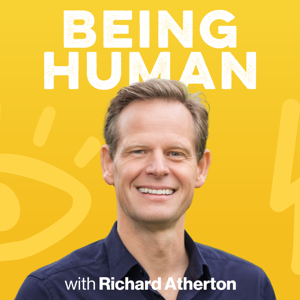

▶️ Connect with Richard on LinkedIn: https://www.linkedin.com/in/richardatherton-firsthuman/
What actually happens when the sense of “self” disappears — and does it make you wiser?
In this episode of Being Human, I’m joined by Ken Wilber, one of the most influential philosophers of human development and the founder of Integral Theory, something which played a big role in my own intellectual development. Ken shares his early awakening experience, in which he experienced a complete dissolution of the separate self, and explains why spiritual awakening alone does not equal psychological maturity or ethical wisdom.
We explore the crucial distinction between waking up and growing up. And why this explains how many spiritual gurus and their communities can become so toxic. Drawing on decades of scholarship, meditation, and systems thinking, Ken offers a comprehensive framework for understanding consciousness and development. This helps us to appreciate the multiple vectors and methods of human expansion.
We explore:
Links:
 View all episodes
 By Richard Atherton

4.3
77 ratings
▶️ Connect with Richard on LinkedIn: https://www.linkedin.com/in/richardatherton-firsthuman/
What actually happens when the sense of “self” disappears — and does it make you wiser?
In this episode of Being Human, I’m joined by Ken Wilber, one of the most influential philosophers of human development and the founder of Integral Theory, something which played a big role in my own intellectual development. Ken shares his early awakening experience, in which he experienced a complete dissolution of the separate self, and explains why spiritual awakening alone does not equal psychological maturity or ethical wisdom.
We explore the crucial distinction between waking up and growing up. And why this explains how many spiritual gurus and their communities can become so toxic. Drawing on decades of scholarship, meditation, and systems thinking, Ken offers a comprehensive framework for understanding consciousness and development. This helps us to appreciate the multiple vectors and methods of human expansion.
We explore:
Links:

2,561 Listeners

686 Listeners

1,880 Listeners

446 Listeners
2,541 Listeners

8,776 Listeners

4,045 Listeners

337 Listeners

1,272 Listeners

917 Listeners
5,392 Listeners

903 Listeners

2,139 Listeners

20,650 Listeners

174 Listeners