
Sign up to save your podcasts
Or

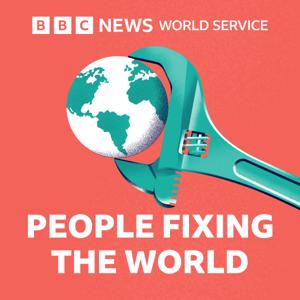

British Sikh engineer, Navjot Sawhney gave up his lucrative career to go and work in India, to use his skills to help solve problems for rural communities. While there, he became fascinated with the problems his neighbour, Divya, was facing while handwashing clothes, sometimes for up to three hours a day.
Broadcaster and journalist Nkem Ifejika finds out how Nav promised to design a hand crank, off-grid washing machine for his neighbour, to help her avoid the sore joints, aching limbs, and irritated skin she got from her daily wash.
Within two years of coming up with the idea, Nav had set up his own company, The Washing Machine Project, and trialled his first machine in a refugee camp in Iraq. From that first trip, over five years ago, the project has now provided nearly a thousand machines, free to the users in poorer communities and refugee camps, in eleven countries around the world.
Nkem hears how seven years on, Nav fulfilled his promise to return to India with a machine for his neighbour, Divya.
The Washing Machine Project is now partnered with the Whirlpool Foundation, the social corporate responsibility arm of the company that designed the first electric domestic machine over a hundred years ago, and together they hope to impact 150,000 people.
Nkem asks if a project like this can really make a difference, given that roughly five billion people still wash their clothes by hand.
Producer: Alex Strangwayes-Booth
Image: Navjot Sawhney sitting between two hand crank, off grid washing machines. Credit: The Washing Machine Project
 View all episodes
 By BBC World Service

4.8
229229 ratings
British Sikh engineer, Navjot Sawhney gave up his lucrative career to go and work in India, to use his skills to help solve problems for rural communities. While there, he became fascinated with the problems his neighbour, Divya, was facing while handwashing clothes, sometimes for up to three hours a day.
Broadcaster and journalist Nkem Ifejika finds out how Nav promised to design a hand crank, off-grid washing machine for his neighbour, to help her avoid the sore joints, aching limbs, and irritated skin she got from her daily wash.
Within two years of coming up with the idea, Nav had set up his own company, The Washing Machine Project, and trialled his first machine in a refugee camp in Iraq. From that first trip, over five years ago, the project has now provided nearly a thousand machines, free to the users in poorer communities and refugee camps, in eleven countries around the world.
Nkem hears how seven years on, Nav fulfilled his promise to return to India with a machine for his neighbour, Divya.
The Washing Machine Project is now partnered with the Whirlpool Foundation, the social corporate responsibility arm of the company that designed the first electric domestic machine over a hundred years ago, and together they hope to impact 150,000 people.
Nkem asks if a project like this can really make a difference, given that roughly five billion people still wash their clothes by hand.
Producer: Alex Strangwayes-Booth
Image: Navjot Sawhney sitting between two hand crank, off grid washing machines. Credit: The Washing Machine Project

7,929 Listeners
377 Listeners

1,067 Listeners

5,577 Listeners

1,807 Listeners
974 Listeners

1,732 Listeners

1,020 Listeners
357 Listeners
585 Listeners
93 Listeners
347 Listeners

965 Listeners

411 Listeners

429 Listeners

745 Listeners

228 Listeners

364 Listeners

473 Listeners

3,245 Listeners
1,028 Listeners

787 Listeners

1,011 Listeners
179 Listeners