
Sign up to save your podcasts
Or

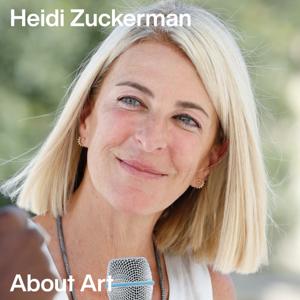


Based on Podcast App listening data
Moshe Safdie is an architect, urban planner, educator, theorist, and author. In 1964 he established his own firm to realize Habitat ’67, an adaptation of his undergraduate thesis and a turning point in modern architecture. Embracing a comprehensive and humane design philosophy, Safdie is committed to architecture that is informed by the geographic, social, and cultural elements that define a place; and that responds to human needs and aspirations. Over a celebrated 50-year career, Safdie has explored the essential principles of socially responsible design with a distinct visual language. His wide range of completed projects include cultural, educational, and civic institutions; neighborhoods and public parks; housing; mixed-use urban centers and airports; and master plans for existing communities and entirely new cities. Safdie’s projects can be found in North and South America, and throughout Asia. Recent projects of note include the Jewel Changi Airport in Singapore, the Albert Einstein Education and Research Center in Brazil, as well as residences in Colombo, Quito, and China that build on and expand his original vision for Habitat ’67, presenting a new vision for urban living rooted in the rediscover of the interdependence between nature and society. Safdie’s new memoir, “If Walls Could Speak,” will be released this fall.
KAWS engages audiences beyond the museums and galleries in which he regularly exhibits. His prolific body of work straddles the worlds of art and design to include paintings, murals, graphic and product design, street art, and large-scale sculptures. Over the last two decades KAWS’ work shows formal agility, underlying wit, irreverence, and affection for our times. His refined graphic language revitalizes figuration with both big, bold gestures and playful intricacies. KAWS often appropriates and draws inspiration from pop culture animations, forming a unique artistic vocabulary across mediums. Admired for his larger-than-life sculptures and hardedge paintings that emphasize line and color, KAWS’ cast of hybrid cartoon characters are the strongest examples of his exploration of humanity. As seen in his collaborations with global brands, KAWS’ imagery possesses a sophisticated humor and reveals a thoughtful interplay with consumer products.
Jérôme Sans began his career in the early 1980s as one of the first independent curators in Europe. His mission has been to rethink contemporary art exhibition making through an engagement with emerging artists. He is the former director of the Ullens Center for Contemporary Art in Beijing, co-founder of the Palais de Tokyo in Paris, and creator, and former creative director and editor-in-chief of the French cultural magazine L’Officiel Art, former artistic director of Rives de Saône-River Movie, former co-artistic director to the Grand Paris Express project, France's largest urban redefinition through culture initiative since Haussmann, among many other accomplishments and appointments. He recently joined LAGO/ALGO, a cultural hub that blends Contemporary Art and modernist architecture in Mexico City, as artistic director.
He and Zuckerman discuss why art matters, institution building and how to make people feel welcome, what we’ve forgotten how to do in the last few years, and what he tells doubters!
Marianne Boesky established her eponymous gallery in New York in 1996. Since its inception, the gallery has represented and supported the work of emerging and established contemporary artists of all media and genres. In its first decade, the gallery was instrumental in launching the careers of major artists including Barnaby Furnas, Takashi Murakami, Yoshitomo Nara, Sarah Sze, and Lisa Yuskavage. The gallery currently represents many significant international artists, including Ghada Amer, Jennifer Bartlett, Sanford Biggers, Pier Paolo Calzolari, Donald Moffett, and Frank Stella. Boesky relocated her flagship gallery from SoHo to Chelsea in 2001, and in 2016, the gallery expanded its flagship location to include its adjacent space on West 24th Street. In 2017, Boesky opened a location in Aspen, Colorado; she has organized temporary exhibition spaces in Europe and in cities across the United States.
Hebru Brantley was born and raised in Chicago. A product of the 80's, Brantley's early inspiration to create visual art derived from the cinematic Blaxploitation and science fiction depicted in the previous decade. His affinity for mythological comic book heroes, Japanimation, and graffiti has strongly influenced his work, and eventually, he began fusing elements of urban society with pop culture. From that, he developed his own unique approach to visual art, layering youthful expression with human emotion, history, and the complexities and challenges of urban life. Brantley creates his work spontaneously and uses an array of mediums such as wood, found objects, spray paint, coffee and tea. He has designed and illustrated for media production and clothing companies and transitioned from graffiti to canvas.
Fred Eversley’s lenses and mirrored forms reflect and refract the world, and our place within it. Eversley hit his stride with his primary mode of working at the same time the Light and Space movement gained momentum in Southern California. Yet unlike his Light and Space and Finish Fetish peers who often collaborated with scientists and outsourced fabrication of their work, Eversley’s firsthand technical understanding as a scientist himself (Eversley came to Southern California in the 1960s to work as a consulting engineer for NASA and his early career was spent with United States’ largest aerospace company during that period–Wyle Labs in Los Angeles) enabled him to utilize materials in ways that uniquely position his practice.
Teresita Fernández’s work is characterized by an interest in self-reflection and conceptual wayfinding. Her immersive, monumental works are inspired by a rethinking of landscape and place, as well as by diverse historical and cultural references. Often drawing inspiration from the natural world, Fernández’s practice unravels the intimacies between matter, places, and human beings. Her work questions power, visibility, and erasure in ways that prompt reflective engagement for individual viewers.
Fernández is a 2005 MacArthur Foundation Fellow, the recipient of numerous awards, and was appointed by President Obama as the first Latina to serve on the U.S. Commission of Fine Arts, a 100-year-old federal panel that advises the president and Congress on national matters of design and aesthetics.
She and I discuss not being a specialist, emptiness, sustainability, what lives inside of us, landscapes, vulnerability, indigenous thought, silence, not needing to hide the story, trusting your instincts, mothering, and seeing yourself in something that is not you.
Sanford Biggers creates hybridized forms that transpose, combine and juxtapose classical and historical subjects to create alternative meanings and produce what he calls “future ethnographies.” His work is an interplay of narrative, perspective, and history that speaks to current social, political, and economic happenings while also examining the contexts that bore them. His diverse practice positions him as a collaborator with the past through explorations of often-overlooked cultural and political narratives from American history.
Leo Villareal works with pixels and binary code to create complex, rhythmic compositions in light. His goal is to create a rich environment in which emergent behavior can occur without a preconceived outcome. His work is focused on stripping systems down to their essence to better understand the underlying structures and rules that govern how they work. He is interested in lowest common denominators such as pixels or the zeros and ones in binary code. The resulting forms move, change, interact and ultimately grow into complex organisms that are inspired by mathematician John Conway's work with cellular automata and the Game of Life. On March 5, 2013 Villareal inaugurated The Bay Lights, a 1.8-mile-long installation of 25,000 white LED lights on San Francisco’s Bay Bridge which has since become a permanent installation.
In April 2021, Villareal completed Illuminated River, which unites 9 bridges in central London into a single, monumental work of public art.
He and Zuckerman discuss different types of public art, connecting the flow state and creativity, circularity, being a beacon, personal and family history, NFTs, and yoga!
Fred Tomaselli’s work reveals a uniquely American vision. Growing up in Southern California, he was influenced by both the manufactured unreality of theme parks and the music and drug countercultures of Los Angeles during the 1970s and 80s. His distinctive melding of these traditions coalesces in an updated, personalized, folk-driven vision of the American West. Tomaselli amasses pills, herbs and other drugs, along with images of plants, flowers, birds, and anatomical illustrations carefully cut from books. Pulling from this visual archive, Tomaselli creates baroque paintings that draw upon a range of art historical sources and decorative traditions—like quilts and mosaics. Combining these unusual materials and paint under layers of clear epoxy resin, Tomaselli’s paintings explode in mesmerizing patterns that appear to grow organically across his compositions in a multilayered coexistence of the real, the photographic, and the painterly.
From the publisher's feed

6,784 Listeners

3,338 Listeners

4,052 Listeners
879 Listeners
2,003 Listeners
297 Listeners

210 Listeners
443 Listeners

495 Listeners
536 Listeners
365 Listeners
145 Listeners

15,941 Listeners

1,647 Listeners
663 Listeners