
Sign up to save your podcasts
Or

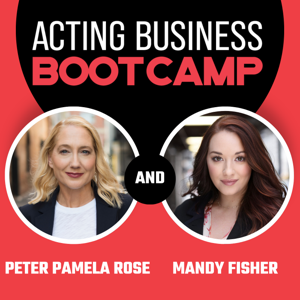


In this solo episode, Peter gets deeply personal about a challenging week—and the powerful mindset shift that came from it.
After getting emotionally "twisted," Peter turned to her most trusted tools: journaling, meditation, and coaching. What started as a spiral led to a breakthrough realization:
Your mind is your world. And your world is your mind.
When you're in your fear-based thought system, everything feels like a problem. But when you shift into a more loving, conscious mindset, you begin to see challenges as opportunities.
Peter shares how unconscious thinking patterns can create unnecessary suffering, and how awareness, honesty, and a willingness to feel your feelings can shift your entire experience.
Whether you've had a tough week yourself or you're just ready for a new perspective, this episode offers a grounded, compassionate reminder of how much power lives in your mindset.
In this episode, you'll learn:The difference between fear thoughts and love-based thoughts
What Peter does when she feels overwhelmed or triggered
How to use stream-of-consciousness journaling to uncover what's really going on
Why it's okay to "suffer a little" before you're ready to shift
A practical way to reset your emotions when you're feeling stuck
Free Time Management Workshop – Click here for details
Book a free consultation with Peter Pamela Rose
Stephen Ridley episode – Listen here
Want more support? If this episode resonated with you and you're ready to take the next step, whether that's with time management, mindset, or your acting career, I invite you to book a free consultation.
Click here to schedule your session.
And as always… stay safe and treat yourself real well. You don't have to be perfect.
If you're a creative who rolls their eyes every time someone says, "You should be on TikTok," I get it.
I did too.
But I've also seen firsthand how a free platform with a low barrier to entry can quietly change your entire business.
Not overnight. But steadily. Strategically. Without becoming someone you're not.
In this episode, I'm pulling back the curtain on how I use TikTok to stay visible, book clients, and build trust—without filters, dances, or pretending to be an influencer.
So, why TikTok?I never expected to like it. I don't love being on camera. I don't enjoy over-polishing or oversharing.
But I do love showing up for my community. I love talking shop. And I really love when a new client says, "I found you on TikTok… I just felt like you got it."
They didn't care about my résumé. They didn't go through my website. They watched a few videos, got curious, and reached out.
That's the power of visibility.
Why Visibility Matters More Than EverI set a personal goal of 30,000 followers. Not for vanity. Because I've seen how perception changes with scale.
At that number, people stop wondering if you're legit. They start assuming you are.
It's wild, but true: I've had actors tell me they didn't book the job because they "didn't have a big enough following."
So while I don't love the rule... I'm learning to play the game.
What I Post (and How I Keep It Manageable)I post just once a day, Monday through Friday. No weekends. That's it.
My content rotates through three categories:
1. Trend-Based PostsNot dancing. Not chasing virality. Just using trending audio or formats to talk about life as a voice actor. Red flags. Weird specs. Behind-the-scenes stress. Stuff people relate to.
2. Original ContentThis is where I share warmups, workflow tips, gear recs, or things I wish I knew when I started out. The more specific, the better.
3. Personal StoriesNo life-overhauls or tearful confessions. Just honest stories from inside the booth: bombing auditions, almost quitting, learning the hard way. Those posts? They connect deeply.
A Weekly Posting RoadmapIf you want to try it out, here's a simple structure:
Monday – A trend or audio reworked for your niche
Tuesday – Respond to a question or comment
Wednesday – Share a personal or client story
Thursday – A POV sketch or observation
Friday – Tips or encouragement for beginners
Repeat. Tweak. Evolve based on what's resonating.
Use Your AnalyticsTikTok gives you free data. Look at what people are watching all the way through, saving, or sharing—and lean into that.
Kill what's not working. Keep what is. Don't overthink it.
This isn't about being viral. It's about being valuable.
Profile Tips to Help You Get HiredYou don't need a perfect feed. But your profile should make sense to someone new:
Clean, recognizable photo (not necessarily a headshot)
Bio that says what you do and what kind of content you make
Link to your site or lead magnet
Keep your vibe real. Show up as yourself.
Don't hide your mic. Don't over-filter. You're not selling a brand. You're being a person.
What If You're Not Using TikTok?That's totally fine.
But then ask yourself: Where are your future clients going to find you?
Instagram? YouTube? Discord? Email? Wherever you plan to show up, you need a strategy.
And if you're not going to show up at all? Then you need a different kind of strategy.
Need Help? I've Got You.If you're feeling overwhelmed or stuck about how to grow your VO presence online—let's talk.
You can always reach me through [email protected], or DM me on TikTok at @astoriaredhead.
I'd love to see what you're creating.
Because we're not just growing followers. We're growing careers.
If you're an artist or creative who feels stalled—like you've hit a wall in your motivation, progress, or passion—you're not alone.
Whether it's burnout, fear, comparison, or just plain fatigue, creative momentum can vanish without warning. And getting it back? That can feel impossible.
But here's the good news: momentum is a choice. Not something that magically returns when the conditions are perfect—but something you can actively create, even in the mess of real life.
In this week's Acting Business Boot Camp podcast episode, I spoke with Stephen Ridley, musician, speaker, and founder of Ridley Academy, about exactly that.
What unfolded was a deeply personal and practical roadmap for any artist who wants to stop stalling and start moving forward again.
What Does It Mean to "Change Your Momentum"?Momentum isn't about working harder. It's about shifting the energy underneath your decisions. According to Stephen, the way we talk to ourselves—our internal attitude—shapes what happens next.
He calls it the self-fulfilling nature of mindset.
"Both negativity and positivity become self-fulfilling prophecies," he says. "And both are equally available."
In other words, what you expect tends to be what you get. So if you're expecting things to be hard, slow, or pointless… they probably will be.
But here's where this conversation gets interesting. Stephen doesn't suggest "faking" positivity. He actually recommends the opposite.
Step 1: Stop Resisting Your MoodWhen you're stuck in a low state—feeling anxious, apathetic, overwhelmed—the worst thing you can do is pretend you're not. Instead, lean in.
"I'll play piano in apathy," Stephen says. "I'll let myself feel lazy. I'll turn up the volume on the feeling until I get bored of it. That's when the momentum shifts."
When you stop resisting how you feel and start actively creating it, you take back control. It's no longer happening to you. You're the one creating it.
That awareness is where movement begins.
Step 2: Ask the Question That Changes EverythingOnce you've moved through the feeling—not skipped over it—there's a simple question Stephen recommends to create forward momentum:
"What can I do for you?"
Not just you, the person in front of you. But you in the broadest sense: the audience, the community, the world.
This question flips your attention from inward to outward. It connects you to purpose. It anchors you in service.
And for artists, that's everything.
Because the role of the artist, as Stephen beautifully puts it, is not to collapse into the emptiness of life—but to provide the antidote.
The Trap of Creative VictimhoodSo many creatives are unconsciously stuck in a victim mindset. Waiting for permission. Hoping to be chosen. Scared to make the wrong move.
But as Stephen says, the longer you wait, the more you stall. And stalling, while it may feel passive, often comes with a payoff: you don't have to take responsibility.
That's the truth most people don't want to hear.
But the moment you reclaim that responsibility—without shame or blame—you begin to unlock the creative momentum you've been craving.
Final Thought: You Don't Have to WaitThe most successful creatives aren't necessarily the most talented. They're the ones who know how to take action even when things aren't perfect. They've learned to choose positivity without needing to feel it first. They know how to get out of their heads and back into service.
Stephen's message is simple, but profound:
"You don't have to find momentum. You can create it. And it starts with one decision."
Want to Practice This Work?If you're ready to rebuild your creative momentum in a grounded, supportive space, I invite you to try a free class of The Weekly Adjustment—my coaching group for actors and artists working on confidence, mindset, and meaningful progress.
🔗 Click here to join us for free
And if you've ever dreamed of learning piano—or reconnecting to passion through creative play—check out RidleyAcademy.com. Stephen's method is changing lives.
Let's talk about something most coaches won't say out loud: Just because you love something doesn't mean you're great at it.
I know. It stings. But it's important.
In this episode, I'm digging into the uncomfortable (but necessary) gap between interest and aptitude—especially in voiceover. Because if you're frustrated that you're not booking in your dream genre, you might be ignoring the thing you're actually great at.
What I Talk About in This Episode:Why passion doesn't always equal potential
How to spot the areas where you naturally shine
Why ignoring your strengths can slow your career
What to do when your "boring" voice actually books
How to balance income work with creative fulfillment
The difference between fantasy reels and real-world needs
Interest is loud. It's shiny. It gets excited. But aptitude? Aptitude is quiet. It's efficient. It gets the job done with less effort.
That's your edge.
If you're constantly trying to "break into" animation but clients keep calling you back for corporate narration... maybe it's time to listen.
I Like to Think of VO as a BuffetYou don't have to love every dish at the buffet. But you do need to eat. Some genres feed your wallet. Others feed your soul. Both matter. But the key is building a career that includes both—without starving either.
A Little Homework for YouAsk yourself:
What do I love to do in VO?
What do I actually book?
Where do I get the most consistent positive feedback?
If those answers aren't lining up, that's your cue to rework your business plan. Not to quit. To recalibrate.
This Isn't About Giving Up on the DreamYou can still create that weird fantasy assassin rabbit character (I mean, please do). Just don't expect it to pay your rent. Yet.
Instead, learn how to work your income genres well. Use them to build your skills, connections, and freedom. Let them support your creativity instead of crush it.
Need Help Strategizing?If you're feeling stuck between what you want and what's working, let's talk. Seriously.
On-camera actor? Peter's your person: [email protected]
Voiceover artist? That's me: [email protected]
We love helping actors figure this stuff out. It's what we do.
Thanks for being here, and if this episode hit home, share it with a fellow actor who needs to hear it too.
In this episode, I dive deep into one of the most important and misunderstood parts of an actor's journey: confidence.
Without confidence, you're benched. Without humility, you're a liability. Confidence is essential in the entertainment industry, but it has to be real—not performative, not overblown, and definitely not hubris.
I break down how to build real, grounded confidence that will keep you moving forward in your voiceover or acting career, using neuroscience-backed tools and personal experience from over two decades in the industry.
Key Topics Covered:
Why confidence is essential, and why too much of it (aka hubris) can end your career
The underrated power of self-awareness and how to cultivate it
"Talent blindness" and why some actors can't see where they're falling short
Real talk on imposter syndrome and how it rewires your brain
The difference between self-trust and self-delusion
Three Neuroscience-Backed Tips to Build Confidence:
Focus on Small Wins
Create a "brag file" with positive feedback, wins, compliments, and proud moments
Celebrate progress, not perfection, and let your brain build new confidence loops
Use Visualization
Imagine your future success in vivid detail to activate the same brain networks as real achievement
Rehearse emotionally grounded wins before you step up to the mic or camera
Interrupt the Cortisol Cycle
Practice intentional breathing to calm your nervous system and stay present
Use 4-4-6 breath work to reset stress levels before auditions or sessions
7-Day Confidence Challenge (Free Prompt Series):
Day 1: Write down 5 wins or moments you felt proud as an actor
Day 2: Visualize a successful performance, using all five senses
Day 3: Record and review a short piece of work
Day 4: Practice calming breath work for 2 minutes
Day 5: Take a risk with your craft (bold choice, new tone, character)
Day 6: Write and say 3 affirmations aloud
Day 7: Journal your growth and what you noticed about trusting yourself
Final Takeaway: Confidence is not just mindset. It's a habit. A neurological pattern. A cycle of self-trust, built one decision at a time.
If you're struggling with imposter syndrome or feel like your confidence disappears when it matters most, you're not alone—and you're not broken. Try the challenge. Start small. And keep going.
Mentioned in This Episode:
My TikTok: @astoryredhead
Actors Index Substack
Email: [email protected]
Want More? Check out our Monthly Gyms and Weekly Classes at Acting Business Boot Camp for ongoing training, coaching, and confidence tools.
Today I want to talk about something that comes up in almost every coaching session I have with actors.
Fear.
Not just nerves before a big audition. Not just that pit in your stomach when you hit "submit" on a self-tape.
I mean the kind of fear that quietly shapes your entire career. The fear that keeps you playing small, second-guessing yourself, or holding back in moments when you need to be bold. The fear that convinces you maybe this dream isn't really for you.
If you've ever found yourself thinking, "What if I'm not good enough?" or "What if I can't handle it?"—you're not alone. And that's exactly what this episode of the Acting Business Boot Camp Podcast is all about.
The Root of Fear in an Actor's LifeFear is instinctual. It's wired into us. Back when humans were being chased by saber-toothed tigers, fear served a purpose—it kept us alive. But today? That same adrenaline spike shows up when you're waiting outside a casting office or uploading a tape for your reps.
And here's the thing: fear doesn't know the difference between real danger and perceived danger. That's why something as simple as a callback can feel like life or death.
But what I've learned—both as a working actress and a coach—is that fear isn't the enemy. The real challenge is how we respond to it.
The Real Reason Fear Holds You BackThere's one core truth I want you to consider:
At the bottom of every fear is the belief that you can't handle what life throws at you.
That's it. That's the root.
Not the audition. Not the agent meeting. Not even the rejection. It's the belief that if those things happen—or don't—you won't be able to cope.
So what do we do? We avoid. We procrastinate. We shrink ourselves.
But I'm here to tell you, you can handle it.
You just haven't built that muscle yet.
Shifting Your Energy From Fear to PowerIn my weekly mindset class for actors, The Weekly Adjustment, we work on exactly this. We shift from what I call catabolic energy (draining, fear-based, victim-thinking) to anabolic energy (creative, empowered, growth-oriented).
It's not magic. It's mindset work. It's learning how to interrupt those thought loops and say, "Hey, I see you, fear. But you're not driving the car today."
Once you do that—once you raise your energy—you start to attract the opportunities, collaborators, and outcomes that match your new level. Not because the world changes. But because you've changed.
What Would You Do If You Knew You Could Handle Anything?That's the question I leave you with. What would you do differently in your acting career if you had full trust in your ability to handle whatever came your way?
Would you submit more? Would you stop apologizing in the room? Would you finally reach out to that rep?
You don't need to "get rid" of fear. You need to learn how to work with it. To build your handling muscle. That's how we grow as actors and as humans.
Ready to Try This Work for Yourself?If this resonates, I'd love to invite you to try two free classes of The Weekly Adjustment. No catch, no obligation—just real tools to help you feel more confident, more connected, and more in control of your career.
This work has changed lives, including my own. It might just change yours too.
👉 Click here to claim your two free classes
And remember—you'll never be given more than you can handle. But you will be given more than you can control. Let's build that muscle together.
With love and belief in you, Peter Pamela Rose Certified Life & Career Coach for Actors Host of the Acting Business Boot Camp Podcast
Episode Summary:
In this episode, I'm pulling back the curtain on something I think we all struggle with at some point—especially if you're a voice actor, on-camera actor, or creative trying to "make it": shiny object syndrome. You know the feeling. You see someone post about a fancy new mic, a game-changing workshop, a big booking, and suddenly you're wondering… should I be doing that too?
I've been there. I've spent the money. I've chased the dopamine hits. And I want to talk honestly about how jealousy, comparison, and impulse spending can quietly erode your confidence, your clarity, and your career.
This one's for the overthinkers, the late-night scrollers, the folks who are constantly trying to prove they belong. You don't need to spend your way into success. You need a strategy. And maybe a little tough love. That's what this episode is all about.
In this episode, I talk about:
Why shiny object syndrome shows up so often in creative careers
How to tell the difference between real growth and reactive spending
The not-so-cute side of jealousy (and what it's actually trying to tell you)
Why a new mic or class might not be the thing that moves the needle
What to track so you can make strategic, data-backed decisions
A practical, free action you can take this week to reconnect with your voice and value
What I Hope You Take Away: Just because someone else is booking doesn't mean they're better. Just because you feel stuck doesn't mean you need to spend. You already have more than you think. The key is learning how to use it intentionally.
Mentioned in this episode: 🎤 Join my Voiceover Gym – Monthly improv-based VO workout sessions with direct feedback 📬 Subscribe to my Substack – Real talk on creative mindset, VO coaching, and the business of being an artist 📱 Follow me on TikTok – For behind-the-scenes, soapbox rants, and the occasional mic drop
Want to support the show? Share this episode with a fellow actor who needs to hear it. Leave a review wherever you listen to podcasts. It makes a huge difference.
How to Land Acting Work in Smaller Markets (And Why It's More Accessible Than You Might Think)
Have you ever thought that real acting work is only found in big cities? Like you have to be in New York or LA to make it? I used to think that too. But my conversation with actor Aaron Marcus on the Acting Business Boot Camp podcast really shifted that perspective.
About Aaron Marcus Aaron Marcus has been a full-time actor for over 40 years, with nearly 1,300 bookings across film, TV, commercials, and more. You might have seen his scene with Tom Hanks in the film A Man Called Otto. Aaron started his acting journey in a small market, with no connections and no clue how to break in. After figuring it out through trial and error, he dedicated himself to helping others avoid those same pitfalls. He's led over 800 workshops on three continents and offers private virtual coaching sessions to share his hard-earned wisdom.
You can learn more about Aaron's work, watch his free quick-tip videos, or sign up for his mailing list at howtoactandmodel.com.
The Reality of Smaller Markets It's easy to forget that acting isn't only about movies and television. There's a whole world of paid acting work in smaller markets that most people overlook: training videos, corporate films, industrials, standardized patient work at hospitals, even local commercials and role-playing jobs for law schools and agencies.
Aaron shared how he built up a steady income and impressive résumé by seizing these opportunities. And he's proof that you don't have to be in a major city to find consistent, paid work as an actor.
Finding These Hidden Opportunities Aaron offered some practical insights that really stuck with me:
Reach out to local businesses and small chains. These places need content to promote themselves—commercials, training videos, even social media content.
Connect with teaching hospitals and medical schools in your area. Standardized patient work is fascinating and pays you to improvise as a patient to help train medical professionals.
Contact advertising agencies nearby, not just the national ones. Local agencies need real people with authentic voices for regional commercials and corporate videos.
And maybe my favorite point: Aaron still believes in mailing hard copies of your materials. Yes, it's old-fashioned. But it's memorable. Most emails get deleted. A real letter can make an impression.
The Importance of Staying Connected Aaron also talked about the value of looping in your agent, even when you book work yourself. It's not about giving away part of your earnings. It's about showing your agent that you're proactive and working. It's about nurturing relationships and building a sense of partnership.
A Reminder: There's Work for Everyone What struck me most in talking with Aaron was this simple truth: there's work out there for everyone. You just have to know where to look and be willing to take action.
If you're feeling stuck or discouraged by the idea that you have to be in a big city to book work, I hope this encourages you. You don't. The opportunities are out there. They're in your community. And often, the first step is just reaching out and asking who's doing the hiring.
Until next time, remember: there's work out there for everyone. Stay safe and treat yourself real well.
It's Mandy Fisher here, your Voiceover actor and creative coach. Today I want to dive into something that's been on my mind a lot: how the neuroscience of decision-making can help us as actors and creative professionals. Because we're not just making choices in auditions or on stage. We're making decisions every single day that shape our careers, relationships, and—let's be real—our self-worth.
How the Brain Guides Our Creative DecisionsLet's talk brain science for a sec. The prefrontal cortex? It's the part of the brain handling complex thoughts and decisions, like our personal command center. Think of it like that alien in Men in Black—the one sitting up front, pulling the strings. Then there's the hippocampus, which stores memories and helps us imagine what's next. They're constantly in conversation, helping us weigh options and see potential outcomes.
Understanding how these parts of the brain work together is powerful. It reminds us that strategic thinking isn't just some abstract idea. It's already woven into the way our brains work, whether we realize it or not.
A Simple Challenge to Build Strategic ThinkingI want to offer you a challenge. Pick one decision you've been dancing around—something big or small, doesn't matter. Think about the risks, the rewards, and what those future scenarios might look like. Then go ahead and make the decision. After a week, check back in with yourself. How did it feel? What did you learn?
This exercise can help you see that you're already more strategic than you give yourself credit for. It's about bringing that awareness to the forefront, so you can start making choices with more clarity and intention.
Limiting Beliefs: The Invisible Blocks to Your SuccessBut here's the thing: decision-making isn't just about what's outside of us. It's also about what's going on inside. I'm talking about those limiting beliefs. You know, the ones that say, "I'm not good enough," or "There's too much competition." These thoughts show up for so many of us in the acting world.
These beliefs often come from past experiences, family dynamics, or even well-meaning but misguided advice. And they can really hold us back if we're not paying attention.
Another Challenge: Reframe Those Old BeliefsSo here's another challenge. Name one limiting belief that's been lurking in the background. Ask yourself: Is this really true? Where did it come from? Then see if you can reframe it into something more helpful. Like changing "I'm not good at public speaking" to "I can improve my public speaking with practice."
Write it down. Repeat it to yourself. And take one small action that lines up with that new belief—like volunteering for a presentation or sharing your work with a trusted friend.
Living Authentically in Your Acting CareerAt the heart of all of this? It's not just about making smart moves. It's about making choices that feel authentic to you as an actor, as a creative, as a human. When you understand how your brain works, and when you let go of those old beliefs that no longer serve you, you start to make decisions that feel more like you.
So that's my invitation: try these challenges. And if you do, I'd love to hear about it. Shoot me an email at [email protected]. I love hearing from actors who are ready to ditch the autopilot and start building careers that actually feel fulfilling.
If you know someone else who might need this gentle nudge, pass it along. Let's keep this conversation going.
Want to Take This Work Deeper?Join our Weekly Accountability Group for actors and get the kind of support that helps you keep growing, testing new ideas, and showing up for yourself. Two weeks free to see if it's the right fit.
When we talk about acting tools, we usually mention headshots, reels, technique, or coaching. But punctuation?
Not so much.
And yet, punctuation—something you probably haven't questioned since middle school—might be interfering with your most natural, honest performances.
The Problem Most Actors Don't Know They HaveYou get a script. Maybe it's commercial copy, maybe it's a scene. And without realizing it, your brain starts obeying the punctuation.
Comma. Small pause.
Period. Full stop, drop your pitch.
Exclamation mark. Boost the energy, punch the line.
Your body responds to those tiny marks automatically. But here's the thing: those cues might not match what your character is actually feeling. They might even contradict the emotional truth of the scene.
If you've ever given a read that felt stiff, too "correct," or like something was missing… this might be why.
Why Punctuation Feels Helpful (But Can Hurt)Punctuation is meant to clarify meaning in writing. It's useful when you're reading silently or trying to follow someone else's train of thought.
But acting isn't silent reading. It's expression. It's listening and responding. It's emotional and often messy.
Here's where things get interesting: studies show that your brain processes punctuation differently depending on the mark. Semicolons and dashes? They activate the left side of the brain. Exclamation points and periods? The right side. Each carries its own emotional weight. Each sends a signal, even if you don't consciously register it.
Which means your delivery may be less about what you're feeling… and more about how your brain is reacting to a comma.
How to Break Free (Without Losing the Script)As Mandy Fisher shared in this episode of the Acting Business Boot Camp podcast, one of the most helpful things you can do—especially for commercial reads—is to strip out the punctuation entirely.
Remove the commas. Take out the periods. Uncapitalize everything except brand names.
Why? Because when you stop being told where to pause or emphasize, you start making those choices from instinct. From character. From context.
It might feel strange at first, but that discomfort is exactly where more interesting, more connected performances begin.
A Simple Experiment to Try This WeekTake 60 seconds of script. Could be anything—a monologue, a commercial, a scene.
Delete every piece of punctuation.
Then read it out loud.
Notice what your voice does. Notice how your pacing shifts. See what happens when you stop "reading" and start speaking.
You might stumble. You might feel a little out of control. But you'll also find something new. A more honest rhythm. A stronger point of view. A version of the script that sounds less like a performance and more like a person.
Final Thought: Punctuation or Presence?Punctuation has a place. It can help with rhythm and intention. But if you're performing with one eye on the commas, you're probably holding back.
So ask yourself: are you punctuating for performance? Or are you speaking from presence?
You already have a voice that's worth hearing. You don't need grammar rules to make it powerful.
Let go. Experiment. Trust that you know how to connect without a period telling you when to stop.
Ready to take your training deeper? Explore our upcoming classes and coaching programs to build confidence in your voice, your instincts, and your career.
Check out what's coming up →
Prefer to keep learning in your inbox? Subscribe to Mandy's Substack for more creative insights, voiceover tips, and honest conversations about the business of being an artist.
From the publisher's feed

56,424 Listeners
77 Listeners

323 Listeners
27 Listeners
28 Listeners
14 Listeners
57 Listeners