
Sign up to save your podcasts
Or

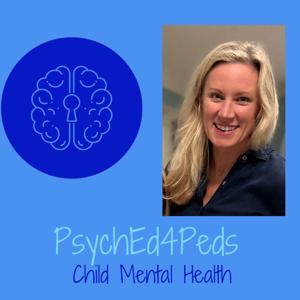
By Elise Fallucco, MD | Child Mental Health Expert
ADHD, Anxiety & More - formerly Child Mental Health for Pediatric Clinicians / PsychEd4Peds - is the podcast for pediatric primary care clinicians who want practical, evid
... more

4.7
3535 ratings


The podcast currently has 87 episodes available.
The most played episodes among Podcast App listeners.
Send us Fan Mail Anxiety is a normal human emotion. So, how do you know when it’s developmentally typical and when it has crossed the line into something that needs treatment? In this episode, Dr. Fallucco walks through a practical approach pediatric clinicians can use to recognize clinically significant anxiety that requires treatment. We talk about Screening, Taking a focused history of Anxiety, and determining whether the anxiety needs treatment. In this episode, you’ll learn:Who to screen for anxiety—and when to keep anxiety on your radar during ADHD, depression, or unexplained physical/behavioral evaluationsWhy the SCARED-5 is a practical anxiety screening tool for pediatric primary careSimple questions you can ask after a positive screen to better understand what a child is worried aboutThe four questions that can help you distinguish developmentally typical anxiety from clinically significant anxiety: Is it proportional? Is it developmentally expected? Is it causing distress? Is it impairing the child or family?How anxiety may look different in younger versus older children, including behavioral symptoms, physical complaints, irritability, and avoidanceWhen to consider treatment—and why CBT is an important first-line intervention for many children with anxiety Sign-up for our NEWSLETTER: https://child-mental-health-for-pediatric-clinicians.kit.com/3bf4aeedfc WEBSITE: PsychEd4Peds.com for more resources! SOCIAL: Instagram or threads @psyched4peds On-demand CME Course online at: Pediatric Mental Health CME Toolkit - Cracking the ADHD Code: Essentials for Pediatric Clinicians. https://ce.nemours.org/content/podcast-series-cracking-adhd-code-essential-skills-pediatric-clinicians#group-tabs-node-course-default1

Send us Fan Mail Join us for the latest Mystery Case: A teen with ADHD + Epilepsy Would you prescribe a stimulant? How do you treat ADHD in people who have epilepsy? In this episode, we unpack: • The surprising relationship between ADHD and epilepsy • Why ADHD is easy to miss in kids with epilepsy • Where the concern about stimulants and seizures came from • What newer research tells us about stimulant treatment in kids with epilepsy • How I would approach treatment—and monitoring—in people with epilepsy 00:00 Welcome and Mystery Case 00:30 ADHD and Epilepsy Link 01:30 Bidirectional Risk Explained 02:58 Seizure History Details 04:00 Treatment Options Debate 06:03 Stimulants and Seizure Evidence 09:14 Best Answer and Monitoring Plan 10:28 Wrap Up and Thanks Studies referenced in the episode: Auvin S et al. Systematic review of the screening, diagnosis, and management of ADHD in children with epilepsy. Consensus paper of the Task Force on Comorbidities of the ILAE Pediatric Commission. Epilepsia. 2018 Brikell I et al. Medication treatment for ADHD and the risk of acute seizures in individuals with epilepsy. Epilepsia. 2019 Cochrane Database of Systematic Reviews. Stimulant and non-stimulant drug-therapy for people with ADHD and Epilepsy 2022. Kwon CS et al. Psychiatric comorbidities in persons with epilepsy compared with persons without epilepsy. JAMA Neurology. 2025 Liu X et al. Stimulant do not increase the risk of seizure-related hospitalization in children with epilepsy. J Child Adol Psychopharm. 2018. Wang S et al. Comorbidity of epilepsy and ADHD: a Systematic review and meta-analysis. J Neurology. 2023 Wiggs KK, Chang Z, Quinn PD, Hur K, Gibbons R, Dunn D, Brikell I, Larsson H, D'Onofrio BM. Attention-deficit/hyperactivity disorder medication and seizures. Neurology. 2018 Sign-up for our NEWSLETTER: https://child-mental-health-for-pediatric-clinicians.kit.com/3bf4aeedfc WEBSITE: PsychEd4Peds.com for more resources! SOCIAL: Instagram or threads @psyched4peds On-demand CME Course online at: Pediatric Mental Health CME Toolkit - Cracking the ADHD Code: Essentials for Pediatric Clinicians. https://ce.nemours.org/content/podcast-series-cracking-adhd-code-essential-skills-pediatric-clinicians#group-tabs-node-course-default1
Send us Fan Mail What ELSE helps ADHD symptoms (in addition to meds?) What does the evidence say about non-medication treatment options for ADHD? We talk about...behavioral therapy exercise - which is an under-prescribed intervention, Think 30 minutes of moderate-to-vigorous activity 3 times weekly for 8–12 weeksWhat about Nutrition?omega-3 fatty acids may help with emotional lability in ADHD broad-spectrum micronutrients??00:00 ADHD Treatmetn BEYOND MEDS Overview 02:16 Therapy Evidence Basics 03:47 Medication Hesitancy Case 04:53 Exercise As Treatment 06:34 How Exercise Works 08:14 Exercise Prescription Tips 08:59 Omega 3 For Mood 11:08 Micronutrients Caution 13:22 Recap And Next Steps 14:09 Wrap Up And Subscribe Sign-up for our NEWSLETTER: https://child-mental-health-for-pediatric-clinicians.kit.com/3bf4aeedfc WEBSITE: PsychEd4Peds.com for more resources! SOCIAL: Instagram or threads @psyched4peds On-demand CME Course online at: Pediatric Mental Health CME Toolkit - Cracking the ADHD Code: Essentials for Pediatric Clinicians. https://ce.nemours.org/content/podcast-series-cracking-adhd-code-essential-skills-pediatric-clinicians#group-tabs-node-course-default1
Send us Fan Mail How can we support children and families who struggle with chronic abdominal pain? Dr. Fallucco shares an episode from The Pediatrician Next Door, an excellent podcast hosted by pediatrician Dr. Wendy Hunter. Dr. Hunter talks with Dr. Ali Navidi, a psychologist who specializes in disorders of gut-brain interaction. Dr. Navidi explains why some kids experience abdominal pain, nausea, diarrhea in a way that makes sense to families Dr. Navidi talks about the role of psychological treatments—including clinical hypnosis—in helping kids retrain these brain-gut pathways. For more helpful episodes for parents and families about The Pediatrician Next Door with Dr. Wendy Hunter: "I answer the questions you forgot or were too embarrassed to ask your doctor. I mix the science of medicine with the reality of parenting to give you satisfying answers to your parenting questions!" Website: https://www.pediatriciannextdoorpodcast.com/ Dr. Ali Navidi, PsyD from GI Psychology https://www.gipsychology.com/ Sign-up for our NEWSLETTER: https://child-mental-health-for-pediatric-clinicians.kit.com/3bf4aeedfc WEBSITE: PsychEd4Peds.com for more resources! SOCIAL: Instagram or threads @psyched4peds On-demand CME Course online at: Pediatric Mental Health CME Toolkit - Cracking the ADHD Code: Essentials for Pediatric Clinicians. https://ce.nemours.org/content/podcast-series-cracking-adhd-code-essential-skills-pediatric-clinicians#group-tabs-node-course-default1
Send us Fan Mail Dr. Elise Fallucco continues this series on non-stimulant medication for ADHD and shares practical tips about using Norepinephrine Reuptake Inhibitors (NRIs): viloxazine ER (Qelbree) and atomoxetine (Strattera) for pediatric clinicians. Who can benefit from NRIs? What are the potential benefits, drawbacks, and side effects? Working through the case of a 12-year-old girl with inattentive ADHD and anxiety who cannot tolerate methylphenidate or amphetamine , she explains why she generally prefers Viloxazine ER (Qelbree)FDA approval for ADHD in children ages 6+Quicker onset (often within 1–2 weeks vs 4–6 weeks for atomoxetine)Better tolerabilityMore straightforward dosing Unlike Atomoxetine (Strattera), you can dose this medication without worrying about significant genetic variability in drug metabolism00:00 NRIs for ADHD 00:38 When to Use 01:07 Case Introduction 02:51 Stimulant Trials Fail 04:09 Considering NRIs 04:30 Why Qelbree First 05:51 Atomoxetine Caveats 07:23 Treating Sophie 08:45 Clinical Pearls Recap 09:50 Wrap Up and CME Sign-up for our NEWSLETTER: https://child-mental-health-for-pediatric-clinicians.kit.com/3bf4aeedfc WEBSITE: PsychEd4Peds.com for more resources! SOCIAL: Instagram or threads @psyched4peds On-demand CME Course online at: Pediatric Mental Health CME Toolkit - Cracking the ADHD Code: Essentials for Pediatric Clinicians. https://ce.nemours.org/content/podcast-series-cracking-adhd-code-essential-skills-pediatric-clinicians#group-tabs-node-course-default1
The podcast currently has 87 episodes available.

91,093 Listeners
145 Listeners

127 Listeners

111,847 Listeners

56,473 Listeners

14 Listeners

293 Listeners

572 Listeners
14,338 Listeners

233 Listeners
646 Listeners

10,835 Listeners
155 Listeners