
Sign up to save your podcasts
Or



Based on Podcast App listening data
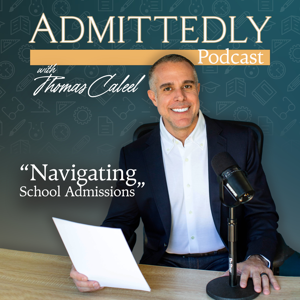
In this episode of The Admittedly Podcast, Thomas Caleel speaks with Michelle Chasin, Associate Director of Advantage Testing New York and senior tutor with more than 30 years of experience working with high school students. Michelle specializes in tutor development, long-term academic mentorship, and supporting students through test preparation, foundational skill-building, and the emotional challenges of high-pressure academic environments.
Together, Thomas and Michelle discuss how students actually learn, why academic anxiety is rising, and how consistent practice and strong process habits set students up for success not only on standardized tests but throughout high school, college, and beyond.
Key Topics:
Why academic anxiety has increased and how to help students break through it
What "missing foundations" look like and how long-term tutoring repairs them
How consistent, incremental practice outperforms last-minute cramming
Why failure and "messing up" are critical parts of real learning
Effective ways parents can support academic growth without increasing pressure
How to motivate gifted students who appear disengaged
Lessons from competitive chess that apply directly to test prep and high-level academics
Why there is no such thing as a "natural test taker" — only strong processes and habits
Guest:
Michelle Chasin: Associate Director of Advantage Testing New York, senior tutor, mentor, and parent of a seven-time national chess champion, with three decades of experience supporting students through deep, long-term academic development.
Learn more about Admittedly's partnership with Advantage Testing: admittedly.co/programs
Follow Admittedly: Instagram and TikTok: @admittedlyco
In this episode of The Admittedly Podcast, host Thomas Caleel breaks down what freshmen (and their parents) should be thinking about as they wrap up their first semester of high school. From academic foundations to extracurricular exploration to strategic planning for summer, Thomas explains why the habits students build now will shape their options in junior and senior year — especially if they're aiming for selective or highly selective colleges.
Rather than overwhelming families with long-term predictions, Thomas focuses on practical, immediate steps freshmen can take to stay on track, reduce future stress, and explore their interests with intention.
Key TakeawaysFreshman year sets the foundation for high school. This episode walks you through how to self-assess, course-correct, and plan ahead without burning out or getting caught up in panic culture.
Follow along on Instagram and TikTok @admittedlyco for more tips to stay ahead.
And if your family is ready to take the next step, visit https://admittedly.co/apply to apply for a free Family Action call with one of our admissions advisors.
In this episode of the Admittedly Podcast, host Thomas Caleel breaks down one of the most confusing (and often misleading) parts of the college admissions landscape: how to evaluate a college consultant. With firms advertising guaranteed results, inflated acceptance lists, and "proprietary systems," Thomas explains what families should actually be looking for when choosing an advisor for their high school student.
Drawing on his years inside highly selective admissions, he clarifies why true expertise goes far beyond flashy claims, why transparency is non-negotiable, and how the right counselor helps a student build confidence, independence, and an authentic narrative… not a manufactured profile.
Key TakeawaysLook Beyond the Marketing: Many firms inflate their success statistics by counting recruited athletes or pro bono admits. Families must ask how results apply to students like theirs.
No One Can Guarantee Admissions: Any consultant offering guaranteed outcomes is using unethical practices or misleading data. Admissions results are never certain.
Experience Matters: A strong counselor brings depth of knowledge, years in admissions or advising, and a proven ability to guide students—not just their own application story.
Personalization Beats Templates: The best consultants help students uncover who they are, not fit into a preset formula or checklist.
Parents Need Trusted Guidance: Over-involvement creates pressure and weakens student voice; a good counselor serves as a neutral, stabilizing force.
Time Is Your Biggest Advantage: Starting early allows students to grow, develop interests, build self-awareness, and avoid last-minute panic before senior year.
Choosing a college consultant should be an informed, transparent process… not a leap of faith. This episode gives families the tools to ask better questions, understand how the industry really works, and identify who can genuinely support their student's long-term success.
Families can find more guidance and explore Admittedly's advising approach at www.admittedly.co, and follow along on Instagram and TikTok at @admittedlyco.
And if your family is ready to take the next step, visit https://admittedly.co/apply to apply for a free Family Action call with one of our admissions advisors.
In this episode of the Admittedly Podcast, host Thomas Caleel explains why freshmen, sophomores, and juniors should begin planning their summer programs and activities long before spring. Drawing on decades of experience in college admissions, he breaks down what actually matters, what doesn't, and why early planning is one of the most overlooked competitive advantages in high school.
Rather than chasing "name-brand" programs, Thomas helps families understand how to build a summer that aligns with a student's interests, goals, and developing narrative without getting caught in the trap of expensive pre-college programs that don't move the needle.
Key Takeaways
Start Early: Selective summer programs open applications between December and February, and scholarships disappear quickly. Early planning gives students real options.
Not All Programs Matter: Most pre-college programs hosted on university campuses do not impact admissions. Only a small handful are truly selective.
Depth Beats Prestige: Admissions officers care about why you chose an experience and what you learned—not the brand name attached to it.
Strong Summers Don't Require Money: Jobs, volunteering, community work, or building your own project can be just as impactful as formal programs.
Explore With Intention: The best summer activities for high school students show curiosity, consistency, and growth (not a checklist of unrelated activities).
Summer is one of the most misunderstood pieces of the college admissions puzzle. Whether you're a freshman, sophomore, or junior, planning early helps you create meaningful experiences, avoid rushed decisions, and build a narrative that stands out. This episode breaks down how to think strategically about summer programs, jobs, volunteering, and independent opportunities so your choices actually support your long-term goals.
Families can find more resources on summer planning at www.admittedly.co and on Instagram and TikTok at @admittedlyco.
And if your family is ready to take the next step, visit https://admittedly.co/apply to apply for a free Family Action call with one of our admissions advisors.
In this episode of The Admittedly Podcast, host Thomas Caleel reveals the hidden half of the college admissions process, the part most families never think about. Students spend years stacking achievements and building resumes, but the truth is that admissions officers care less about what you have done and far more about why you have done it.
Drawing from two decades of experience, including his time as Director of MBA Admissions at the Wharton School, Thomas explains why resume racing does not work, how to uncover authentic motivation, and what real introspection looks like in practice. Through powerful examples from students he has guided, from costume designers to community leaders, this episode unpacks how self-awareness, focus, and coherence make the difference between a good application and a great one.
Key Takeaways
1. The Resume Myth Admissions is not a checklist. Doing more does not make you stand out; it makes you blend in. Top schools see thousands of "captains," "presidents," and "founders." What matters is why you chose what you did and what you learned along the way.
2. Depth Over Breadth Students who slow down and invest deeply in a few meaningful pursuits instead of chasing every opportunity demonstrate maturity, focus, and authenticity. Less really can be more.
3. Introspection Is Power Reflection builds connection. Admissions officers can feel when an applicant understands themselves. The best essays do not just describe activities; they reveal growth, intention, and purpose.
4. Narrative Coherence Wins When your choices, experiences, and essays fit together naturally, you tell a story that admissions officers can remember and advocate for. That is the hidden skill behind every standout applicant.
College admissions is not just about proving what you have done; it is about showing who you have become.
Visit www.admittedly.co for free resources, guides, and upcoming webinar dates.
And if your family is ready to take the next step, visit https://admittedly.co/apply to apply for a free Family Action call with one of our admissions advisors.
In this episode of The Admittedly Podcast, host Thomas Caleel breaks down the three most common mistakes he sees students make year after year in the college admissions process — and how to correct them before it's too late.
Drawing on more than two decades of admissions experience, including his time as Director of MBA Admissions at UPenn's Wharton School, Thomas explains why the strongest applicants aren't just the ones with high GPAs or perfect test scores. They're the ones who build a compelling story, act strategically, and take ownership of their journey.
Whether your student is just starting high school or in the middle of the application process, this episode offers practical advice on how to stand out in today's hyper-competitive admissions landscape.
Key Takeaways1. No Story Top students don't just collect activities — they craft a clear narrative. Admissions officers want to understand who you are, what drives you, and how your choices connect. Story-building starts earlier than most families think, and it requires intentional reflection.
2. No Strategy Doing everything is not a strategy. Students who spread themselves too thin dilute their impact. Thomas shares how to audit your commitments, focus on meaningful pursuits, and show depth over breadth — the key to a memorable application.
3. No Ownership Parents, counselors, and peers can offer support, but the most powerful applications come from students who take charge of their journey. True ownership builds voice, maturity, and self-awareness — qualities that can't be faked in essays or interviews.
Even in a world of rising selectivity and grade inflation, students who approach the process with story, strategy, and ownership stand out.
Visit www.admittedly.co for free resources and guidance on college admissions.
In this episode of The Admittedly Podcast, host Thomas Caleel breaks down why college admissions at Ivy League and other top universities are more competitive than ever—and what students and parents can still control in the process.
Despite social media myths about an "easier" year ahead, Thomas explains why application numbers remain high, selectivity rates are dropping, and grade inflation is blurring academic distinctions. Drawing on decades of admissions experience, he reveals how to focus on what actually moves the needle: differentiation, strategy, and authentic engagement.
Key Takeaways:
Admit Rates Stay Low: Even with visa changes and testing shifts, top schools like Columbia, Penn, and Stanford continue to see rising applications and falling admit rates. The qualified applicant pool is bigger, not smaller.
Qualified Isn't Enough: Perfect grades and test scores don't guarantee admission anymore. What separates top candidates is coherence—the ability to connect activities, essays, and recommendations into a clear, intentional story.
Differentiate or Disappear: Students who follow formulas or copy peers' paths blend into the crowd. The strongest applicants take risks, pursue genuine interests deeply, and craft an application that reflects individuality, not perfection.
Parents, Step Back Strategically: Thomas offers a direct message to parents—how to support without pressuring, and why old admissions playbooks no longer apply. Honest evaluation, early preparation, and outside perspective are key.
Control What You Can: Grades and scores matter, but the true edge lies in strategy—building academic rigor, refining narratives, and making decisions with long-term intention.
Admissions to top universities aren't getting easier. But with clarity, focus, and the right approach, students can still stand out.
Follow @admittedlyco on Instagram and TikTok for more college admissions strategy, and visit www.admittedly.co for webinars, guides, and expert support.
In this episode of The Admittedly Podcast, Thomas Caleel speaks with Matthew Demmer, Associate Director of Advantage Testing New York and Director of Advantage Testing UK. With over 22 years of experience tutoring students across the U.S., U.K., and Middle East, Matt shares how one-on-one tutoring helps students build confidence, reduce anxiety, and perform at their best — whether preparing for the SAT, ACT, UCAS, or Oxbridge interviews.
Key Topics:
Lessons from the UK's tutorial system and how they shape effective tutoring
Why confidence is the antidote to test-day stress
UCAS vs. Oxbridge admissions: what students need to know
The real timeline for SAT/ACT prep (and why 3 months usually isn't enough)
Writing authentic personal statements for U.S. and U.K. schools
Advice for parents: how to support without adding pressure
Why top colleges are reinstating testing — and what it means for students
Matt's perspective is essential for families planning ahead for competitive college admissions in the U.S. or abroad.
Guest: Matthew Demmer – Associate Director of Advantage Testing New York and Director of Advantage Testing UK, veteran tutor, and international education expert
Learn more about Admittedly's partnership with Advantage Testing: admittedly.co/programs
Follow Admittedly: Instagram and TikTok: @admittedlyco
Follow Advantage Testing: Instagram: @advantagetesting
In this episode of the Admittedly Podcast, host Thomas Caleel, former Director of MBA Admissions at Wharton, takes you behind the scenes of the admissions office to show how applications are actually read. From transcripts and essays to activities, recommendations, and test scores, Thomas explains what admissions officers focus on and how they build a three-dimensional picture of each applicant.
Key Takeaways:
Applications are often reviewed in just three to five minutes, so clarity and strategy matter.
Transcripts are scored separately, then weighed alongside essays, activities, and recommendations.
Admissions officers don't always read in order—they jump across sections to connect the dots.
Context matters: family responsibilities, school resources, and personal chall enges shape how an application is viewed.
Strong recommendations highlight character and classroom presence, not just academic success.
Additional essays should clarify key details, not overload with extra information.
The best applications give admissions officers a clear, memorable story they can advocate for in committee.
Whether you're aiming at Ivy League and T20 schools, or simply want to understand how admissions officers evaluate files at competitive colleges, this episode will help you prepare an application that works under real review conditions.
Follow us on Instagram and TikTok @admittedlyco for more admissions insights, and visit www.admittedly.co for free resources, webinars, and expert guidance.
In this episode of The Admittedly Podcast, host Thomas Caleel unpacks one of the most debated topics in college admissions: test optional policies.
Are they really leveling the playing field, or just creating more confusion? Drawing from his decades of admissions experience, Thomas explains how test optional began, what it means for students today, and why the future of standardized testing is shifting once again.
Key TakeawaysThe Origins of Test Optional: COVID-19 accelerated the move away from testing, with schools adopting test optional to expand diversity and boost application numbers.
Equity and Access: Standardized tests often disadvantage lower-income students due to differences in tutoring access, prep resources, and early exposure to academic vocabulary.
The Reality vs. PR: Colleges also use test optional strategically: to lower admit rates, attract more applicants, and keep flexibility for admits such as athletes or donor-linked students.
Why Test Scores Still Matter: Strong SAT/ACT results can offset weaker grades, help combat grade inflation, and provide admissions officers with a clearer measure of academic readiness.
Who Benefits from Test Optional: Policies may help first-gen, low-income, or students with extenuating circumstances — but for many, not submitting scores can raise red flags.
The Road Ahead: Elite schools like MIT, Yale, and Dartmouth are reinstating test requirements. For 2025 and beyond, students should treat testing as essential.
Practical Advice for Students: Start preparing early. Use free tools like Khan Academy, peer tutoring, or paid resources. Build consistency and discipline, because "hope is not a strategy."
Test optional policies may change, but one thing remains constant: preparation and intentional strategy make all the difference.
Follow us on Instagram and TikTok @admittedlyco for more admissions guidance, and visit www.admittedly.co for free resources, webinars, and expert support as you plan your college journey.
From the publisher's feed
Ranked by our users in the last 21 days

2,591 Listeners

1,845 Listeners

281 Listeners

222 Listeners

369 Listeners
14 Listeners
109 Listeners

296 Listeners

85 Listeners

22 Listeners
99 Listeners
122 Listeners

30 Listeners

9 Listeners

64 Listeners