
Sign up to save your podcasts
Or

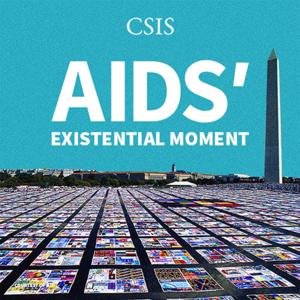


In this episode, CSIS Senior Associate Jeffrey L. Sturchio speaks with Kathleen McManus, Assistant Professor of Medicine in the Division of Infectious Diseases and International Health at the University of Virginia Medical School, about what still needs to be done to achieve the ambitious goal of ending the HIV/AIDS epidemic in the United States. Professor McManus discusses how inequalities are driving HIV transmission and how they still affect vulnerable populations disproportionately, drawing on her experiences treating HIV patients in the Ryan White clinic at the University of Virginia. She also explores how the complicated and bewildering patchwork system of uneven coverage and access to HIV prevention and treatment services in the US healthcare system presents barriers to care and treatment for key populations at risk of HIV infection. The podcast concludes with Professor McManus’s reflections on what needs to be done at the state and local levels to translate the policy prescriptions of the US National HIV/AIDS strategy into service delivery programs that leave no one behind.
In this episode, CSIS Senior Associate Jeffrey L. Sturchio talks with Chris Beyrer, Desmond M. Tutu Professor of Public Health and Human Rights of the Johns Hopkins Bloomberg School of Public Health, about issues at the intersection of the HIV/AIDS and Covid-19 pandemics – and the prospects for an integrated and sustained global response. Professor Beyrer explores why people living with HIV/AIDS are at greater risk of being infected with Covid-19, and the impact this new virus has had on disparities in HIV/AIDS care for different key populations – including people who are incarcerated, refugees and migrants, and adolescent girls and young women. He also discusses how the global research infrastructure and networks for HIV/AIDS pivoted to conducting clinical trials for Covid-19 therapeutics and vaccines. The podcast concludes with a discussion of the steps needed to ensure a more integrated response to both Covid-19 and HIV/AIDS with a focus on solidarity and equity for improved global health security in the long run.
In this episode, CSIS Senior Associate Jeffrey L. Sturchio speaks with author Emily Bass about her new book, To End a Plague, which chronicles the transnational activism, legislative deal-making, and unprecedented political leadership that led to President George W. Bush’s 2003 announcement of the U. S. President’s Emergency Program for AIDS Relief (PEPFAR). With more than $85 billion invested, 18.2 million men, women, and children treated with antiretroviral therapy, and more than 50 million people provided HIV prevention services in recent years, it is also the largest commitment in history by any nation to address a single disease. In this conversation, Bass reflects on what drew her to this complex and compelling story, on the key factors in PEPFAR’s origins and evolution, on the reasons for the program’s improbable and long-standing bipartisan support, and on the crucial contributions of people living with HIV/AIDS and their allies and advocates in shaping the program’s priorities. She also comments on the role of the private sector and on lessons to be learned from PEPFAR in the present moment, when the world continues to grapple with the Covid-19 pandemic.
In this episode, Katherine E. Bliss speaks with Agnes Ronan, Head of Programmes and Knowledge at Paediatric Adolescent Treatment Africa (PATA), based in Cape Town, South Africa. Agnes shares how PATA has adapted its work and how she’s seen service delivery change during the COVID-19 pandemic. She unpacks how stress, disruption, and exhaustion will have long-term impacts on caregivers, children and families, and health workers, and why psychosocial interventions will be a critical element in recovering from the pandemic and reinforcing efforts to make progress against pediatric HIV. Agnes also reflects on the importance of fighting the double burden of stigma, engaging young people to ensure their voices are heard by decision-makers, and prioritizing the needs of children and their caregivers in new global strategies to address HIV/AIDS.
Her Excellency Mrs. Monica Geingos, First Lady of the Republic of Namibia, has been an outspoken champion for women and girls and gender equality in Namibia and globally. In this episode, Janet Fleischman, senior associate with the Global Health Policy Center at CSIS, speaks with Mrs. Geingos about why Covid-19’s disproportionate impact on women and girls should push countries and donors to prioritize them in policy and funding, why the world keeps making the same mistakes in responding to pandemics and global health security, why multi-sectoral initiatives like PEPFAR’s DREAMS are so critical, and why she tells girls and young women not to aspire to become first ladies – but to be politically and economically empowered.
Students around the world are struggling to return to school in the midst of the Covid-19 crisis, but these challenges are especially acute for vulnerable adolescent girls and young women in low income countries, where Covid-19 has magnified the barriers they already faced in getting an education, including HIV, economic hardship, gender-based violence, early marriage, and unintended pregnancy.
In this episode, we’re looking at why education for girls, especially secondary education, is so critical for girls’ health and development, and how Covid-19 threatens their ability to go back to school. Janet Fleischman speaks with Dr. Kakenya Ntaiya, a Kenyan educator and founder of Kakenya’s Dream, which educates and empowers girls and works to end harmful traditional practices, like female genital cutting/mutilation and child marriage. Kakenya describes the impact of Covid-19 on the school for girls that she founded in Kenya, and how the school responded. Janet then takes us to western Kenya, where she speaks to Linda Achieng Orodo, a 19-year-old secondary school student, who participates in the PEPFAR-led DREAMS program. Like many girls in her community, Linda faced many challenges in returning to school after the Covid lockdown, and she gives us a glimpse of why secondary school is so critical for girls in Kenya.
Even before the onset of the Covid-19 pandemic, preventive services, diagnostics, and treatments for pediatric HIV lagged far behind the comparable tools for adult populations. Recognizing that progress had stalled, in 2017 the Vatican convened leaders from pharmaceutical companies, regulatory agencies, research institutions, and community organizations to align interests and identify new areas for collaboration. This series of discussions gave rise to the Rome Action Plan, a rights-based partnership that has served as an accountability mechanism to generate higher-quality services for children living with HIV globally. In this episode of AIDS2021, Katherine E. Bliss speaks to Chip Lyons, President and CEO of the Elizabeth Glaser Pediatric AIDS Foundation; and Monsignor Robert Vitillo, Attaché at the Permanent Observer Mission of the Holy See to the UN in Geneva and Secretary General of the International Catholic Migration Commission to discuss the how the commitments made under the Rome Action Plan have advanced progress for children living with HIV and how that partnership model can be adapted for the Covid-19 crisis and used to drive innovation in the years to come.
Economic empowerment is a critical pathway to preventing HIV in adolescent girls and young women (AGYW), and an increasing focus of PEPFAR’s DREAMS program (Determined, Resilient, Empowered, AIDS-free, Mentored, and Safe). This episode takes us to western Kenya, where new HIV infections among AGYW are among the highest in the country, fueled by social and economic factors. Janet Fleischman brings us three perspectives about the importance, impact, and challenges of reaching vulnerable young women with economic strengthening activities and why these approaches can improve HIV outcomes. First we speak to Daniel Oluoch-Madiang, the DREAMS coordinator for PATH in Kenya. We then hear from one of the young women participating in DREAMS, Valary Atieno, about how she’s translated the financial support she received from DREAMS into chickens that help her to be independent and avoid risky behaviors. We also hear from one of the DREAMS mentors, Veronica Chesongok Owiti. Their on-the-ground perspectives elevate our understanding about why economic support is so central to HIV prevention for this population.
You can see a photo of Valary with her daughter and her chickens here.
In recent years Kenya has experienced notable successes in reducing mother-to-child transmission of HIV and initiating children living with HIV on antiretroviral treatment, but progress in scaling up newer point of care testing approaches and maintaining children on treatment regimens has been slower. Since March of 2020, when the first Covid-19 cases in Kenya were reported, quarantine measures, the diversion of health resources to outbreak response, and supply chain disruptions have exacerbated existing challenges but also provide opportunities for innovations and improved service delivery for children. In this episode of AIDS 2021, Katherine E. Bliss speaks with Dr. Catherine Ngugi, Head of the National AIDS and STI Control Program in Kenya, on how health care providers are finding ways to continue community engagement and ensure the rollout of new technologies, despite a constrained emergency environment.
In this episode of AIDS 2021, we discuss pre-exposure prophylaxis — PrEP — a critical HIV prevention tool for adolescent girls and young women (AGYW) in countries with high HIV burdens. Janet Fleischman speaks with Mitchell Warren, the executive director of AVAC, and two women working with Wits Reproductive Health and HIV Institute in South Africa – Khanyi Kwatsha, a 26-year-old PrEP ambassador, and Elmari Briedenhann, a senior project manager. They discuss the importance of PrEP for AGYW and highlight innovative approaches to better reach this group and to address the inherent challenges of meeting the needs of this population.
From the publisher's feed
251 Listeners

141 Listeners
2 Listeners

153 Listeners

85 Listeners
17 Listeners
1 Listeners

143 Listeners
25 Listeners
4 Listeners
2 Listeners
5 Listeners
47 Listeners

0 Listeners
3 Listeners
13 Listeners
9 Listeners
3 Listeners

0 Listeners