
Sign up to save your podcasts
Or



Based on Podcast App listening data
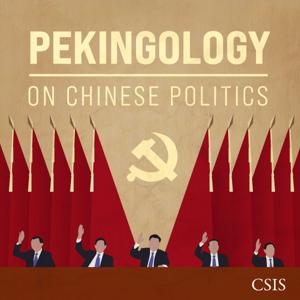
In this episode of Pekingology, Senior Fellow Henrietta Levin is joined by Logan Wright, author of the new book Broken China: How the Economic Miracle Shattered and What it Means for the World. Logan argues the Chinese economy is already shrinking, in large part due to its overextended financial system. Logan and Henrietta discuss what happens when the tools on which Beijing relies to control the economy stop working, why China's stalling economy is causing problems for its trading partners, and how Chinese financial policy may be fueling organized crime around the world.
In this episode of Pekingology, Senior Fellow Henrietta Levin is joined by Steve Tsang, Director of the SOAS China Institute and co-author of the new book China’s Global Strategy under Xi Jinping, to discuss China’s ambitions under Xi Jinping and the ideas shaping Beijing’s approach to the world.
They discuss the importance of Xi’s personal worldview in understanding Chinese foreign policy, how his consolidation of power has changed foreign policy decisionmaking, and the role of regime security, ideology, and nationalism in shaping China’s national interests. The conversation also explores why China’s vision for a new international order is inherently global, how the Global South concept has become central to China’s broader ideological ambitions and engagement with the world, and how Xi’s recent focus on economic and technological power supports China’s pursuit of global preeminence.
In this episode of Pekingology, Senior Fellow Henrietta Levin is joined by Ambassador Daniel Kritenbrink, former Assistant Secretary of State for East Asian and Pacific Affairs, U.S. Ambassador to Vietnam, and Senior Director for Asian Affairs at the National Security Council, to discuss U.S.-China diplomacy and the upcoming meeting between President Donald Trump and Chinese President Xi Jinping.
Drawing on decades of experience engaging with senior Chinese officials, including Xi Jinping, Kritenbrink reflects on Xi’s leadership style and China’s increasingly confident approach to the United States and the international system. He discusses the role of leader-level diplomacy in managing U.S.-China competition, lessons he learned from preparing for Xi’s 2015 state visit to Washington, and what effective communication between Washington and Beijing looks like behind closed doors.
They also examine what to expect from the Trump-Xi summit, the prospects for maintaining what Kritenbrink describes as a “fragile truce” between the two countries, and the economic, technological, and security issues that will continue to test U.S.-China relations.
In this episode of Pekingology, Henrietta Levin, Senior Fellow with the CSIS Freeman Chair in China Studies, is joined by Kurt Campbell, former Deputy Secretary of State and President Biden’s “Asia Czar.” He is currently Chairman of The Asia Group and Distinguished Fellow in Diplomacy with the Georgetown University School of Foreign Service. Henrietta and Kurt discuss how Beijing views American power, the development of U.S. strategy towards China, U.S.-China diplomacy and the characters that sat on the Chinese side of the table, and more.
To learn more about Kurt Campbell’s perspectives on China, you can read his April 2025 Foreign Affairs article, co-authored with Rush Doshi, Underestimating China: Why America Needs a New Strategy of Allied Scale to Offset Beijing’s Enduring Advantages, and his 2016 book, The Pivot: The Future of American Statecraft in Asia.
Founded in 2001 by China, Russia, and key Central Asian states, the Shanghai Cooperation Organization (SCO) marks its 25th anniversary this year. With Chinese President Xi Jinping expected to attend the SCO Leaders' Summit in Kyrgyzstan later this month, the organization has become an increasingly important platform for advancing Beijing's vision of a multipolar international order as China's economic, political, and security influence across Central Asia continues to grow.
In this episode of Pekingology, CSIS Senior Fellow Henrietta Levin is joined by Bradley Jardine, co-author of the new book, Backlash: China’s Struggle for Influence in Central Asia. Henrietta and Bradley unpack China's goals for the upcoming SCO summit, as well as China's long history in Central Asia. They discuss Beijing's use of Silk Road narratives to frame its contemporary engagement with Central Asia, Chinese leaders' top priorities in the region - from border security, to energy resilience, to construction of an increasingly Sinocentric regional architecture - how Central Asian governments quietly manage tensions over repression in Xinjiang, and whether the "debt diplomacy" narrative holds up. They also explore the collision of Chinese and Russian interests in Central Asia, and how the SCO became a leading component of the new international order China is working to build.
China is generating groundbreaking advances in electric vehicles, battery technology, applied artificial intelligence, and industrial robotics. Yet Chinese households are facing stagnant wages, consumption is weak, and public confidence in the economy appears to be declining. In this episode of Pekingology, CSIS Senior Fellow Henrietta Levin is joined by Alicia García-Herrero, a leading expert on Chinese economics, to unpack China's "dual economy." They discuss why President Xi has prioritized global technological leadership over economic opportunity at home, why many of China's most successful companies struggle to turn a profit, and whether rapid AI adoption will boost growth or imperil social stability.
To learn more, read Alicia García-Herrero's recent article in China Leadership Monitor, "China's Dual Economy: When Strategic Ambition Hollows Out the Foundation."
China is rapidly emerging as a global leader in robotics and embodied artificial intelligence, leveraging its manufacturing scale and deep supply chains to shape the future of automation. In this episode of Pekingology, CSIS Senior Fellow Henrietta Levin is joined by Wendy Chang, Senior Analyst at MERICS, to unpack the significant advances – and limitations – of China’s robotics sector and its embodied AI ecosystem. They discuss the politics that have driven huge amounts of capital towards innovative Chinese robotics companies, why China’s humanoid robots may not be quite as impressive as they initially appear, and the global implications of China's robotics ambitions.
To learn more about China's embodied AI strategy, you can read the new MERICS report from Wendy Chang, Rebecca Arcesati, and Altynay Junusova: Embodied AI: China's Ambitious Path to Transform Its Robotics Industry.
Ten years after an international tribunal found the vast majority of China’s claims in the South China Sea to be unlawful, the risk of conflict in this vital global throughway remains stubbornly high. This week on Pekingology, CSIS Senior Fellow Henrietta Levin is joined by Greg Poling, Director and Senior Fellow of the CSIS Asia Maritime Transparency Initiative and Southeast Asia Program, for a wide-ranging discussion on China’s strategy, successes, and failures in the South China Sea. They examine the evolving nature of China’s maritime claims, why Beijing cares so much about small rocks in the middle of the ocean, and why the South China Sea has become a major flashpoint in U.S.-China relations.
To learn more about the South China Sea, you can read Greg’s book On Dangerous Ground: America’s Century in the South China Sea. https://global.oup.com/academic/product/on-dangerous-ground-9780197633984
As a global power, China faces a growing tension between its ambitions to reshape the international order and its disinterest in bearing the costs of upholding that new system. In this episode of Pekingology, CSIS Senior Fellow Henrietta Levin is joined by Sam Chetwin George, Senior Fellow at the Asia Society’s Center on U.S.–China Relations and Research Fellow at China Heritage, to explore Beijing’s evolving perspectives on the post-World War II order and what comes next. They discuss China’s vision for global governance, the ideological foundations of its international strategy, how its domestic economic challenges may shape its international priorities, and how it approaches the conflicts in Ukraine, Iran, and Myanmar.
To learn more about Sam’s perspectives on Chinese foreign policy, you can read his new Foreign Affairs article, China Was Ready for the Age of Anarchy: Why Turbulence Will Make Beijing More Assertive. https://www.foreignaffairs.com/china/china-was-ready-age-anarchy
China and Russia have transformed a historically fraught relationship into one of the most consequential strategic partnerships in the world. This week on Pekingology, CSIS Senior Fellow Henrietta Levin is joined by Alexander Gabuev, a leading expert on China-Russia ties and director of the Carnegie Russia Eurasia Center. They examine how Xi Jinping and Vladimir Putin have deepened their bilateral and personal ties, what China gains from supporting Russia's war in Ukraine, and where the limits of their “no-limits” partnership may lie. The conversation explores energy, sanctions, leverage, people-to-people ties, and the role of the Xi-Putin relationship in shaping the future of international order.
From the publisher's feed
252 Listeners

595 Listeners

1,069 Listeners
142 Listeners

603 Listeners
206 Listeners
768 Listeners

718 Listeners
2 Listeners
290 Listeners
152 Listeners
423 Listeners

6 Listeners
109 Listeners

85 Listeners
17 Listeners
404 Listeners
1 Listeners

22 Listeners
25 Listeners

493 Listeners
4 Listeners

474 Listeners
2 Listeners

372 Listeners
5 Listeners
266 Listeners
47 Listeners

0 Listeners
3 Listeners
13 Listeners
9 Listeners
3 Listeners
1 Listeners