
Sign up to save your podcasts
Or



Based on Podcast App listening data
Through most of 1941, as fighting raged across Europe, the United States held back from entering the war. That all changed in December, when Japanese fighter planes bombed Pearl Harbor and the nation found itself mobilizing for World War II. Suddenly, the frenzy to fight enemies abroad turned to suspicion against those at home.
President Roosevelt signed Executive Order 9066, giving the military the power to detain and permanently jail over 110,000 Japanese Americans living on the West Coast. But three young detainees would defy their fate.
Fred Korematsu, Gordon Hirabayshi and Mitsuye Endo would challenge the U.S. policy of Japanese internment and bring their cases all the way to the Supreme Court — pitting the wartime powers of the United States against the constitutional rights of American citizens.
Listen ad free with Wondery+. Join Wondery+ for exclusives, binges, early access, and ad free listening. Available in the Wondery App. https://wondery.app.link/historytellers
Support us by supporting our sponsors!
See Privacy Policy at https://art19.com/privacy and California Privacy Notice at https://art19.com/privacy#do-not-sell-my-info.
After the Civil War, America began to rebuild a shattered nation. For the first time, the country could create a society without slavery, and a nation where Black people could forge their own path as independent citizens.
But by the 1890s, the laws and policies that promised new rights for Black citizens in the South were under assault. In Louisiana, white politicians attempted to turn back the clock on racial progress by passing the Separate Cars Act and reinstating segregation.
The move prompted a Black New Orleans activist group called the Comité des Citoyens to rise up and challenge the law. Members Louis Martinet and Albion Tourgee aimed to build a test case – a case that would force the Supreme Court to strike down segregation laws, and disprove the idea that “separate” could ever be “equal.”
The high-stakes case would define race relations for decades to come. And it would begin with a brief train car ride in New Orleans, by a 29-year-old shoemaker named Homer Plessy.
Listen ad free with Wondery+. Join Wondery+ for exclusives, binges, early access, and ad free listening. Available in the Wondery App. https://wondery.app.link/historytellers
Support us by supporting our sponsors!
See Privacy Policy at https://art19.com/privacy and California Privacy Notice at https://art19.com/privacy#do-not-sell-my-info.
In the early 1800s, the United States was growing rapidly, seeking land and resources for its expanding population. But the growth threatened Native American communities throughout the East. In the southern Appalachia region, the Cherokee Nation held millions of acres of prime farmland and forests, managed by a centuries-old tradition and a thriving government. But the state of Georgia, and a relentless President Andrew Jackson, set their sights on seizing the land.
When the Georgia statehouse declared political war, Cherokee advocates fought back. Newspaper publisher Elias Boudinot and Cherokee Chief John Ross took their challenge all the way to the Supreme Court, forcing Chief Justice John Marshall to weigh in on two monumental cases, Cherokee Nation v. Georgia and Worcester v. Georgia.
At stake was a decision that would test the limits of the high court’s power -- and determine the future and sovereignty of a threatened nation.
Listen ad free with Wondery+. Join Wondery+ for exclusives, binges, early access, and ad free listening. Available in the Wondery App. https://wondery.app.link/historytellers
Support us by supporting our sponsors!
See Privacy Policy at https://art19.com/privacy and California Privacy Notice at https://art19.com/privacy#do-not-sell-my-info.
After the War of Independence, the new American government created the Supreme Court to be the final word on disputes that the states couldn’t settle. But at first, the Court was anything but Supreme.
For nearly a decade, Congress and the President held the real power. In practice the Supreme Court was weak, ineffectual and disorganized – a post so unappealing that many men turned down nominations to serve on its bench.
All that would change with the appointment of Chief Justice John Marshall and the arrival of a case called Marbury v. Madison — a political drama that would embroil the new President Thomas Jefferson, outgoing president John Adams, the U.S. Congress, and even the Chief Justice himself.
Listen ad free with Wondery+. Join Wondery+ for exclusives, binges, early access, and ad free listening. Available in the Wondery App. https://wondery.app.link/historytellers
Support us by supporting our sponsors!
See Privacy Policy at https://art19.com/privacy and California Privacy Notice at https://art19.com/privacy#do-not-sell-my-info.
After Federal troops withdrew from the South in 1877, Reconstruction officially came to an end, and the battle to control the narrative began. For the next century, white Southerners espoused the Lost Cause mythology, shifting the blame for the failure of Reconstruction onto Northern interlopers and Black citizens supposedly “unready” for freedom. Today, Lindsay is joined by University of Colorado Professor Ashleigh Lawrence-Sanders to discuss the legacy of Reconstruction, and how Black scholars and communities have worked to counter the Lost Cause narrative, even up to today.
Listen ad free with Wondery+. Join Wondery+ for exclusives, binges, early access, and ad free listening. Available in the Wondery App. https://wondery.app.link/historytellers
Support us by supporting our sponsors!
See Privacy Policy at https://art19.com/privacy and California Privacy Notice at https://art19.com/privacy#do-not-sell-my-info.
In 1876, Republican Rutherford B. Hayes and Democrat Samuel Tilden vied for the presidency. But when Election Day was over, no clear winner emerged. Amid reports of voter fraud, intimidation and violence, both parties claimed victory in South Carolina, Louisiana, and Florida, the only three Southern states where Republicans still held the reins of local government.
It was the most bitterly disputed election in American history. As the stalemate dragged on, the nation faced a Constitutional crisis. The outcome of the presidency, the fate of Reconstruction, and the futures of millions of Black Southerners hung in the balance.
Listen ad free with Wondery+. Join Wondery+ for exclusives, binges, early access, and ad free listening. Available in the Wondery App. https://wondery.app.link/historytellers
Support us by supporting our sponsors!
See Privacy Policy at https://art19.com/privacy and California Privacy Notice at https://art19.com/privacy#do-not-sell-my-info.
On Easter Sunday, 1873, an armed white mob battled a Black militia over control of a courthouse in a rural Louisiana parish. In the end, as many as 150 Black citizens were massacred. It was one the deadliest incidents of racial violence during the Reconstruction era.
As anti-Black violence ravaged the South, President Ulysses S. Grant entered his second term. Soon, the North’s commitment to defending Southern Black political rights faltered when disaster struck Wall Street, triggering bank failures across America. Tens of thousands of freedpeople saw their meager savings disappear, as their political rights came under threat from armed Southern Democrats determined to reclaim power once and for all.
Listen ad free with Wondery+. Join Wondery+ for exclusives, binges, early access, and ad free listening. Available in the Wondery App. https://wondery.app.link/historytellers
Support us by supporting our sponsors!
See Privacy Policy at https://art19.com/privacy and California Privacy Notice at https://art19.com/privacy#do-not-sell-my-info.
In 1870, the ratification of the 15th Amendment enshrined Black men’s right to vote in the Constitution. Senator Hiram Revels became the first Black man to serve in Congress. Across the South, Black men were elected to office in unprecedented numbers.
But soon, the Ku Klux Klan moved to undermine Black political rights with a violent campaign of fear and intimidation. Black militias formed, and took up arms to defend their communities from Klan terrorism. But in Washington, a split in the Republican party would soon jeopardize the fate of Reconstruction.
Listen ad free with Wondery+. Join Wondery+ for exclusives, binges, early access, and ad free listening. Available in the Wondery App. https://wondery.app.link/historytellers
Support us by supporting our sponsors!
See Privacy Policy at https://art19.com/privacy and California Privacy Notice at https://art19.com/privacy#do-not-sell-my-info.
In the spring of 1867, over President Andrew Johnson’s veto, the Republican-controlled Congress passed the Reconstruction Acts, putting the U.S. Army in control of the South and giving Black Southerners expanded political rights. For the first time they organized and attended political rallies, registered to vote, and even helped draft new state constitutions across the South. Back in Washington, D.C., the conflict between Johnson and Congressional Republicans reached a boiling point, and Johnson became the first president in American history to be impeached. While he fought for his presidency, Black voters in the South faced a backlash of vigilante violence, as the white supremacist Ku Klux Klan unleashed a wave of terror.
Listen ad free with Wondery+. Join Wondery+ for exclusives, binges, early access, and ad free listening. Available in the Wondery App. https://wondery.app.link/historytellers
Support us by supporting our sponsors!
See Privacy Policy at https://art19.com/privacy and California Privacy Notice at https://art19.com/privacy#do-not-sell-my-info.
In December 1865, the first postwar Congress convened in Washington, D.C. With Black Southerners still facing rampant violence and discrimination, the Republican majority blocked the former Confederate states from rejoining the Union.
Determined to protect Black rights and curb the power of ex-Confederates, Radical Republican leaders Thaddeus Stevens and Charles Sumner vowed to seize control of Reconstruction. But President Andrew Johnson wielded his veto power to fight back. While the rift between the President and Congress deepened, millions of freed people struggled to maintain their autonomy and economic independence.
Listen ad free with Wondery+. Join Wondery+ for exclusives, binges, early access, and ad free listening. Available in the Wondery App. https://wondery.app.link/historytellers
Support us by supporting our sponsors!
See Privacy Policy at https://art19.com/privacy and California Privacy Notice at https://art19.com/privacy#do-not-sell-my-info.
From the publisher's feed
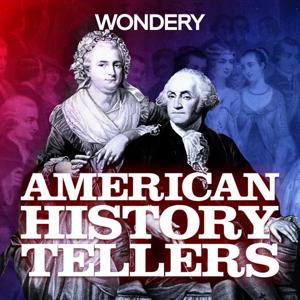
The Cold War, Prohibition, the Gold Rush, the Space Race. Every part of your life - the words you speak, the ideas you share - can be traced to our history, but how well do you really know the…
Audible subscribers can listen to all episodes of American History Tellers ad-free right now. Join Audible today by downloading the Audible app.
Ranked by our users in the last 21 days
10,440 Listeners

30,152 Listeners
777 Listeners
467 Listeners

783 Listeners

3,994 Listeners

6,173 Listeners

12,829 Listeners

3,638 Listeners

19,106 Listeners
2,149 Listeners

2,932 Listeners

115 Listeners

3,044 Listeners
22,947 Listeners

4,221 Listeners

905 Listeners

1,466 Listeners

7,772 Listeners

256 Listeners

2,521 Listeners

2,824 Listeners

251 Listeners

2,161 Listeners

1,597 Listeners
848 Listeners
1,531 Listeners

239 Listeners

592 Listeners

69 Listeners

535 Listeners
875 Listeners

163 Listeners