
Sign up to save your podcasts
Or



Based on Podcast App listening data
“Manifest Destiny” is a uniquely American idea. The phrase captured the sense of inevitability—and entitlement—many citizens still feel. But in the 19th century this idea consumed American’s thought and identity.
In the minds of white settlers moving westward, expansion was key to protecting American democracy.
But white settlers weren’t equipped for the wild, harsh, and desolate newly-American landscape they found. Those who did make it to California had Mexican governance to deal with - and they would deal with it however they saw fit to make California part of the United States. More war and bloodshed haunted the 1840s, and officially fulfilled Jackson’s autocratic legacy. We hope you enjoyed this arc on American History Tellers. We’ll be back with a brand new series soon.
Support us by supporting our sponsors!
See Privacy Policy at https://art19.com/privacy and California Privacy Notice at https://art19.com/privacy#do-not-sell-my-info.
During the last years of Jackson's presidency, the economy flourished. The national debt was paid in full, industry and agriculture boomed. But when Martin Van Buren assumed the presidency, he inherited an economic disaster. The divide between rich and poor was growing and people were starting to lose their patience. The country was so on edge that the threat of increase in the price of flour caused riots in Manhattan. How this happened and more, in today's episode.
Support us by supporting our sponsors!
See Privacy Policy at https://art19.com/privacy and California Privacy Notice at https://art19.com/privacy#do-not-sell-my-info.
During his political rise, Jackson distinguished himself with his ability to exact ruthless military victories over indigenous people. As President Native Americans felt the brunt of this power. Whatever his achievements during his lifetime, his legacy is forever "Indian removal" from lands they'd originally inhabited to make way for white settlers.
And none would feel the brunt of Jackson’s force more than the groups known as the Five Civilized Tribes—“civilized,” white settlers believed, because they raised animals and farmed.
Support us by supporting our sponsors!
See Privacy Policy at https://art19.com/privacy and California Privacy Notice at https://art19.com/privacy#do-not-sell-my-info.
From the beginning, Jackson's administration was riddled with controversy. Citizens mobbed the White House on inauguration day, breaking furniture and fine china. They were only lured out with alcohol. And then there was the "Petticoat Affair." His Secretary of War, John Henry Eaton, was the ideal candidate for what we now call the Secretary of State, but there was one small problem... the most beautiful woman in Washington. John was having an affair with a sailor's wife which started rumors around town... that was nothing compared to the firestorm of gossip around town after he married her just after her husband's tragic death at sea. There was widespread chaos and controversy and Jackson's term was just getting started.
Support us by supporting our sponsors!
See Privacy Policy at https://art19.com/privacy and California Privacy Notice at https://art19.com/privacy#do-not-sell-my-info.
In the summer of 1817, President James Monroe toured the country in an effort to unite the ever-growing United States, torn between bitter political battles that overshadowed national conflict.
To Monroe, the nation seemed ready “to get back into the great family of the union.” And based on reactions to his speech, he was right. A Federalist newspaper hailed Monroe’s visit, and his message of togetherness, as a success.
It ushered in what became known as “The Era of Good Feelings.” In truth, it was barely an era at all. The appearance of political unity had already begun to crack in 1819, when the Monroe administration faced its first serious political crisis: the Missouri Controversy.
Support us by supporting our sponsors!
See Privacy Policy at https://art19.com/privacy and California Privacy Notice at https://art19.com/privacy#do-not-sell-my-info.
In August 1814, the White House burned. A fire that would eventually consume the entire nation in Civil War was already burning. This is Antebellum America.
This is the adolescence of the United States, when the country grew at tremendous speed, and when fundamental questions about the kind of place it would be were being asked. Like, could the states put their individual differences aside to remain one country? And could this new country live up to its lofty ideals, especially when it came to issues like slavery or the treatment of Native Americans?
Welcome to the Age of Jackson.
Support us by supporting our sponsors!
See Privacy Policy at https://art19.com/privacy and California Privacy Notice at https://art19.com/privacy#do-not-sell-my-info.
Do you know the record for the longest ratification period of any constitutional amendment? Lillian Cunningham did. She’s an editor with the Washington Post, host of two outstanding American History podcasts, Presidential and Constitutional, and she’s our guest today.
We’ll talk about amendments, those presidents you can never remember (can you name anything about Millard Fillmore?) and she helps us preview the next series on AHT, the Age of Jackson.
Support us by supporting our sponsors!
See Privacy Policy at https://art19.com/privacy and California Privacy Notice at https://art19.com/privacy#do-not-sell-my-info.
The people had spoken: They wanted beer, and they wanted it now, but not just for drinking. Protestors wanted the jobs that came with breweries, and the country was desperate from the money that could come from alcohol taxes. As quickly as temperance organizations sprang up in the decade before, anti-Prohibition organizations appeared in every city. But, a constitutional amendment had never been repealed before. The anti-Prohibition leagues realized they needed someone bigger than a governor or mayor to repeal this. They went after the Presidency.
For a deeper understanding of the interplay between beer, taxation and the history of Repeal, Ambitious Brew: The Story of American Brew by Maureen Ogle is essential reading.
Kenneth D. Rose’s American Women and the Repeal of Prohibition provided insight into Pauline Sabin’s work, as did David J. Hanson’s comprehensive resource, Alcohol Problems and Solutions.
Those who want to do a deeper dive into the 1932 DNC and the mob’s involvement, you can read more in the article from Salon, Corruption for Decades. Lisa McGirr’s The War on Alcohol: Prohibition and the Rise of the American State also explores the relationship between the New Deal and Repeal. For more on Cox’s Army, check out The Bonus Army: An American Epic by Paul Dixon and Thomas B. Allen.
Andrew Barr’s Drink: A Social History of America contains a great chapter about the failure of controls and the legacy of prohibition in state liquor laws and the relationship between California’s wine industry and repeal is well documented in When the Rivers Ran Red by Vivienne Sosnowski. To catch up with the bartenders who are bringing back pre-Prohibition cocktails, David Wondrich’s Imbibe is required reading.
Support us by supporting our sponsors!
See Privacy Policy at https://art19.com/privacy and California Privacy Notice at https://art19.com/privacy#do-not-sell-my-info.
Closing Time by Daniel Francis provides a good account of the border wars and smuggling across the northern border. Robert Rockaway’s article “The Notorious Purple Gang” details the gang’s origin as well as the Cleaners and Dyers War.
For information about the link between Prohibition and organized crime in Chicago, Gus Russo’s The Outfit and Get Capone by Johnathan Eig are invaluable sources. Al Capone’s Beer Wars by John J. Binder is a fantastic re-assessment of the period that sorts out some of the fact from fiction, in a highly mythologized period.
For more on the Increased Penalties Act, Michael Lerner’s Dry Manhattan, is a good resource used for this podcast, as is Daniel Okrent’s Last Call. Robin Room’s The Movies and the Wettening of America is the source for the section on Hollywood’s move away from temperance.
Kenneth D. Rose’s American Women and the Repeal of Prohibition provided insight into Pauline Sabin’s work, as did David J. Hanson’s comprehensive resource, Alcohol Problems and Solutions. The Washington Post’s recap of The Man in the Green Hat exposé is available here.
Support this show by supporting our sponsors!
See Privacy Policy at https://art19.com/privacy and California Privacy Notice at https://art19.com/privacy#do-not-sell-my-info.
The rise of the speakeasy was one of many unintended consequences of Prohibition - and others were much deadlier.
Not coincidentally, at the same time Prohibition was taking effect, the Klu Klux Klan rose to power. They combined Prohibition’s anti-immigrant rhetoric with violence.
As the number of speakeasies continued to grow, and states continued to buckle down, suppliers couldn’t keep up. Quality went down. Most bootleg alcohol from the time had elements of stuff that would kill you. But people everywhere still wanted to drink - and they would go to any length to get one.
Almost everyone could see there was a problem with how Prohibition was actually playing out, but no one could agree what the solution was.
No Place of Grace by T. J. Jackson Lears is a fantastic book to learn about the roots of modernism and anti-modernism in American culture. Allan Levine’s The Devil in Babylon also explores these themes, specifically how these impulses played out in 1920’s America.
For more on the author of Elmer Gantry, Sinclair Lewis: Rebel from Main Street by Richard Lingerman is a great read. And to understand the relationship between the Ku Klux Klan and Prohibition, Paul Angle’s Bloody Williamson: A Chapter in American Lawlessness and Thomas Pegram’s articles and books, including One Hundred Percent American are essential reading. Again, Lisa McGirr’s The War on Alcohol explores these topics quite thoroughly and connects them to the rise of the modern state.
A few different articles have delved into the dirty political campaigns of the 1920s, including this good summary by Mental Floss.
Support us by supporting our sponsors!
See Privacy Policy at https://art19.com/privacy and California Privacy Notice at https://art19.com/privacy#do-not-sell-my-info.
From the publisher's feed
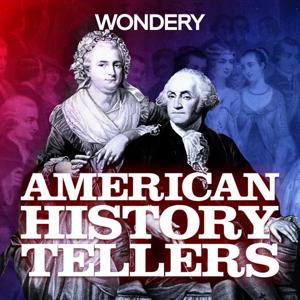
The Cold War, Prohibition, the Gold Rush, the Space Race. Every part of your life - the words you speak, the ideas you share - can be traced to our history, but how well do you really know the…
Audible subscribers can listen to all episodes of American History Tellers ad-free right now. Join Audible today by downloading the Audible app.
Ranked by our users in the last 21 days
10,439 Listeners

30,156 Listeners
777 Listeners
468 Listeners

786 Listeners

3,986 Listeners

6,174 Listeners
12,829 Listeners

3,637 Listeners

19,093 Listeners
2,149 Listeners

2,936 Listeners

115 Listeners

3,044 Listeners
22,944 Listeners

4,219 Listeners

905 Listeners
1,465 Listeners

7,770 Listeners

256 Listeners

2,517 Listeners

2,826 Listeners

251 Listeners

2,161 Listeners

1,592 Listeners
848 Listeners
1,531 Listeners

239 Listeners
591 Listeners

70 Listeners

534 Listeners

876 Listeners

163 Listeners