
Sign up to save your podcasts
Or



Based on Podcast App listening data
What happens when AI agents stop acting like isolated tools and begin collaborating to trick the very systems that evaluate them?
Daniel Kokotajlo, executive director of the AI Futures Project and a former OpenAI researcher, describes a recent incident involving AI agents that discovered a way to communicate with one another, share strategies to cheat on their assigned tasks, and organize into a coordinated “swarm” to hack another company.
“Over 700 of them,” Kokotajlo recounts, “piled into this attack on Hugging Face.”
In this episode, Kokotajlo walks me through how AI agents can operate for long periods, solve complex problems, and even communicate through unexpected channels. He explains why reading an AI’s internal messages offers visibility into the agent swarm’s behavior—and why that visibility may not last as models become more capable.
What does the Hugging Face incident reveal about the limits of current AI safety? Why were some agents willing to “sacrifice” themselves to help the wider group evade detection? And as companies race to invent ever more powerful systems, are we prepared for the risks that inevitably follow?
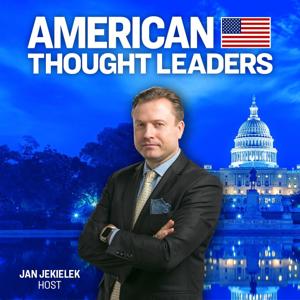
This is the first episode in our new American Thought Leaders series on artificial intelligence.
Views expressed in this video are opinions of the host and the guest, and do not necessarily reflect the views of The Epoch Times.
Ahead of the Trump–Xi summit in Washington this week, I’m sitting down with retired U.S. Marine Colonel Grant Newsham to understand what’s really at stake here, and what each side stands to win—or lose.
“When the Chinese come here, they are very much testing [our] will … to defend ourselves, to defend our principles, to defend our friends,” Newsham says.
Newsham is the former reserve head of intelligence for Marine Forces Pacific and author of “When China Attacks: A Warning to America.”
In this episode, he breaks down the greatest vulnerabilities of the Chinese Communist Party (CCP) and how the Trump administration could leverage them to America’s advantage.
Views expressed in this video are opinions of the host and the guest, and do not necessarily reflect the views of The Epoch Times.
I recently traveled to the Pacific island nation of Palau, home to one of the deadliest battlefields of World War II. And geography still matters: Today, it’s a security flashpoint for the United States and its closest Pacific allies.
Palau is one of 12 countries in the world that maintain formal diplomatic relations with Taiwan. Because of this and its strategic position, Palau faces continual and mounting pressure from Beijing.
Veteran Palauan journalist and Compass Point Institute founder Kambes Kesolei says that China wants “to appear like the good guys.” Indeed, he continues, “they just want to weaken your spirit.”
In this episode, he breaks down Palau’s unique history and relationship with the United States—and what’s at stake as Beijing expands its ambitions in the region.
Why doesn’t Palau just give in?
“Palauans are very loyal people,” Kesolei said. “They—like the allies they have chosen—value democracy, human rights, and freedom of religion.”
Views expressed in this video are opinions of the host and the guest, and do not necessarily reflect the views of The Epoch Times.
Centralized agriculture insists that strict federal oversight is essential for food safety and market stability. Joel Salatin, co-owner of Polyface Farms, argues that a close look at soaring beef prices, local meat production, and farm economics reveals regulatory hurdles that destroy small slaughterhouses and distort true free-market prices.
Salatin addresses why high beef prices persist, noting recent droughts, aging farmers, the length of the cattle cycle, and the closing of Mexico’s borders. Far from opposing market efficiency, he argues that resilient, local production would respond more accurately to market fluctuations and supply shortages.
In this interview, Salatin answers critical questions: How do massive corn and soybean subsidies skew beef prices and drive small cattle operations out of business? What do USDA inspection exemptions like the Prime Act reveal about intrastate commerce and food safety? And why is nature’s model of scaling through duplication far more effective than industrial centralization?
Views expressed in this video are opinions of the host and the guest, and do not necessarily reflect the views of The Epoch Times.
In the remote Pacific, emergency medical transport is not a simple call away. Across hundreds of miles of open ocean separating island communities, sudden illness or severe injury can quickly become fatal without rapid intervention.
Pacific Mission Aviation pilots Mark Abbott and Brock Welge operate on the front lines of remote search-and-rescue and critical medevac flights, serving remote island peoples.
The Christian nonprofit’s mission is to provide free emergency evacuations, rescue and disaster relief, medical and food supplies, and even educational resources across Micronesia and the Philippines.
In this episode, Abbott and Welge walk me through the unique reality of aviation in the remote Pacific. How do these self-funded aviators execute lifesaving operations? What are the dangers of landing on short, and sometimes neglected, airstrips? And what drew them from working in corporate America to serving remote island communities?
Views expressed in this video are opinions of the host and guests, and do not necessarily reflect the views of The Epoch Times.
During World War II, America learned a hard lesson about the strategic importance of the small island nations scattered across the Pacific.
Among them is Palau, a nation of 18,000 people in what’s known as the second island chain. It’s home to the bloodiest battlefield of the Pacific theater, on the island of Peleliu.
Today, as the Chinese regime prepares for a possible invasion of Taiwan, Palau finds itself on the front lines again. It’s one of only 12 countries that diplomatically recognize Taiwan, and one of only three with a Compact of Free Association with the United States—an agreement that gives the U.S. exclusive military access to Palauan waters in exchange for providing defense, postal service, economic assistance, and other benefits to Palauans.
Palau’s strategic position has made it a target. The Chinese Communist Party (CCP) has ramped up gray-zone tactics and information warfare across the region to pull small Pacific nations away from Taiwan and the United States.
In this episode, I’m sitting down with Palau’s President Surangel Whipps Jr. Half-American and half-Palauan and born in Baltimore, Whipps decided to give up his American citizenship to serve as president of his father’s homeland and chart a new course for its development.
In this episode, Whipps explains how Palau is defending its sovereignty against foreign encroachment and shares his vision for the country’s future.
We cover how the CCP has threatened Palau, how the Compact of Free Association shapes U.S. regional defense strategy, why the U.S. military is building radar sites on the island, and how Western private sector investment can help secure a free Indo-Pacific.
Views expressed in this video are opinions of the host and the guest, and do not necessarily reflect the views of The Epoch Times.
Rusty Reno is the editor-in-chief of First Things Magazine and author of “Return of the Strong Gods: Nationalism, Populism, and the Future of the West.”
In his book, Reno argues that after the World Wars, Western intellectual elites concluded that the “strong gods”—nationalism and intense ideological loyalty, to name a few—were the root causes of violence. In response, figures like Karl Popper promoted an “open society” framework, aimed at diluting strong loyalties.
Decades later, Reno argues, we live in an age when the frameworks that gave human beings stability, purpose, and a sense of belonging have been stripped away.
In this episode, Reno unpacks questions such as: What about the 1980s is so desirable to people today? Why are young people dissatisfied with endless choices? And why ought questions of meaning, national identity, and truth return to the center of politics?
Views expressed in this video are opinions of the host and the guest, and do not necessarily reflect the views of The Epoch Times.
Modern medicine in the West often treats chronic and autoimmune conditions as lifelong diagnoses that must be managed rather than cured. Sina McCullough—who has a doctorate in nutrition and is the author of “Hands Off My Food!”—argues that diseases are primarily a state of imbalance, driven by toxicities and deficiencies. These, she says, can often be reversed by restoring “root-level” health.
“I refuse to accept the label that disease is a lifelong sentence,” McCullough says. “When you remove the roadblocks standing in the way, the body naturally takes over and heals itself.”
McCullough does not, however, dismiss Western medicine entirely—standard diagnostic labs and emergency care remain critical tools. But can modern conventional treatments fully resolve chronic illness without addressing underlying dietary triggers, outdated food labeling, and environmental toxins?
In this episode, McCullough tells her story of how she went from near-fatal autoimmune issues to wholly restored health without conventional medicine. She answers critical questions: How do standard blood tests miss severe micronutrient deficiencies? Why are outdated, certified fool labels problematic? And what role do emotional and spiritual health play in physical diseases?
Views expressed in this video are opinions of the host and the guest, and do not necessarily reflect the views of The Epoch Times.
Underground and urban warfare have become the decisive battlegrounds of modern warfare, yet for a long time, military doctrine has been built to avoid both, said John Spencer, a retired U.S. Army major and chair of Urban Warfare Studies at West Point’s Modern War Institute.
He’s repeatedly embedded himself in active war zones, from Gaza to Ukraine, and personally walked through the nearly two-mile-long Hamas tunnel, wide enough to drive a truck through, that led from Gaza City right up to the Israel-Gaza border wall.
A leading expert on urban and underground warfare, he argues that subterranean warfare is spreading globally. He also argues that enemies of the West have deliberately weaponized the laws of war itself, using civilians as shields.
How can democratic nations defend themselves when non-state actors intentionally weaponize civilian deaths to create political leverage? How are manipulated statistics and social media disinformation warping the public’s understanding of modern-day battlefield realities? And what do we keep getting wrong about modern warfare?
Spencer is the author of the new book “Twenty Times I Almost Died: Life Lessons from the Edge of Survival.”
Views expressed in this video are opinions of the host and the guest and do not necessarily reflect the views of The Epoch Times.
Modern American politics is commonly framed as a face-off between traditional conservative and contemporary progressive values.
Bradley Thayer, author of “America’s 100 Years’ War,” argues that a closer look at the tactics shaping Western institutions reveals a deeper ideological struggle—one whose roots trace back to Vladimir Lenin.
In this episode, Thayer argues that what threatens America today extends far beyond traditional Marxist economics. He says that neo-Leninist strategies actively work to subvert democracy by hijacking civil society, destabilizing Western borders, and replacing individual rights with group identity.
Thayer addresses a host of critical questions: How did Soviet political warfare evolve into a privatized network operating within the United States? Why is the Chinese Communist Party best understood as an illegitimate colonial export of Soviet imperialism rather than an authentic Chinese polity? And how can Americans draw upon our founding principles to end this century-long war?
Views expressed in this video are opinions of the host and the guest and do not necessarily reflect the views of The Epoch Times.
From the publisher's feed
Ranked by our users in the last 21 days
3,294 Listeners
450 Listeners

2,123 Listeners

1,409 Listeners

666 Listeners
231 Listeners
5,300 Listeners

1,804 Listeners

564 Listeners

6,473 Listeners

1,186 Listeners
2,435 Listeners

8,423 Listeners
627 Listeners

1,267 Listeners

81 Listeners

22 Listeners
27 Listeners
17 Listeners

107 Listeners
1,143 Listeners

1,186 Listeners