Ancient Greece: Myth, Art, War

Ancient Greece: Myth, Art, War

By Professor Chris Mackie and Dr Gillian ShepherdEducation
Download on the App Store

Ancient Greece: Myth, Art, War episodes

  • Solon to Peisistratos: Athens in the 6th Century BC
    Athens in the 7th century BC seems to have been a place of social and political tensions between rich and poor. At the beginning of the 6th century, Solon emerged as an enlightened reformer, who put in place measures to improve the Athenian economy and the lot of the poor, and recorded his efforts in poetry. By 560 BC, however, Athens was moving towards a political regime common in archaic Greece: tyranny. After three attempts, Peisistratos finally gained power as tyrant of Athens. In this lecture Dr Gillian Shepherd explores this critical period in Greek history and also focuses on one of our main sources, the 5th century BC writer Herodotus, who is often awarded the title of “the father of history”.
    Copyright 2013 Gillian Shepherd / La Trobe University, all rights reserved. Contact for permissions.

    55 min
  • Solon to Peisistratos: Athens in the 6th Century BC (handout)
    Athens in the 7th century BC seems to have been a place of social and political tensions between rich and poor. At the beginning of the 6th century, Solon emerged as an enlightened reformer, who put in place measures to improve the Athenian economy and the lot of the poor, and recorded his efforts in poetry. By 560 BC, however, Athens was moving towards a political regime common in archaic Greece: tyranny. After three attempts, Peisistratos finally gained power as tyrant of Athens. In this lecture Dr Gillian Shepherd explores this critical period in Greek history and also focuses on one of our main sources, the 5th century BC writer Herodotus, who is often awarded the title of “the father of history”.
    Copyright 2013 Gillian Shepherd / La Trobe University, all rights reserved. Contact for permissions.
    0 min
  • Greece at War: The Persian Wars
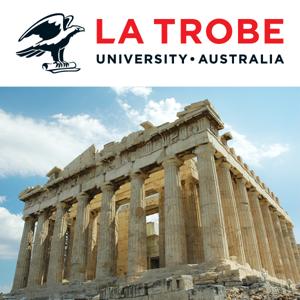
    Peisistratos, tyrant of Athens, seems to have ruled benevolently and Athens prospered under his regime. In the course of the 6th century BC, important public buildings were erected in both the Agora (town square) of Athens and on the Acropolis. But change was afoot: in this lecture Dr Gillian Shepherd traces the events of the late sixth century and earlier 5th century BC, an action-packed period for Athens. The Peisistratid tyranny fell and was replaced by a new form of government – democracy. Despite the new regime, life was not peaceful: the Athenians united with other Greeks in bloody clashes with the invading Persians, fighting some of the greatest battles in history - Marathon, Thermopylae, Salamis and Plataea.
    Copyright 2013 Gillian Shepherd / La Trobe University, all rights reserved. Contact for permissions.
    50 min
  • Greece at War: The Persian Wars (handout)
    Peisistratos, tyrant of Athens, seems to have ruled benevolently and Athens prospered under his regime. In the course of the 6th century BC, important public buildings were erected in both the Agora (town square) of Athens and on the Acropolis. But change was afoot: in this lecture Dr Gillian Shepherd traces the events of the late sixth century and earlier 5th century BC, an action-packed period for Athens. The Peisistratid tyranny fell and was replaced by a new form of government – democracy. Despite the new regime, life was not peaceful: the Athenians united with other Greeks in bloody clashes with the invading Persians, fighting some of the greatest battles in history - Marathon, Thermopylae, Salamis and Plataea.
    Copyright 2013 Gillian Shepherd / La Trobe University, all rights reserved. Contact for permissions.
    0 min
  • Solon to Peisistratos: Athens in the 6th Century BC
    Athens in the 7th century BC seems to have been a place of social and political tensions between rich and poor. At the beginning of the 6th century, Solon emerged as an enlightened reformer, who put in place measures to improve the Athenian economy and the lot of the poor, and recorded his efforts in poetry. By 560 BC, however, Athens was moving towards a political regime common in archaic Greece: tyranny. After three attempts, Peisistratos finally gained power as tyrant of Athens. In this lecture Dr Gillian Shepherd explores this critical period in Greek history and also focuses on one of our main sources, the 5th century BC writer Herodotus, who is often awarded the title of “the father of history”.
    Copyright 2013 Gillian Shepherd / La Trobe University, all rights reserved. Contact for permissions.
    0 min
  • Solon to Peisistratos: Athens in the 6th Century BC (handout)
    Athens in the 7th century BC seems to have been a place of social and political tensions between rich and poor. At the beginning of the 6th century, Solon emerged as an enlightened reformer, who put in place measures to improve the Athenian economy and the lot of the poor, and recorded his efforts in poetry. By 560 BC, however, Athens was moving towards a political regime common in archaic Greece: tyranny. After three attempts, Peisistratos finally gained power as tyrant of Athens. In this lecture Dr Gillian Shepherd explores this critical period in Greek history and also focuses on one of our main sources, the 5th century BC writer Herodotus, who is often awarded the title of “the father of history”.
    Copyright 2013 Gillian Shepherd / La Trobe University, all rights reserved. Contact for permissions.
    0 min
  • Homer's World: Dark Age Greece
    For reasons that are still unclear to us, the Mycenaean civilisation fell around 1200 BC. After that, life was relatively grim in Greece – a lot of important skills, including literacy, were lost and Greece seems to have had less contact with the outside world. In this lecture Dr Gillian Shepherd looks at this intriguing period between the Bronze Age and the Classical period: occasionally, however, we see a glimmer of light in the Dark Age Greece, such as the extraordinary finds from Lefkandi and flashy 9th century BC burials in Athens. In the 8th century BC - sometimes called the “Renaissance” of ancient Greece – we see an explosion in the archaeological record after the relative paucity of the Dark Ages: more burials, more settlements and more religious activity. The Greeks started venturing abroad, and founded settlements overseas. The 8th century also saw reading and writing reappear – but this time in a new form, an alphabet borrowed from the Phoenicians.
    Copyright 2013 Gillian Shepherd / La Trobe University, all rights reserved. Contact for permissions.
    54 min
  • Homer's World: Dark Age Greece (handout)
    For reasons that are still unclear to us, the Mycenaean civilisation fell around 1200 BC. After that, life was relatively grim in Greece – a lot of important skills, including literacy, were lost and Greece seems to have had less contact with the outside world. In this lecture Dr Gillian Shepherd looks at this intriguing period between the Bronze Age and the Classical period: occasionally, however, we see a glimmer of light in the Dark Age Greece, such as the extraordinary finds from Lefkandi and flashy 9th century BC burials in Athens. In the 8th century BC - sometimes called the “Renaissance” of ancient Greece – we see an explosion in the archaeological record after the relative paucity of the Dark Ages: more burials, more settlements and more religious activity. The Greeks started venturing abroad, and founded settlements overseas. The 8th century also saw reading and writing reappear – but this time in a new form, an alphabet borrowed from the Phoenicians.
    Copyright 2013 Gillian Shepherd / La Trobe University, all rights reserved. Contact for permissions.
    0 min
  • Bronze Age Greece and Troy
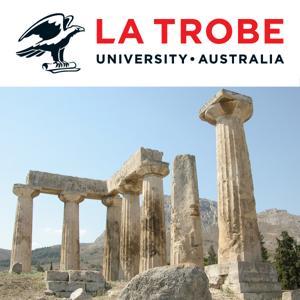
    Did the Trojan War actually happen? What evidence do we have on – or rather in – the ground for Troy and the world of heroes, magnificent cities and rich objects which Homer describes? In this lecture Dr Gillian Shepherd looks at some of the issues in identifying “Homer’s Troy” and the glories of Late Bronze Age Greece, especially Mycenae, home of Agamemnon – much of which is indeed described by Homer.
    Copyright 2013 Gillian Shepherd / La Trobe University, all rights reserved. Contact for permissions.
    48 min
  • Bronze Age Greece and Troy (handout)
    Did the Trojan War actually happen? What evidence do we have on – or rather in – the ground for Troy and the world of heroes, magnificent cities and rich objects which Homer describes? In this lecture Dr Gillian Shepherd looks at some of the issues in identifying “Homer’s Troy” and the glories of Late Bronze Age Greece, especially Mycenae, home of Agamemnon – much of which is indeed described by Homer.
    Copyright 2013 Gillian Shepherd / La Trobe University, all rights reserved. Contact for permissions.
    0 min

About Ancient Greece: Myth, Art, War

From the publisher's feed

In this subject students are introduced to the diversity of the ancient Greek achievement, which has exercised a fundamental and continuing influence upon later European literature and culture. The…

More shows like Ancient Greece: Myth, Art, War

Epics of Rome by Dr Rhiannon Evans

Epics of Rome

9 Listeners

History of Children's Literature by David Beagley

History of Children's Literature

37 Listeners

Early Imperial Russia by Dr Adrian Jones

Early Imperial Russia

25 Listeners

Ancient Greece: City and Society by Dr Gillian Shepherd

Ancient Greece: City and Society

15 Listeners

Australian Aboriginal History by Professor Richard Broome

Australian Aboriginal History

7 Listeners

Hume by La Trobe University

Hume

1 Listeners

The Philosophy of Descartes by La Trobe University

The Philosophy of Descartes

3 Listeners

The Roman World by Dr Rhiannon Evans

The Roman World

33 Listeners

Biography by La Trobe University

Biography

3 Listeners