
Sign up to save your podcasts
Or

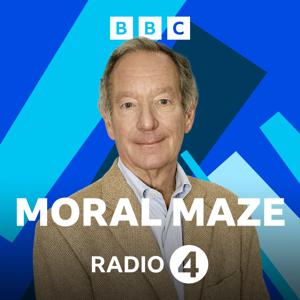

How far should you be allowed to express your moral and political beliefs through boycotts? There have been high profile boycott campaigns on everything from companies involved in the arms trade, fossil fuels, and tobacco products to economic and academic boycotts of Israel. Now the government is planning a law to make it illegal for local councils, public bodies and even some university student unions to carry out boycotts. Under the plan all publicly funded institutions will lose the freedom to refuse to buy goods and services as part of a political campaign. It's said that any public bodies that continue to pursue boycotts will face "severe penalties." The government believes cracking down on town-hall boycotts is justified because they undermine good community relations, poison and polarise debate and fuel anti-Semitism. Beyond the narrow principle of what tax payers money should be spent on, what is wrong with a group of citizens organising to express their moral, philosophical or political objection to a company or country through their economic, intellectual or cultural power? Such boycotts have in the past been very effective. If every pound we spend can on some level be seen as an expression of our individual moral codes, why should we not have a say on where money is spent on our behalf? Are boycotts misguided empty political gestures more designed to make us feel self-righteous? And even if they are is outlawing them justified? Banning the boycott - the Moral Maze. Chaired by Michael Buerk with Melanie Phillips, Matthew Taylor, Claire Fox and Jill Kirby.
 View all episodes
 By BBC Radio 4

4.6
5151 ratings
How far should you be allowed to express your moral and political beliefs through boycotts? There have been high profile boycott campaigns on everything from companies involved in the arms trade, fossil fuels, and tobacco products to economic and academic boycotts of Israel. Now the government is planning a law to make it illegal for local councils, public bodies and even some university student unions to carry out boycotts. Under the plan all publicly funded institutions will lose the freedom to refuse to buy goods and services as part of a political campaign. It's said that any public bodies that continue to pursue boycotts will face "severe penalties." The government believes cracking down on town-hall boycotts is justified because they undermine good community relations, poison and polarise debate and fuel anti-Semitism. Beyond the narrow principle of what tax payers money should be spent on, what is wrong with a group of citizens organising to express their moral, philosophical or political objection to a company or country through their economic, intellectual or cultural power? Such boycotts have in the past been very effective. If every pound we spend can on some level be seen as an expression of our individual moral codes, why should we not have a say on where money is spent on our behalf? Are boycotts misguided empty political gestures more designed to make us feel self-righteous? And even if they are is outlawing them justified? Banning the boycott - the Moral Maze. Chaired by Michael Buerk with Melanie Phillips, Matthew Taylor, Claire Fox and Jill Kirby.

7,913 Listeners

863 Listeners

1,067 Listeners
159 Listeners

5,576 Listeners

1,808 Listeners

1,729 Listeners

1,018 Listeners
2,113 Listeners

1,952 Listeners
32 Listeners
38 Listeners
428 Listeners
159 Listeners
43 Listeners
75 Listeners
108 Listeners
745 Listeners

3,245 Listeners
779 Listeners
1,010 Listeners
3,858 Listeners
1,314 Listeners
851 Listeners
48 Listeners