
Sign up to save your podcasts
Or

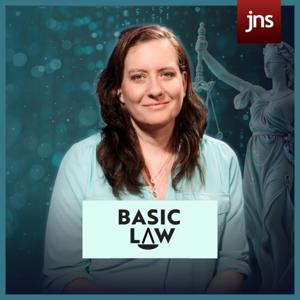


What if the biggest threat to Israel isn’t external but the stories it tells itself?
500 rocket attacks in days and the world is still arguing about “restraint.” In this episode, you’ll learn why the Israel–Hezbollah conflict didn’t suddenly erupt, but was decades in the making. From failed UN resolutions and ignored warnings to Hezbollah’s transformation into a global terror-crime network backed by Iran. We break down what the headlines leave out: the legal case for Israel’s response, the reality behind “ceasefire” arguments and how international inaction helped create the current crisis. If you want to actually understand what’s happening and what may come next, this is the context you’ve been missing.
Should a country at war pause its legal battles or prove its commitment to the rule of law by continuing them? In this episode, viewers dive into the debate surrounding calls for a potential pardon for Prime Minister Benjamin Netanyahu, reportedly pushed by former U.S. President Donald Trump during wartime. As Netanyahu juggles court appearances while leading Israel through war, the episode explores a deeper question: how democracies balance judicial independence, political pressure and national security in moments of crisis. Watch to understand the legal principles, political tensions and constitutional dilemmas shaping one of Israel’s most controversial debates.
Politicians and pundits around the world are claiming that U.S. and Israeli strikes on Iran violate international law, but what if that narrative completely misunderstands how the law of armed conflict actually works? In this episode of Basic Law, Aylana Meisel is joined by Natasha Hausdorff, barrister and legal director of 'UK Lawyers for Israel' to break down the difference between jus ad bellum and jus in bello, the legal meaning of “imminent threats,” and why much of the international commentary may be misapplying the rules that govern war. Cutting through political rhetoric and legal buzzwords, this episode explains how context, ongoing conflict, and self-defense shape the legal framework behind modern military strikes—and why misinterpreting international law can ultimately undermine its credibility.
Tucker Carlson tried to pull the rug out from under Israel’s very foundation, but what if the real story completely flips the script? In this episode of "Basic Law", you’ll learn why the viral “gotcha” about Israel’s Law of Return and the Brother Daniel case doesn’t unravel the Jewish claim to the land, but actually reveals the deep, complex evolution of Jewish identity in the modern world. Aylana Meisel cuts through the half-truths, exposing how history, law, exile, survival and sovereignty collide in ways most commentators conveniently ignore. You’ll walk away understanding not just what the Law of Return really says, but what Israel’s identity debates teach the entire West about nationhood, borders and self-determination in an age allergic to all three.
Israelis don’t just disagree about judicial reform, they’re losing faith in the entire governing machine: how laws get made, who actually represents voters and why unelected legal power keeps swallowing elected authority. Guest Amiad Cohen lays out a provocative “reset button” idea: a second legislative chamber, an Israeli-style Senate, built to slow legislation, force compromise, restore trust and break the hostage-taking dynamics of coalition politics, while also reshaping appointments, oversight and even how prosecutions of elected officials should work. You’ll come away understanding why the current system incentivizes chaos and why this proposed fix could either cool Israel’s internal civil war… or ignite an even bigger one.
Just when Israel finally closes the chapter on October 7th and brings every hostage home, a far bigger geopolitical gamble quietly takes center stage. In this episode of Basic Law, Middle East expert Dr. Mike Doran unpacks President Trump’s controversial new “Board of Peace” a sweeping international framework that could redefine how Gaza is governed, how Hamas is disarmed and even how global conflict is managed beyond the Middle East. Viewers will learn why this plan bypasses the UN, why Arab states are hesitant to enforce it and the uncomfortable truth about who (if anyone) is actually willing to take Hamas’s weapons away....revealing a high-stakes experiment that may shape Israel’s security and the future world order itself.
As Iran’s streets fill with protesters paying in blood for the basic right to vote, speak and dissent, Basic Law turns the camera inward and asks a sharper question: are Israelis, in the middle of their own democratic trench warfare, about to rewrite criminal law for principled reasons or for perfectly timed political gain? Host Aylana Meisel uses a “magic trick” to strip the personalities out of the debate and walk you through the real issue: Israel’s fraud and breach of trust offense is so vague it can turn “unethical” into “criminal” after the fact, empowering prosecutors and judges to enforce intuition instead of clear rules. You’ll learn why top legal scholars across Israel’s ideological spectrum have warned about this for decades, how a landmark Supreme Court case exposed the law’s arbitrariness and why global democracies are moving away from catch-all corruption charges. The result is a gripping framework for spotting the difference between rule of law and rule by headline...right when it matters most.
New York City changed overnight and for many Jews, the warning signs are flashing red.
From the publisher's feed

111 Listeners
40 Listeners
648 Listeners

124 Listeners
446 Listeners
67 Listeners

18 Listeners

87 Listeners

92 Listeners

31 Listeners

104 Listeners

909 Listeners

5 Listeners

18 Listeners

6 Listeners