
Sign up to save your podcasts
Or

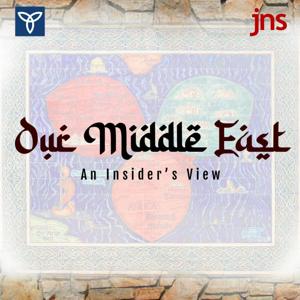


Three years after October 7, Hamas and Iran have been battered, but Khaled Abu Toameh warns the ideology driving their war is still very much alive.
Is the United States losing its influence in the Middle East?
Why is Iran attacking America's Arab allies while much of the world looks the other way?
Why do groups like Hamas, Hezbollah and the IRGC keep claiming victory even when they've suffered devastating losses?
What if the real revolution in the Middle East isn’t happening on the battlefield but in the battle for narrative and identity? This fascinating conversation reveals a powerful lesson: that Israel’s greatest opportunity right now may not be military, but cultural. Viewers will discover how decades of misinformation and ideological manipulation, especially driven by Iran, have distorted reality, and why reclaiming the story could change everything. By the end, you’ll see that the future of the Middle East might hinge not just on power, but on who finally tells their story and who listens.
This episode flips everything you think you know about “ceasefires” on its head, revealing why what the West calls peace is, in reality, just a strategic pause in a Middle Eastern long game. You’ll learn how Iran and its proxies weaponize temporary calm (hudna) to regroup, rearm and psychologically claim victory, even when they’ve taken heavy losses. The discussion exposes a chilling mindset where mere survival equals triumph, reshaping how conflicts in the Middle East are understood and why short-term wins may actually signal long-term danger. By the end, you’ll see why this isn’t a series of wars, but one continuous ideological battle and why misunderstanding that could have massive global consequences.
Learn why the Iran conflict is exposing deep fractures inside the Arab world, how jihadist ideology shapes the battlefield far beyond missiles and diplomacy and why “total victory” means far more than another temporary ceasefire. If you want to understand what the headlines keep missing: who’s afraid, who’s bluffing, who’s shifting alliances and why this moment could redefine the region for years, this episode pulls no punches and leaves you questioning what comes next.
While the world focuses on Iran and the Strait of Hormuz, Gaza has quietly disappeared from the headlines. This episode explains how Hamas may be regrouping and reasserting control, while Iran’s broader strategy uses multiple fronts, from Gaza to Hezbollah, to wage a long war of attrition against Israel and the West. The discussion explores why ignoring Gaza now could lead to serious consequences later.
Stage Two of the Gaza peace plan is being sold as a fresh start, but Dan Diker and Khaled Abu Toameh argue it may be the most dangerous mirage yet. In this episode of Our Middle East, they walk you through what actually happens when the Rafah crossing reopens, “technocrats” arrive, and the Donald Trump-era “Board of Peace” raises global expectations...while Hamas remains the de facto power on the ground, rearming and controlling key institutions. You’ll learn why disarmament talk is mostly theater unless someone can enforce it, why the real battlefield is cultural (education, ideology, incentives), and how a glossy “New Gaza” vision can backfire, turning Israel into the scapegoat when reality refuses to match the brochure. The takeaway is blunt: buyer beware, because the plan only works if the underlying system changes, and nobody can yet prove that’s happening.
From the publisher's feed
648 Listeners
309 Listeners
1,214 Listeners
124 Listeners
446 Listeners
67 Listeners

18 Listeners

87 Listeners

15 Listeners

104 Listeners
19 Listeners

909 Listeners

5 Listeners
123 Listeners
4 Listeners