
Sign up to save your podcasts
Or



Based on Podcast App listening data
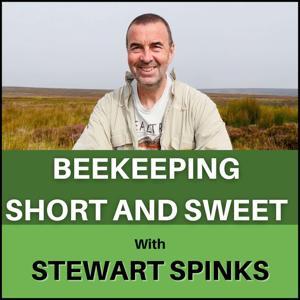
Hi, I’m Stewart Spinks and welcome to Episode 124 of my podcast, Beekeeping Short and Sweet.
In This Week's Podcast: We’ve had a couple of exciting deliveries this week and stay tuned to hear how to get Autumn colonies to draw new foundation and all about Gary’s Hive Make Over.
Featured Links In Today's Podcast:
I’m grateful to Honey Paw hives for sponsoring, in part, our podcasts for this season. Check out the full range of hives and other beekeeping equipment.
Join Our Beekeeping Community in the following ways:
Support the show
Hi, I’m Stewart Spinks and welcome to Episode 123 of my podcast, Beekeeping Short and Sweet. If you’re worried about getting your bees prepared for Autumn and Winter then stay tuned for some simple advice to help take the worry out of those long Winter nights.
Do take a look at the extra content available on my patreon page, that’s www.patreon.com/norfolkhoney
I’m grateful to Honey Paw hives for sponsoring, in part, our podcasts for this season. Honey Paw hives are, as I’m sure you’re aware, Poly Langstroth hives and we’re setting up an apiary full of their hives this season courtesy of Honey Paw. Check out their range of hives and other equipment on their website, I’ll leave a link to their website in the show notes as usual.
Honey Paw Hives - Designed by Beekeepers, For Beekeepers.
Another week and August is slipping quickly by, I woke this morning and felt a distinct but subtle change in the air. As I got into the truck to head up to my allotment it struck me that there was a much fresher feel to the air and I noticed quite a lot of condensation on the windscreen. That’s not to say Summer is gone but it certainly had a feel of a shift in conditions. We’ve actually just come through a period of quite unsettled weather with very high temperatures and thundery downpours, I got caught out by one just a day ago and it decimated my giant dahlia flowers. We don’t have much of a front garden here at home, it’s all shingle with a small flowerbed in the middle, literally a metre square but this year I planted some dahlias in it and they’ve been fantastic. We’ve had some enormous flower heads but with that comes the risk that in a heavy downpour they get shot to pieces, petals everywhere and that’s just what happened yesterday.......
........One question that I get asked regularly every year at this time is very specific to National bee hives. The National brood box can be a little on the small side and the colony needs a little extra space in the form of a super placed with the brood box having first removed the queen excluder. But the question is where do you put the super, does it go above the brood box or beneath the brood box?
Well, once again we are likely to have a difference of opinion but for the sake of throwing my hat into the ring, I would say for all of our National brood boxes that are not on double brood I always place the super between the floor and the brood box, so that’s beneath the brood box.
I do this for two reasons, firstly I find that lifting the brood box a little higher above the floor makes me feel the bees are a little further away from any cold drafts that might blow under the floor, I am using open mesh floors throughout and I don’t insert the varroa board for the winter months at all.
Secondly, I very rarely find the queen has moved down into the super and started laying eggs in the Spring so I can easily swap the super back up above the brood box with the queen excluder replaced between them. When I used to experiment with the position I often found the queen had moved higher into the super and started laying eggs in there, making it more difficult to manage in the Spring.
It’s a point I’m sure will keep beekeepers discussing over their beers at virtual beekeeping meetings as we head into the Autumn period. Just to add, this is why I prefer the Commercial brood box over the National, I don’t need to leave a super on as the Commercial has plenty of room for both bees and food for the winter.
That’s it for another week, if you haven’t yet checked out all of this seasons videos so far do pop over to my patreon page, that’s www.patreon.com/norfolkhoney
I’m Stewart Spinks
And that was Beekeeping Short and Sweet
Support the show
Hi, I’m Stewart Spinks and welcome to Episode 122 of my podcast, Beekeeping Short and Sweet. Could it get any hotter? Well, actually yes it could, a sweltering week and it seems Mad Dogs and Beekeepers go out in the midday sun!
Do take a look at the extra content available on my patreon page, that’s www.patreon.com/norfolkhoney
I’m grateful to Honey Paw hives for sponsoring in part our podcasts for this season. Honey Paw hives are, as I’m sure you’re aware, Poly Langstroth hives and we’re setting up an apiary full of their hives this season courtesy of Honey Paw. Check out their range of hives and other equipment on their website, I’ll leave a link to their website in the show notes as usual.
Honey Paw Hives - Designed by Beekeepers, For Beekeepers.
Honey Monitoring Scheme can be found Here
Welcome back to a much cooler, calmer Beekeeping HQ where today I’m actually recording and publishing the podcast all in one hit on Friday. As you know, I normally publish the podcast on a Friday and I’ve had a lot of messages from beekeepers saying how they enjoy each episode and look forward to the Friday morning fix. Well, this one is a little late in the day mainly due to the incredibly hot weather we’ve been enjoying this week. I use the word “Enjoying” somewhat cautiously as I not these intense temperatures aren’t to everyone’s liking and I certainly struggled with the very high overnight temperatures. For anyone listening outside the UK we’ve had daytime temperatures of around 30 to 34 degrees centigrade that’s somewhere in the low 90’s Fahrenheit with overnight temperatures staying around the high teens and even into the low 20’s centigrade, again that’s the upper 60’s Fahrenheit...........
.......Finally today, I’ve just sent off my sample of honey to the National Honey Monitoring Scheme. I grabbed some information from their website to explain what they’re up to.
Working in partnership with UK beekeepers, the National Honey Monitoring Scheme aims to use honeybees to monitor long-term changes in the condition and health of the UK countryside. However, they do need the help of beekeepers if the scheme is to work.
They go on to state “With the help of beekeepers we would like to collect honey samples from across the UK and continue to do this for many years. These samples will analysed using advanced DNA barcoding techniques to identify the species of plant pollen present. This will tell us what bees are feeding on in different parts of the country and at different times of year. This information will help us identify possible threats to the floral resources of pollinating insects”. Now that to me seems like a really good idea and so I signed up. It’s a simple process on their website and I’ll add a link to the podcast notes online. Once the sample had been taken and sent I popped onto their website and updated the records, answering the simple questionnaire which takes a couple of minutes. Now all I have to do is sit back and wait for the results.
I think it’s a very worthwhile exercise and would encourage all UK based beekeepers to get involved and support this proje
Time’s up for another week, I’m off to demonstrate the Honey Paw Slit Uncapper now, do look out for the video next week some time. And if you haven’t yet checked out all of this seasons videos so far do pop over to my patreon page, that’s www.patreon.com/norfolkhoney
I’m Stewart Spinks
And that was Beekeeping Short and Sweet
Title of my book - Resource Rich Beekeeping
Support the show
Hi, I’m Stewart Spinks and welcome to Episode 121 of my podcast, Beekeeping Short and Sweet. Ah the sweet smell of Summer honey, it’s extraction time here at the Norfolk honey company so stay tuned to hear about our process and kit we use to make the job as easy as possible.
Do take a look at the extra content available on my patreon page, that’s www.patreon.com/norfolkhoney
I’m grateful to Honey Paw hives for sponsoring in part our podcasts for this season. Honey Paw hives are, as I’m sure you’re aware, Poly Langstroth hives and we’re setting up an apiary full of their hives this season courtesy of Honey Paw. Check out their range of hives and other equipment on their website, I’ll leave a link to their website in the show notes as usual.
Honey Paw Hives - Designed by Beekeepers, For Beekeepers.
Welcome back to another weekly instalment of our beekeeping antics, it’s been a tough physical week with all the usual lifting and moving of honey supers as we take off the Summer honey crop, I’m glad to say my back seems to be holding up well at the moment, famous last words of course but I’m doing all I can to protect it and starting to put together some neat but simple bits of kit to help take the strain out of the process.
It’s been another whirlwind week, clearer boards on, supers off, clearer boards on, supers off. I have a feeling this Summers crop is going to be way down on what I might have expected if we hadn’t split colonies again, it’s also been a very dry Summer again for us here in Norfolk and despite having lots of apiaries near rivers and lakes the bees really seem to have struggled with building up larger surpluses of honey.
So the honey room is finally in action, I’d have to say it’s still a work in progress, I’m not totally convinced of the exact layout but this week has allowed me to get a fairly decent workflow going without the constant need to move things around, lift heavy boxes and generally make it more work that it needs to be...........
.......I may have found the perfect tool for the job for me. As with most of these tools there are pros and cons and the first thing to say about the honey paw slit uncapper is it isn’t cheap. The same can be said or the Fritz brush uncapper but if you have a lot of supers to extract it’s worth the investment.
So the slit uncapper is a hollow cast, block of aluminium attached to a handle. It has an inlet and outlet fitting on the back to which you attach a couple of hoses, one coming from a steam unit and the other running to a sink or drain bucket.
I have now secured a supply of Autumn bee feed called Apikel, it’s a heavy syrup that I’ve used before and I import it direct from the manufacturer. I still like and use the Apimix from Modern Beekeeping but having an additional option always makes sense.
It comes in the usual sizes, the most convenient for beekeepers being the 14kg plastic can. The biggest issue with syrup is the cost of transporting it and it almost makes it prohibitively expensive.
The bees really like the stuff and it gets them nicely prepared with stores for the Winter. If you’d like some please do send me a message either via Patreon or my website contact page.
Time’s up for another week, I’m back to the unit to extract some more honey, Please do take a look at the extra content available on my patreon page, that’s www.patreon.com/norfolkhoney
I’m Stewart Spinks
And that was Beekeeping Short and Sweet
Support the show
Hi, I’m Stewart Spinks and welcome to Episode 120 of my podcast, Beekeeping Short and Sweet. The Summer nectar flow is all but done and I discover a colony rammed full of varroa and in danger of collapse.
Do take a look at the extra content available on my patreon page, that’s www.patreon.com/norfolkhoney
I’m grateful to Honey Paw hives for sponsoring in part our podcasts for this season. Honey Paw hives are, as I’m sure you’re aware, Poly Langstroth hives and we’re setting up an apiary full of their hives this season courtesy of Honey Paw. Check out their range of hives and other equipment on their website, I’ll leave a link to their website in the show notes as usual.
Honey Paw Hives - Designed by Beekeepers, For Beekeepers.
Hi Everyone, I trust you’re all safe and well still and enjoying your beekeeping season, mine sadly, is coming to an end this weekend. I say coming to an end but it’s only the end of the Summer nectar flow and the work ramps up for a while as we remove honey and start preparations for the Autumn treatments and feeding. Inspections can actually start to reduce a little, no need for the mad rush of weekly inspections to check for swarming bees. The main priority for me now is changing focus to get bees treated and fed for the long Autumn and Winter haul.
Following on from last week’s podcast I’ve had a number of messages to say my comments regarding a lack of honey stores in the brood boxes is something other beekeepers are experiencing too. Sometimes when I’m looking through my colonies and making a mental note of what I’m seeing I do wonder if what I am seeing is fairly normal for beekeeping here in the UK and particularly the East of England or whether I’m a bit of an odd one out and somehow I’m getting it all horribly wrong. I have to say, I’m fairly comfortable with my own style of beekeeping and what you see in the videos is generally how I inspect my bees off camera too. Maybe a little quicker and a few more colourful expletives when I get stung but otherwise I don’t change much. It got me thinking about how many colonies I could actually handle with my particular inspection regime. On a good day I can easily inspect fifty plus colonies with comparative ease, it’s those days when things don’t always go to plan and the weather intervenes to complicate matters. Then there are the days when all of the colonies need your attention at the same time on the same day, all I can say about that is thank goodness I clipped queen’s this year!
It’s looking like we’ll have something in the order of 100 to 120 colonies going into the Winter this year. That feels like a very comfortable number to manage for me, allowing for the fact that I’m also working on the videos, podcast and other various projects along the way.
Honey production has slowed through the Summer, I’m making a snap judgement here that the weather has played a big part in this. Even the more reliable apiaries near water courses and packed out with brambles have been a little slow. Most of the honey production colonies have a couple of supers on with just a few having more. Of course, I did split a number of colonies to produce nucs for queens to go in to so that reduced the number of production colonies quite a bit.......
Well that’s it for this week, Time to get out and see how my bees are doing in some of the Honey Paw Hives and I’ve also got a honey delivery to complete. Please do take a look at the extra content available on my patreon page, that’s www.patreon.com/norfolkhoney
I’m Stewart Spinks
And that was Beekeeping Short and Sweet
Support the show
Hi, I’m Stewart Spinks and welcome to Episode 119 of my podcast, Beekeeping Short and Sweet, coming up this week, amazingly quite a number of my colonies are low on food in their brood boxes and I help out with a home-made beehive that’s gone rogue!
Do take a look at the extra content available on my patreon page, that’s www.patreon.com/norfolkhoney
I’m grateful to Honey Paw hives for sponsoring in part our podcasts for this season. Honey Paw hives are, as I’m sure you’re aware, Poly Langstroth hives and we’re setting up an apiary full of their hives this season courtesy of Honey Paw. Check out their range of hives and other equipment on their website, I’ll leave a link to their website in the show notes as usual.
Honey Paw Hives - Designed by Beekeepers, For Beekeepers.
Hi everybody and welcome back to another podcast, it’s been a very fast week, it feels that just a very short time ago I was considering what to do when I was setting out hive stands a the oilseed rape pollination and looking forward to an exciting season of beekeeping and here we are just days away from the end of my Summer flow. I think the routine of beekeeping also makes it feel like the weeks race past, the cycle of inspections, videos, podcast and repeat makes the days kind of melt into one continuous regime.
I’m noticing a lot of my colonies this summer are not storing any nectar and thus honey in the brood boxes, plenty of honey stored int eh supers but the brood boxes that were full of Oilseed Rape honey just a month ago are completely empty. Now this isn’t happening with all colonies but more than I normally see like this at this stage in the season. The good news is, they won’t be clogged up with solid Oilseed Rape honey for the Winter the bad news is, if I remove all of the honey supers there is a real probability that colonies will starve before September before I would normally feed them. You can do a couple of things here but first you need to get into your hives and inspect them, know what you’re looking for and check them thoroughly. Like I said, not all colonies will be in this state and your bees might be perfectly ok, but it’s got to be worth having a check and not just assume they have plenty of food as you whip off the honey.......
...... If you want to leave a full super of honey on your bees then do that, if you want to remove the honey and feed, then do that. Just make sure that whatever you do, you’re taking good care of your bees and helping them as they prepare themselves for the long nights ahead. Remember they will soon be producing Winter bees that will survive many more weeks than the slimmed-down Summer bees and they will need resources to do that. We will all need to start checking colonies to make sure they are queen right, healthy, and have enough stored food to see them through to next year. I for one will be feeding syrup, it’s still warm enough to be feeding a light syrup, I’ll be using the Apimix from Modern Beekeeping over the next month, I do have some stock here in Norwich if you’re local but if not check out the link in the podcast notes. I’m sure Paul at Modern Beekeeping will have plenty of stock but it’s worth getting in early before there’s a mad rush. I will have some stock of syrup if you’re local and want to collect from me to save on the very high carriage charges for syrup these days.
And on that note, it’s time for my mad rush out of the door to check on my bees. Please do take a look at the extra content available on my patreon page, that’s www.patreon.com/norfolkhoney
I’m Stewart Spinks
And that was Beekeeping Short and Sweet
Support the show
Hi, I’m Stewart Spinks and welcome to Episode 118 of my podcast, Beekeeping Short and Sweet, The sprint is on to the final few weeks of the nectar flow for me, listen in for a hotch Potch of Summer ramblings about apiary sites, the summer nectar flow and to kick off a small but significant milestone for me.
Do take a look at the extra content available on my patreon page, that’s www.patreon.com/norfolkhoney
I’m grateful to Honey Paw hives for sponsoring in part our podcasts for this season. Honey Paw hives are, as I’m sure you’re aware, Poly Langstroth hives and we’re setting up an apiary full of their hives this season courtesy of Honey Paw. Check out their range of hives and other equipment on their website, I’ll leave a link to their website in the show notes as usual.
Honey Paw Hives - Designed by Beekeepers, For Beekeepers.
It’s a bit of a milestone week for me, I was checking out some videos that we had uploaded recently and noticed that we’d managed to break the 500 videos uploaded mark. 501 to be exact although that number should have increased by the time we publish the podcast. Now, that’s all videos, including some fairly dodgy initial efforts and some might say they haven’t improved a great deal!
Anyway, I’m very happy to be celebrating not just the number of videos but also that so many of you have watched them and sent me encouraging comments and emails to keep me going. Apart from a few very early videos in 2012 I really got started in 2016 and we’ve continued to upload videos ever since. Now I’m not in the same rarified air as a lot of YouTube channels but I’m very happy to have nearly 2.2 million views and almost 25k subscribers. More importantly to me though is the support I have from my small group of Patreon subscribers for whom the vast majority of videos are specifically produced for. Each week through the active season I record a range of videos and of these just one goes public on YouTube, the rest are purely for release on my patreon page.
My thanks to all of you that support me and, judging by the comments and feedback I get, I know a lot of you have benefited from the content and additional support that I provide.....
......The new unit continues to be a fun project, with the wall up I’m now able to plan out where I want everything to go. We’ve filmed a couple of videos there and are working out the best way to position everything. I’ve found some really neat, rusted corrugated roofing sheets and want to try them as a background for the filming, just something a little different to a plain white wall. I’ll have to hang some posters or signs on it but I think it might work quite well. I did use a few stacks of supers but they’re quite deep and use up crucial space in the unit that I’d rather not waste.
Thinking about the forthcoming honey extraction, I’ve bought some more trolley wheels to create movable platforms for stacking the honey supers on when I get them back to the unit. It’s so much easier wheeling the full supers around than lifting and walking with them. They’re really easy to make, just a 500mm square of 18mm plywood and some heavy-duty wheels off the internet. the wheels come with large, heavy-duty screws so fitting is easy enough, even I can do that!
The next big job at the unit is extraction preparation, everything needs a wash down and the floor needs moping. I do need to get the hanging door screen too, that’s a job that’s becoming more urgent as each day goes by. I’ll have to remember to measure up the exact size next time I’m at the unit and get it ordered.
Although it’s not the finished article yet I am enjoying having the extra space to move around and store equipment, once the new moveable trolleys are sorted it will be a doddle to get things in their rightful place. Once that’s done, I may even open the door to some sociall
Support the show
Hi, I’m Stewart Spinks and welcome to Episode 117 of my podcast, Beekeeping Short and Sweet, With the weather turning cooler and rainy, it’s time to turn my attention to the new unit, preparations for the honey extraction at the end of the month, and I have a question for you, have you ever been stung!
Catch up with my latest podcast here
I’m grateful to Honey Paw hives for sponsoring in part our podcasts for this season.
Honey Paw hives are, as I’m sure you’re aware, Poly Langstroth hives and we’re setting up an apiary full of their hives this season courtesy of Honey Paw. Check out their range of hives and other equipment on their website, I’ll leave a link to their website in the show notes as usual.
Honey Paw Hives - Designed by Beekeepers, For Beekeepers.
Welcome back once again, and the British Summer continues to do it’s thing, meaning it’s raining once again, it’s been a wet week really, since the weekend we’ve had some quite heavy showers nixed in with a little sunshine but generally it’s been quite cloudy. I’ve been out inspecting where and when I could but to be honest the bees are not too keen on me crashing around when it’s wet and humid so it’s been quite intense at times. I would say this week I’ve had more stings than I’ve had all season and it’s just not pleasant. It doesn’t matter how long you’ve been keeping bees the sharp jab of a bee sting is always unwelcome but actually not all stings are equal. It’s interesting that sometimes when you’re stung by one of your honeybees it’s almost as if you’ve been jabbed by a needle but the pain is instantly gone, there’s no swelling or long lasting itchiness. The flip side of this is the less pleasant sting that makes you jump and dance like some maniac, dropping your hive tool and cursing the colony with threats of robbing all their honey or worse still total destruction! Now I’m not totally serious about the whole destruction thing, not totally. Most of the time stings are the fault of the beekeeper, let’s face it, sometimes we’re clumsy and don’t always pay attention to what we’re doing and that’s when we put our fingers and thumbs where they shouldn’t be and we get stung. I remember, some time ago, and I apologise to anyone who has already heard this story, I may have already mentioned it in previous podcasts, but, it’s an amusing and also interesting situation that illustrates nicely the effects of a bee sting or two.
Some years ago I was carrying out an inspection on a series of hives in a lovely little apiary ............
............And on that very cheerful note we reach the end of this week’s podcast, thanks for hanging around until the end of the podcast and keep the comments coming.
Please do take a look at the extra content available on my patreon page, that’s www.patreon.com/norfolk honey
I’m Stewart Spinks
And that was Beekeeping Short and Sweet
Support the show
Hi, I’m Stewart Spinks and welcome to Episode 116 of my podcast, Beekeeping Short and Sweet, Summer is here, our lime trees and blackberries are bursting with flowers and it’s time to benefit from the hard work of the Spring and early Summer. In other news I’m building a wall this week so stay tuned for my latest updates.
Do take a look at the extra content available on my patreon page, that’s www.patreon.com/norfolkhoney
I’m grateful to Honey Paw hives for sponsoring in part our podcasts for this season. Honey Paw hives are, as I’m sure you’re aware, Poly Langstroth hives and we’re setting up an apiary full of their hives this season courtesy of Honey Paw. Check out their range of hives and other equipment on their website, I’ll leave a link to their website in the show notes as usual.
Honey Paw Hives - Designed by Beekeepers, For Beekeepers.
Welcome back everyone after a brief, enforced absence.
So, it’s been a mad busy couple of week’s I won’t bore you with the personal stuff as there’s so much beekeeping to talk about.
Here’s a quick update of where we’re at, colonies that were on the oilseed Rape pollination are now back at their respective permanent apiaries, it’s a pretty big job for a small commercial outfit but there were no disasters this year. Colonies have been trying to swarm or have swarmed and replacement queens are back laying eggs, for some of them it’s all a bit late and they won’t be producing any honey over the Summer. Hive Number six continues to be our strongest colony and is filing yet more supers with honey, it’s going to be very interesting to see how they end up this year.
I’ve heard stories of beekeepers being attacked when they get too close to their beehives with strimmers and lawnmowers so I always figure on being a little cautious. I even put on my gloves, no point in wearing a bee suit only to be stung on the fingertips. Anyway, I started out at the university apiary, it was the closest on my way back home. All set, I fired up the lawnmower and did a couple of passes back and forth, no real trouble. On the third strip I suddenly became aware of a sudden pain in my ankle, looked down and saw something like thirty or forty bees attacking my boots! One of the colonies was obviously very upset with my need to keep a tidy lawn. I say lawn, it’s more ragwort and those yellow spikes flowers, the name’s escaped me at the moment. Anyway, one of the little attackers had got itself under the ankle cuff and had stung me good and proper. Obviously I fled the scene quickly pushing the now quiet lawnmower as fast as I could. Then I felt a sudden pain on the back of my left knee and realised with some horror that bees were actually getting inside my bees suit via a dodgy zip and to make matters worse I was wearing shorts! How those beekeepers inspect their bees wearing just shorts and t-shirts I will never know. Suffice to say I left the lawnmower, jumped into the truck and got rid of as many bees as I could before they progressed any higher. I’m glad to report there were no further stings.
I rescued the lawnmower and made a fairly quick exit and headed to the fishing lakes apiaries where the bees were altogether calmer and ignored me completely.
Some times you just have to concede defeat, sort your wounds and prepare for the next time!
Well, that’s all for this week, oh, that spiky plant is called a verbascum. I knew the name would come back to me eventually.
Well, that’s it for this week, Thanks for hanging around until the end of the podcast and keep the comments coming.
Please do take a look at the extra content available on my patreon page, that’s www.patreon.com/norfolk honey
I’m Stewart Spinks
And that was Beekeeping Short and Sweet
Support the show
Hi, I’m Stewart Spinks and welcome to Episode 115 of my podcast, Beekeeping Short and Sweet, Our Summer nectar flow is about to begin but this week I’ve had to contend with some sneaky and grumpy bees, listen in for stuff you just don’t find in the books.
Catch up with my latest podcast here
I’m grateful to Honey Paw hives for sponsoring in part our podcasts for this season.
Honey Paw hives are, as I’m sure you’re aware, Poly Langstroth hives and we’re setting up an apiary full of their hives this season courtesy of Honey Paw. Check out their range of hives and other equipment on their website, I’ll leave a link to their website in the show notes as usual.
Honey Paw Hives - Designed by Beekeepers, For Beekeepers.
Before we get started this week I wanted to say a quick hello and thank you to the team that moderate my Facebook group “Stewart’s beekeeping Basics”. The Facebook group was set up to give new beekeepers the opportunity to ask those beginner questions in a safe environment where they’re not going to get shot down by know it all beekeepers who find it amusing to harrang new beekeepers and give them a hard time. The trouble is there are always beekeepers out there that get their kicks out of talking down to new beekeepers and that’s where the moderators come in. If you’re new to beekeeping and want to chat with other beekeepers in a controlled and safe environment do give it a look. I also find there are beekeepers who have started their own YouTube channel and seem to think it’s ok to piggyback on the back of the hard work we’ve put in and promote their own channels and products in my group, while I’m not against sharing knowledge I do think they should make the effort of creating their own platform to promote their content and not try to take shortcuts using someone else’s hard work. So thank you to the team of moderators that help me with policing the Facebook group.
It’s raining again, welcome to the great British Summer, we are so lucky to have such a variable climate here in the UK with seasonal changes creating something different in the landscape as the months go by. The rain is actually very welcome, perfectly timed for all of the Summer flower plants our honeybees will be foraging on over the next five or six weeks. Remember, the plants need the water in order to produce a decent amount of nectar in order to tempt our pollinators, including my bees, onto their flowers to pollinate them and get a reward of nectar for doing so. This is it for me, the start of the Summer nectar flow, colonies are now in a variety of states ranging from queenless where they have swarmed, being occupied by a virgin queen that has recently emerged, some have newly mated queens that have just started to lay eggs and others such as our skyscraper colony seem to be ploughing on, full steam ahead and doing just fantastically well. The flip side is we have discovered several colonies that have Chronic Bee Paralysis Virus and I think I mentioned before I’m going to destroy these. I just don’t want it spreading throughout my apiaries. Thinking back to the various colonies I currently have, I would say I have an average set up, not everything is where I wanted it to be and I have lost a few swarms from colonies that were totally unexpected. An interesting situation developed with the church cut out colony this week that I want to share with you to give an example of how bees can completely flummox you as a beekeeper...........
Well, that’s it for this week, Thanks for hanging around until the end of the podcast and keep the comments coming.
Please do take a look at the extra content available on my patreon page, that’s www.patreon.com/norfolk honey
I’m Stewart Spinks
And that was Beekeeping Short and Sweet
Support the show
From the publisher's feed
A Beekeeping Podcast for the Inquisitive Beekeeper with a Short Attention Span! BeeFarmer, YouTuber (The Norfolk Honey Company, Patreon Host (www.patreon.com/norfolkhoney), Beekeeping mentor to…
Ranked by our users in the last 21 days
281 Listeners
233 Listeners
252 Listeners
296 Listeners

175 Listeners
226 Listeners
128 Listeners
293 Listeners
5 Listeners
124 Listeners

196 Listeners
17 Listeners
5 Listeners
17 Listeners

97 Listeners