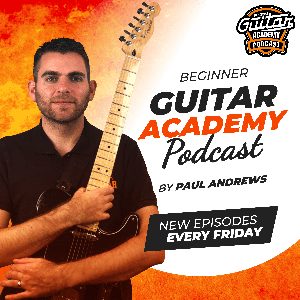
Beginner Guitar Academy

Beginner Guitar Academy

By Beginner Guitar AcademyEducation
Download on the App Store

Beginner Guitar Academy episodes

  • 271 - Thinking Like a Musician When You Jam (Not Just a Guitarist)

    Welcome to the final instalment of January Jamming! This week, Paul Andrews wraps up the series with a deep dive into how to shift your mindset from thinking like a guitarist to thinking like a musician while jamming.

    If you missed any previous episodes, Paul Andrews recaps the highlights and encourages you to revisit them for a complete foundation.

    Key Topics CoveredJanuary Jamming Series Recap
    • Episode 267: What jamming is and how to get the most out of it.
    • Episode 268: How to jam musically using just one scale.
    • Episode 269: The three roles every guitarist plays in a jam—timekeeper, supporter, and speaker.
    • Episode 270: How to practice jamming to improve as a player, featuring the Simple Jam Practice Loop.

    Charity Practice Challenge
    • Practice tracker and month-long challenge to support Jesse’s Fund, a UK charity using music for children with serious illness. Donations are still welcome at bgapodcast.com/charity.

    Main Content: Thinking Like a Musician
    • Most beginners focus on mechanics (“What scale? Where do my fingers go next?”), but musicians think in terms of the bigger picture.

    Musician Mindset:

    • What key are we in (major/minor)? What’s the home note?
    • What’s the feel or groove?
    • Where are we in the structure (building, ending, supporting)?
    • Who’s leading at the moment?
    • Listening for these elements creates more cohesive, musical jams and helps avoid chaotic “wall of sound” sessions.
    • Even if you’re new to theory, you likely already have musical instincts (tapping your foot to pulse, feeling tension/resolution).
    • Bringing listening awareness into your playing is more important than technical ability—simple, responsive playing can sound advanced if musically engaged.

    January Jam Challenge
    • Next time you jam, focus on listening for one element: groove, structure, dynamics, or who’s leading.
    • Respond to that element in your playing instead of trying to fill every gap or perform.

    Encouragement & Next Steps
    • You don’t need years of playing or endless scales to start jamming. What matters most is intent listening and awareness.
    • For more inspiration, revisit previous jamming episodes (including last year’s series).
    • Rate and review the podcast on Spotify or Apple Podcasts to help it reach more listeners.

    Beginner Guitar Academy Membership
    • Beginner Guitar Academy offers structured online lessons, support, and community for beginners at beginnerguitaracademy.com
    • Try it out with a $1 two-week trial.

    Thanks for listening! Keep practicing and see you next week.

    10 min
  • 270 - How to Practice Jamming (So It Actually Improves Your Playing)

    This week, Paul Andrews explores one of the most common struggles guitarists face: how to practice jamming in a way that leads to real improvement, rather than just filling time.

    If you’ve ever found yourself noodling over a backing track and wondering why you don’t seem to get any better, this episode is for you!

    Paul breaks down a practical “jam loop” that transforms aimless jamming into focused, efficient practice, and offers actionable tips for beginners and seasoned players alike.

    Key Topics & Takeaways

    1. Community News & Updates

    • Upcoming Beginner Guitar Academy member live Q&A: New date is Monday, January 26th at 9 pm GMT / 4 pm EST / 1 pm PST. Members can pre-submit questions, and the recording will be available afterwards in the Academy.
    • January Practice Tracker and Charity Fundraiser: Download the tracker at bgapodcast.com/january. Donations support Jesse’s Fund, a charity helping seriously ill and disabled children in the UK through music. Consider donating via bgapodcast.com/charity.

    2. Why Jamming Isn’t Always Progress

    • Many guitarists spend practice time jamming over backing tracks, but don’t see results.
    • The problem: not all practice leads to improvement. Deliberate, focused practice is essential.

    3. The 4-Step Jam Practice Loop: Transform unstructured jamming into real progress:

    1. Jam Freely: Start by playing over a backing track to warm up and get in the groove.
    2. Notice One Thing: Pause after a minute or two, pinpoint one specific area that felt off (timing, phrasing, technique, etc.).
    3. Isolate: Zoom in on that one issue. Slow it down, simplify, and practice it separately.
    4. Rejam With Intention: Go back to the track, this time focusing on improving that one thing, aim for progress, not perfection.

    4. Making the Most of Backing Tracks

    • Choose simple, slow or mid-tempo tracks with clear chord changes.
    • Use tracks that inspire you musically.
    • Beginner Guitar Academy offers curated backing tracks for members.

    5. Best Practices for Jamming

    • Don’t play nonstop; leave space to create musical phrases.
    • Stop while it feels good: 5 minutes of focused jamming beats 20 minutes of unfocused noodling.
    • Balance focused practice with fun, unstructured playing to stay motivated and see real benefits.

    6. Advice for Beginners

    • You don’t need long jam sessions; even a few minutes of focused practice makes a difference.
    • Mix deliberate practice with time to play and enjoy music.

    Links & Resources
    • Download January Practice Tracker: bgapodcast.com/january
    • Donate to Jesse’s Fund: bgapodcast.com/charity
    • Access Backing Tracks: Beginner Guitar Academy dashboard (Members only)

    Final Thoughts

    Jamming should be a fun, rewarding part of your practice routine. By using the four-step jam loop, you’ll start to notice real improvement and avoid the trap of aimless noodling. Remember: improvement comes from intention, not just repetition!

    17 min
  • 269 - The 3 Roles Every Guitarist Plays in a Jam

    In this episode, Paul Andrews dives into one of the most common mistakes guitarists make when jamming: the belief that you need to be soloing all the time. Whether you’re jamming with others or with a backing track at home, understanding and embracing your role in the music is what truly elevates the experience.

    Key Topics Covered:

    The Three Essential Roles in a Jam:

    1. Timekeeper:
    2. The backbone of any jam.
    3. Provides solid rhythm, groove, and consistency.
    4. Not just for beginners—crucial for all musicians.
    5. Steady chord strumming or repeating simple riffs anchors the music.
    6. Supporter:
    7. The glue that holds the jam together.
    8. Adds chord changes, small fills, dynamic shifts, and textures.
    9. Reacts to others, listens, and creates space—often less noticed but vital.
    10. Speaker:
    11. The lead voice: melodies, solos, and musical statements.
    12. What most think of when they imagine jamming, but shouldn’t be everyone’s focus at once.
    13. Works best when time and support roles are present.

    How Jams Fall Apart:

    1. When everyone tries to be the speaker at once, musical communication breaks down.

    Practical Jam Challenge:

    1. Put on a simple backing track and deliberately cycle through each role:
    2. Focus on timekeeping for one minute.
    3. Shift to supporting, adding fills or dynamic changes.
    4. Become the speaker—play a short, clear musical phrase.
    5. Repeat the cycle or reflect on which role felt most natural.
    6. Use this as a roadmap for structured practice rather than just noodling.

    Empowering Beginners:

    1. You don’t need to solo to belong in a jam.
    2. Solid timing and support skills mean you’re already playing like a musician.

    Action Steps:

    1. Try the four-step jam practice outlined by
    2. Paul Andrews
    3. Reflect after each jam on which role you found easiest or most challenging.
    4. Progress by working on the roles that feel less comfortable.

    Next Episode Teaser: Paul Andrews will be diving into strategies for practicing jamming in ways that actually improve your guitar playing—not just fill time. Tune in next week for more practical advice to make your jamming sessions count!

    Thanks for Listening! If this episode helped you rethink your approach to jams, share it with a fellow guitarist. For more jamming tips and guidance, catch last week's episode and stay tuned for next week’s deep dive into practice routines.

    10 min
  • 268 - How to Jam Musically Using Just One Scale

    In this episode, Paul Andrews digs deep into one of the most common questions beginner guitarists ask: “I know lots of scales, so why doesn’t my lead playing or improvisation sound musical?”

    If you’ve ever felt overwhelmed by scales or are uncertain how to turn your knowledge into actual music, this episode is for you! Paul Andrews demonstrates how to sound more musical with only one scale and reveals why learning more scales isn’t the secret to great jamming.

    Key Topics Covered

    Jamming January & Practicethon

    • Start your year strong with Beginner Guitar Academy’s January Practicethon! Practice daily, track your progress, and join a community aiming to improve together. There’s also a charitable side: help raise money for Jesse’s Fund, supporting children with complex needs through music.

    Myth Busting: Paul Andrews addresses the myth that learning more scales alone will make you a better guitarist. Instead, it’s about how you use the scales you know.

    The Power of Limitation

    • Why sticking to just one scale (even a tiny section of it) can actually boost creativity, reduce overwhelm, and make your solos sound more intentional and musical.

    The Four Must-Have Musical Elements for Great Jamming:

    1. Repetition: Create memorable hooks by repeating phrases.
    2. Space: Let the music breathe; don’t play constantly—leave room between notes.
    3. Rhythm: Change up the rhythmic feel of your phrases to add interest.
    4. Dynamics: Play with volume—soft, loud, or both—to add expression.

    Hands-On Example:

    • Paul Andrews gives a practical, step-by-step demonstration of how to jam with just three notes from the A minor pentatonic scale over a backing track—creating musical phrases using only repetition, space, rhythm, and dynamics. He encourages students to keep it simple, repeat phrases, and experiment before ever moving on to more notes or scale shapes.

    Upcoming Events & Resources:

    • There's a “First Steps Jam” happening live on Zoom for Beginner Guitar Academy members—perfect for those nervous to jam in public, as everyone will be muted!
    • Backing tracks, scale diagrams, and a video of this episode are available on bgapodcast.com/268.
    • Backing track used in the episode: https://youtu.be/bkMtp8vt6oE?si=n2G0fRXBNn5OCkJg
    • A Minor Pentatonic Scale: https://www.dropbox.com/scl/fi/n6drxfruuf2yg4n1qi11w/A-Minor-Pentatonic.pdf?rlkey=evq8t819h1m7ak22qtq3qcck0&e=1&dl=0

    Action Steps
    1. Join the Practicethon: Sign up at bgapodcast.com/january to track your practice, get motivational emails, and be part of the challenge.
    2. Support Jesse’s Fund: Raise money with your own sponsorship page or donate directly at bgapodcast.com/charity.
    3. Practice Jamming: Use one part of a scale, focus on the four key elements, and try improvising over backing tracks for at least five minutes each session.
    4. Check Resources: For full lesson notes and backing tracks, visit bgapodcast.com/268.

    Next Episode Preview

    Next week, Paul Andrews will be discussing the different roles in a jam—how to know when to lead, support, or listen, even when practicing solo.

    Remember:

    You don’t need a ton of scales—just one used musically can take your lead playing to the next level. Practice, keep it simple, and have fun!

    For show notes, resources, and bonus content, visit bgapodcast.com.

    18 min
  • 267 - Why Most Guitar Jams Go Nowhere (And How to Fix That)

    Welcome to the first episode of 2026! In this episode, Paul Andrews kicks off "Jamming Month" with practical advice on why most guitar jams—whether solo or group—tend to stall or feel unmusical, and how you can overcome those hurdles to make your playing more creative and enjoyable.

    Key Topics Discussed

    1. Jamming Defined

    1. Jamming isn't just about playing with other people. It can be solo, using backing tracks or drum loops, and is accessible to beginners.

    2. Practice-a-Thon and Charity News

    1. January’s Practice-a-Thon: Practice throughout January to launch your year on a strong note.
    2. Optional charity element supporting Jesse’s Fund, helping children with complex needs. You can join and track your progress for free, with the option to raise funds.

    3. Upcoming Events

    1. First Steps Jam: January 11th (live on Zoom) — Learn the basics of jamming with guided real-time practice.
    2. Live Member Q&A: January 25th (live on Zoom) — Submit questions in advance or join live; recording available later.

    4. Why Guitar Jams Go Nowhere

    1. The core issue: Random ideas with no intent or commitment.
    2. Most jams falter not from lack of skill, but lack of focus.

    5. Noodling vs. Jamming

    1. Noodling: Playing without intent, changing ideas constantly.
    2. Jamming: Committing to ideas, responding to what you hear, and developing musical phrases.

    6. The Power of Constraints

    1. Music flourishes with fewer ideas, not more.
    2. Use constraints (like limiting yourself to three notes or repeating a phrase for 30 seconds) to foster creativity and musicality.

    7. Practice Challenge

    1. Try the "two-note improvising" challenge found in the community section of Beginner Guitar Academy.

    8. Action Steps for Listeners

    1. If you can play a few chords or notes, you’re ready to jam! Jamming is a skill developed by doing.
    2. For your next solo or group jam, pick one idea and stick with it longer than feels comfortable—this forces creativity and deeper musical exploration.

    9. What's Next

    1. Next week's episode: How to sound musical using just one scale, and why phrasing is more important than knowing lots of notes.

    Resources and Links
    1. Sign up for PracticeThon: bgapodcast.com/january
    2. Community Section & Practice Challenges: Available through the Academy portal
    3. First Steps Jam and Live Q&A: Details and Zoom links sent via email to members

    Standout Quotes“Jamming isn’t a level you reach, it’s a skill you develop.” – Paul Andrews“Music doesn’t come from more ideas. It comes from doing more with fewer ideas.” – Paul AndrewsEpisode Challenge

    Pick a single idea for your next jam and stick with it longer than feels comfortable. Notice how your musical creativity expands!

    Thanks for tuning in! Don't forget to subscribe and join us next week for more actionable guitar wisdom from Beginner Guitar Academy.

    13 min
  • 266 - Bonus Episode: Join the January Practice-a-Thon and Boost Your Guitar Skills

    In this bonus episode, Paul Andrews announces the launch of the January Practice-a-thon challenge at Beginner Guitar Academy! The Practice-a-thon kicks off Thursday, January 1st, and is designed to set the tone for a productive and inspiring year of guitar playing.

    What is the Practice-a-thon?
    1. A flexible challenge: Push yourself to practice guitar more often throughout January.
    2. No pressure to practice every single day, set your own realistic goals.
    3. Perfect for those struggling with consistency, motivation, or regular practice.

    Charity Element
    1. This year, you can add a charitable aspect to your challenge by getting sponsored.
    2. Donations support Jesse’s Fund, a UK charity using music to help children with additional and complex needs communicate and express themselves.
    3. You can set up your own sponsorship page or support Paul Andrews via his sponsorship page. (All participation is optional.)

    How to Join
    1. Sign up at bjapodcast.com/january
    2. Register with your name and email to receive all the info you need.
    3. Download the Practice Tracker (a fillable, printable PDF) to log your minutes and reflect on your progress each week.
    4. Links to set up your charity page are included in the email.

    Episode Highlights
    1. Start the year strong by building a consistent practice habit.
    2. Connect with a community of guitar learners.
    3. Support a meaningful cause through music.
    4. Entire challenge is free and customizable to your schedule.
    5. Let’s kick off 2026 with a bang!

    Quick Links
    1. Sign up for the Practice-a-thon Challenge

    Join the challenge, start the year with intention, and become the guitarist you want to be—while helping others experience the joy and connection of music!

    Note: The Practice-a-thon challenge and charitable elements are entirely optional and flexible. Participate in whatever way is right for you.

    5 min
  • 265 - The Most Common Beginner Frustrations of 2025 (And How to Fix Them in 2026)

    In this episode, Paul Andrews dives deep into the most common frustrations faced by beginner guitarists. Whether you're picking up the instrument for the first time or you've been working at it for a while, these struggles are universal!

    Paul shares practical solutions you can use to overcome these common setbacks and keep progressing on your guitar journey as you move into the new year.

    Key Topics Discussed

    Common Guitar Frustrations

    • Slow chord changes
    • Messy or out-of-time strumming
    • Sore fingertips
    • Not knowing what to practice or feeling stuck
    • Feeling like you're not improving quickly enough
    • Difficulty combining skills (chords + strumming)
    • The challenge of bar chords

    Actionable Tips to Overcome Each Frustration

    • The “Three S’s” for chord changing: Shape, Sound, Speed
    • Isolating the strumming hand before combining with chords; use window wiper technique
    • Short, frequent practice sessions to toughen fingertips (not marathon sessions!)
    • Structured practice routines: the 5-10-10-5 formula (warm-up, focused skills, song practice)
    • Tracking progress and journaling—celebrate small wins!
    • Ignore comparison, focus on your own journey, and aim for process, not perfection
    • Integrate skills slowly and prioritize hand isolation before combining them
    • Approach barre chords with patience, gradual skill-building, and proper hand technique

    Beginner Guitar Academy Community Updates

    • The Sip and Strumming session recording (“Run Rudolph Run” by Chuck Berry) is now available for members
    • January Practice Challenge: Practice daily to raise money for Jesse’s Fund, a UK charity helping children communicate through music

    Highlights & Insights
    • Paul Andrews reminds listeners that frustration is entirely normal—every guitarist experiences it, and there are proven ways to overcome it.
    • Breaking down both chord and rhythm sections into isolated skills is key to building smooth and consistent technique.
    • The podcast encourages slow and steady progress over rushed perfectionism.
    • Building calluses and avoiding finger pain requires a gentle, regular approach, not pushing too hard too soon.
    • Structure in practice is crucial—random practice leads to slow progress.
    • Keep a practice journal and record your monthly progress to objectively see improvements over time.
    • Comparison steals joy—track your own wins and value the small steps forward.

    Resources & Next Steps

    For Beginner Guitar Academy Members:

    • Check your dashboard for the Sip and Strumming session recording.
    • Watch for news and links about the January practice challenge in the community.

    For Non-members:

    • Next week’s episode will include details and links for joining the January Practice Challenge.

    Want to improve your barre chords?

    • Explore the “Get to Grips with Bar Chords” workshop in the Academy.

    Final Thoughts

    As Paul Andrews shares, every frustration is fixable and simply part of the learning journey. Take stock of the challenges that resonate most with you and commit to one small action this week—your progress depends on practicing with intention, patience, and celebration of every milestone.

    Tune in next week for the Beginner Guitar Academy Christmas Special!

    24 min
  • 264 -3 Must-Know Christmas Songs

    In this festive episode, Paul Andrews guides you through three must-know Christmas songs for beginner guitarists.

    Building on last year’s list, this 2025 edition covers “Feliz Navidad,” “Last Christmas,” and “Rockin’ Around the Christmas Tree.”

    Whether you’re looking for simple strumming patterns or ways to tackle trickier chords, this episode is packed with practical tips, easy substitutions, and downloadable resources to help you sound great this holiday season.

    What’s Covered in This Episode

    1. Feliz Navidad

    • An easy, beginner-friendly strummer that introduces the G, A, D, and B minor chords.
    • Paul Andrews discusses multiple ways to play the B minor chord, including an approachable Bm7 alternative.
    • Learn about song structure, simple strumming progressions (from whole notes to eighth notes), and breaking down the chorus and verse sections.
    • Great for group sing-alongs or solo performances!

    2. Last Christmas (Wham!)

    • Play both the classic Wham! and the rockier Jimmy Eat World versions.
    • Discover the differences between the two versions in melody and chords.
    • Tips on using Bm7 as a substitute for B minor, efficient finger placement, and building up a pop-rock strumming pattern.
    • Perfect for duets: split melody and chords with a guitar partner!

    3. Rockin’ Around the Christmas Tree

    • Learn Brenda Lee’s classic with a breakdown of the iconic intro (suitable for electric guitar or acoustic with a cutaway).
    • Step-by-step finger placement advice for nailing the intro riff.
    • Chord version features beginner-friendly chords using a capo on the 1st fret (G, E minor, C, D, and A).
    • Simplified song sheet for easy play-along, with practical strumming patterns and tips.

    Special Announcements & Extras
    • Get access to all tabs, chord sheets, and video walkthroughs for this episode here.
    • Join the Sip and Strum event on December 14th: a live group class to learn “Run Rudolph Run” by Chuck Berry, perfect for all skill levels. Members receive a direct link via email.
    • Not a member? Try Beginner Guitar Academy for two weeks for just $1! Visit beginnerguitaracademy.com to learn more.

    Additional Resources
    • Miss last year's Christmas episode? Find five more holiday classics in Episode 211.
    • Got a question? Email: [email protected]

    Subscribe & Support

    If you enjoyed this episode, please subscribe, rate, and review on your favourite podcast app. Happy playing and happy holidays!

    23 min
  • 263 - The Beginner Guitarist’s Gift Guide (What’s Worth Buying… and What’s Not)

    Welcome to the festive edition of Beginner Guitar Academy! As we kick off December, Paul Andrews shares a comprehensive gift guide for beginner guitarists, perfect for Christmas wishlists or for anyone shopping for a guitar-loving friend.

    This episode covers essential accessories that beginner guitar players will truly appreciate, products to avoid, and tips for selecting quality gear that actually gets used rather than languishing in a drawer.

    Key HighlightsAcademy Updates
    • Monthly Academy Show is live on the site, featuring new content releases, member shout-outs for level assessments, progress checks, and guitar-versaries. Special mention to Ken on his four-year guitar-versary!

    Upcoming December events:

    • Sip and Strum: December 14th, featuring “Run Rudolph Run” by Chuck Berry.
    • Live Q&A: December 22nd, the final session of the year, join live or pre-submit questions.

    Gift Guide – What to Buy

    Stocking Fillers (Under £20)

    • Clip-on Tuners: Essential for beginners; reliable brands like D’Addario, Fender, or Boss recommended over cheap alternatives.
    • Capos: Great for playing more songs and simplifying chords. Brand examples: G7th, Kaiser, Jim Dunlop.
    • Picks/Plectrums: Variety packs are ideal for experimentation with thickness and material (Dunlop recommended).
    • String Winder & Cutter: Handy for changing strings efficiently.
    • Strap Locks: Protects guitar from accidental drops; options include simple rubber locks or upgraded locking systems.

    Useful Upgrades (£20–£50)

    • Quality Guitar Strap:
    • Paul Andrews recommends the Ernie Ball Polylock for built-in strap locks and durability.
    • Sturdy Music Stand: Skip foldable models and choose heavy-duty or orchestral stands for stability and better posture.
    • Cleaning Kits: Brands like Dunlop and Ernie Ball offer comprehensive kits (fretboard conditioner, polish, string cleaner).
    • Metronome: Korg MA2 is recommended for practice; digital options have more features.
    • Foot Stool: Helpful for guitar posture, especially in classical position.

    Bigger Gifts (Above £100)

    • Amps: The Spark series is highlighted as the best beginner amp currently, including the Spark Go, Mini, and Spark 2.
    • Headphones: Audio-Technica ATH series for decent monitoring, or consider Boss and Positive Grid’s “amp-in-headphones” for advanced practice.
    • Tablet/Phone Stands: Hercules stands for durability and versatility in digital practicing.

    Online Learning

    • Paul Andrews explains how to gift a Beginner Guitar Academy subscription—easy steps available via the website.

    What NOT to Buy
    • Cheap Accessories: Budget tuners, capos, and especially guitars can be unreliable and uncomfortable. Spend a bit more for usability and enjoyment.
    • Low-Quality Effects Pedals: Cheap pedals often sound disappointing; aim for reputable brands like Boss, Zoom, or Line6.
    • Guitar Gadgets: Avoid unnecessary hand exercisers, finger stretchers, or plastic finger protectors—best hand training is on the guitar itself.
    • Wall Hangers Without Proper Hardware: Risky for your instrument.
    • Picks for Beginners: Stay away from thick picks; variety packs with thin picks are best for new players.

    Top Gift Recommendation

    A Professional Guitar Setup is the ultimate “service” for your instrument, making it easier and more fun to play, reducing string buzz, and improving intonation. Paul Andrews promises a future masterclass on guitar maintenance for Beginner Guitar Academy members.

    Final Thoughts & Next Week

    Summing up the best gifts for guitarists—from practical accessories to big upgrades—Paul Andrews reminds listeners to avoid cheap, gimmicky items in favour of quality gear.

    Next week, tune in for another Christmas-themed episode featuring beginner-friendly holiday songs (2025 edition)!

    If you enjoyed the episode, please leave a rating or review on your podcast app or via bgapodcast.com.

    Happy holidays and keep practicing!

    33 min
  • 262 - Keep Progressing on Guitar When You Can’t Play: Injury & Surgery Edition

    In this episode, Paul Andrews tackles a common challenge faced by many guitarists: how to keep developing as a musician when an injury or surgery keeps you away from the guitar.

    Inspired by a question from student Jim Fochs (recovering from left shoulder surgery), Paul Andrews shares practical ways to stay motivated, continue progressing, and set up for a strong comeback—even if you physically can’t play.

    Key Topics Covered1. Mindset Shift
    • Your identity as a guitarist doesn’t pause just because you’re injured.
    • Shift focus from physical playing to musical development.
    • Maintain your regular practice times and fill them with musical activities that don’t require the guitar.

    2. Skills to Train Without the Guitar
    • Ear Training: Use apps like EarMaster or music theory resources. Train intervals, chords, rhythms, and overall aural skills.
    • Music Theory: Take advantage of recovery time to learn theory in bite-sized pieces—chord families, key signatures, scales, and how theory influences songs.
    • Song Studies: Analyze songs you want to play when you’re back. Break down their structure, chords, rhythm, and get familiar through intense listening.
    • Visualization: Imagine playing. Visualize chord shapes, riffs, picking patterns, and finger placements—high-level athletes use this technique to rehearse mentally.
    • Intentional Listening: Listen purposefully to music, live recordings, interviews, and documentaries. Focus on tone, timing, and technique.

    3. Practicing with Limited Mobility
    • If medically safe, work on right-hand only skills like muted strumming, rhythm drills, or picking.
    • Practice rhythm by tapping, clapping, or counting along with music, even without holding the guitar.
    • Try gentle mobility exercises for your recovering hand—only with professional clearance.

    4. Planning Your Comeback
    • Start slow: aim for 50% of your previous practice load, focusing on basics like chords and slow strumming.
    • Gradually reintroduce technical work, prioritizing quality over quantity.
    • Trust that your progress will come back—and may even be accelerated by your musical development during recovery.

    News & Updates
    • Member Q&A: This month’s Q&A recording is now available in the Beginner Guitar Academy dashboard and the members-only podcast.
    • Guitar Gear: New designs and a range of hats, mugs, and stickers added to the Guitarshirts.Shop.
    • Gift Subscriptions: Now available for Beginner Guitar Academy—give the gift of guitar to a friend!
    • One-to-One Lessons: Book private sessions with
    • Paul Andrews
    • to get personal help or build a recovery/practice plan.

    Final Thoughts

    If you’re currently injured or recovering from surgery, you’re not alone, and your time away from the fretboard can STILL be productive. Focus on the musical side of learning, strengthen often-overlooked skills, and know that you’ll return to the guitar with a stronger foundation.

    If you’d like help building a recovery plan, need motivation, or want to share your own experience, join the Beginner Guitar Academy community at beginnerguitaracademy.com.

    19 min

About Beginner Guitar Academy

From the publisher's feed

This podcast is for beginner guitarist who want to take the confusion out of learning and the pain out of practice

More shows like Beginner Guitar Academy

Guitar Music Theory by Desi Serna

Guitar Music Theory

819 Listeners

Guitar Nerds by Guitar Nerds

Guitar Nerds

153 Listeners

Retirement Starts Today by Benjamin Brandt CFP®, RICP®

Retirement Starts Today

542 Listeners

Revisionist History by Pushkin Industries

Revisionist History

58,980 Listeners

Chasing Tone - Guitar Podcast About Gear, Effects, Amps and Tone by Wampler Pedals

Chasing Tone - Guitar Podcast About Gear, Effects, Amps and Tone

481 Listeners

The SBL Podcast by Scott's Bass Lessons

The SBL Podcast

416 Listeners

Music Student 101 by Jeremy Burns, Matthew Scott Phillips

Music Student 101

253 Listeners

Know Your Gear Podcast by Phillip Mcknight

Know Your Gear Podcast

315 Listeners

Play Guitar Podcast by Lee Anderson

Play Guitar Podcast

213 Listeners

The Peter Attia Drive by Peter Attia, MD

The Peter Attia Drive

7,943 Listeners

The Daily Stoic by Daily Stoic | Backyard Ventures

The Daily Stoic

4,961 Listeners

The Steve Stine Podcast by Steve Stine

The Steve Stine Podcast

79 Listeners

Chewing the Gristle with Greg Koch by Greg Koch

Chewing the Gristle with Greg Koch

225 Listeners

Dipped In Tone by Dipped in Tone

Dipped In Tone

221 Listeners

The Economics of Everyday Things by Freakonomics Network & Zachary Crockett

The Economics of Everyday Things

1,618 Listeners