
Sign up to save your podcasts
Or

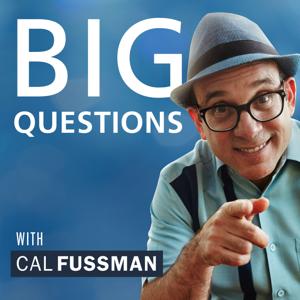


When a CEO who most of America wouldn't recognize on the street gets impersonated by Saturday Night Live, he stops being an expert on the news. He becomes a character in the great drama of our time. Cal starts there and then runs through the week the AI conversation changed, all curated into short clips so you can get caught up without scrolling YouTube at 2 a.m.
Cal becomes curious when he hears about a book that proves just that. He learns from The New Social Code that the most successful people aren't the ones who get the most social media likes – but the ones who have three or four powerful human connections. Authors Greg Pryor and Michael Arena show how those types of connections came together to enable Robert Prevost to become Pope Leo. And they also prove how success in our time can be attained by getting the most out of AI while doubling down on human connections that are based on deep trust.
Cal's ongoing look at how humans can get the best out of AI while avoiding the worst goes to an unanticipated place: Mentorship. In the time of a loneliness crisis, will young people rely on AI too much for guidance? Will those who refuse all interaction with AI miss out on its benefits and pay a price? It turns out there's never been a more important time for humans to find the people who can put them on the right path. A conversation with Georgetown professor Eric Koester, author of Super Mentors, shows us where ambition meets guidance in our time. And we're in luck! Eric reveals the best ways humans can connect with the right mentors and use AI as an accelerant, whether you're 18 or 52.
Three young girls leave the United States for the first time and head to Paris on a trip that has been awarded to their mother for extraordinary work. It lands them in a restaurant where they encounter escargot for the first time. Do they devour the snails? Drown them in lemon juice to avoid the taste? Or scramble for the nearest detour?!!! The story is a portal into how the workplace has changed through a report called the Recognition Disconnect. Now, with more than 50 percent of employees surveyed feeling burned out and many fearful of being replaced by artificial intelligence, people desire workplace rewards that are about time with family that actually replenishes. The human connection in this trip shifts the narrative away from the dystopian nightmare of AI taking everybody's jobs. It's told through Xceleration CEO Ben Levenbaum – who commissioned the survey. And seasoned by Frank Congiu, a global thought leader at Randstad – which helped 1.7 million people find jobs last year. In the end, it defines how this podcast has evolved into ways of getting the best out of AI and avoiding the worst. For these reward trips are an innovative way of enabling humans to feel confident and thrive in the age of artificial intelligence.
Cal goes to the heartland to talk with a man who's spent decades teaching kids how to build strength the right way for a conversation on how his training approach overlaps with AI. Turns out, Michael Ockrim uses the same disciplined tactics to build digital muscles that can wrestle down insurance payments. This episode is a real-world look at how anyone (not just tech people) can start putting AI to work in their own life. Michael is a husband, father of four and founder of Mighty Oak Athletic in Westmont, Illinois. Consider this episode solid advice from the heartland.
As the 25th anniversary of 9/11 approaches, Cal replays one of the most powerful conversations in Big Questions' archive: his interview with Michael Wright, a survivor who was buried alive when Tower 2 of the World Trade Center collapsed on him.
Michael was a 30-year-old account executive on an ordinary Tuesday morning when the hijacked planes hit. Cal interviewed him for Esquire Magazine just days after the attack and has replayed his taped recollections every year since Big Questions started.
This year, Cal introduces curated archival images from that day, synced to Michael's narrative. The visuals can be found on youtube.com/@bigquestionspodcast. This is the story of how Michael survived after being buried alive near a fireman. He crawled to the fireman and stuck to him "like a sticky burr on a bear's ass." The fireman hacked them both out with an axe.
When the story was first published, Esquire called it "the fastest 3,863 words you will ever read." It's a story about adaptation under the worst possible pressure, and about the connection between two strangers that made survival possible. Twenty-five years later, all of those involved still have everything to teach us.
Lachi is a blind musician who has produced GRAMMY nominated projects. She's also a GRAMMY trustee. And the voice behind Diseducation — a song built on the idea that the world needs a new way of thinking about disabilityHer latest album, Magnificent, features more than 70 human collaborators at a moment when many in the music industry worry about how AI might be coming to replace them. Cal sits down with her to work through the question at the center of this podcast: How do we get the best out of AI without taking on the worst? For Lachi, AI can open vistas that are closed to the disabled. For a musician, it can also take away a livelihood and steal IP. Lachi and Cal talk about accessibility, authorship, the environmental cost of the data centers powering the future, and what happens when we let AI do the thinking our minds were built to do. It's a conversation about what we all need to do to recognize our best path forward.
"If you want to know what life's like when you're not the apex of intelligence, ask a chicken."That's the line that Geoffrey Hinton, the Nobel Prize-winning "Godfather of AI" dropped on Steven Bartlett's podcast. It stopped Cal cold. Along with a lot of other people. One of them was a digital anthropologist and best-selling author named Brian Solis, who's spent decades watching technology unfold. To Solis, Hinton's statement felt in the moment like we had reached The End. But when Cal caught up with Brian a year later, he found that the anthropologist had adapted and made a case for what's possible. It's all in the book he co-wrote with Dave Wright that's titled: Infinite. Cal's conversation with Brian did something he never expected. It made him think about himself, for the first time, as a leader. Stay tuned . . .
Everybody's telling you that AI is coming for your job. Kevin Surace is here to tell you what they're not telling you. Kevin's the father of the artificial assistant. A CNBC Top Innovator of the Decade. He's the holder of more than 90 patents. And now he's the author of The Joy-Success Cycle – a book that is going to make you happy. Kevin has spent decades watching new technology arrive, and he's never once seen it destroy more than it creates. The headlines may chase the 90,000 jobs lost to AI. Kevin's counting the 364,000 jobs that didn't exist three years ago. That's because they didn't have "AI" in the title at the time. Cal makes a case that the coming labor shortage nobody's talking about is a much bigger story than the layoffs everybody is. Kevin has the numbers to prove it. So be joyful. In 30 minutes you're going to see the world in a new way.
From the publisher's feed
2,698 Listeners
1,232 Listeners

1,087 Listeners

30,177 Listeners
1,653 Listeners
2,208 Listeners
572 Listeners
3,979 Listeners

845 Listeners

4,966 Listeners

2,647 Listeners
2,207 Listeners
207 Listeners

595 Listeners
684 Listeners