
Sign up to save your podcasts
Or

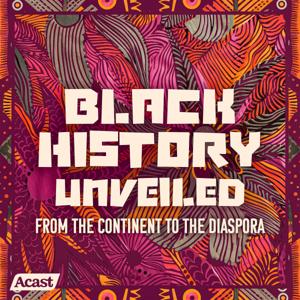


Today's episode of the Black History Unveiled Podcast marks the third and final part of the Haitian Revolution series. In the previous episode, we witnessed the outbreak of the revolt and the successful expulsion of the invading British and Spanish forces by the enslaved people of Saint-Domingue.
However, instead of peace, the so-called "War of the Knives" ensued, with leaders of the newly liberated population vying for control of the colony. After two years of conflict, the former slave Toussaint Louverture emerged as the victor. But what had he really won? Officially, Saint-Domingue still remained under French sovereignty.
Our story picks up when the French are gearing up to assert their authority. Louverture and the rest of the freed slaves are faced with an overpowering enemy and impossible odds, with the violence in Saint-Domingue reaching apocalyptic levels. The episode also provides keys to understanding why Haiti is in such a vulnerable position today.
You can find Black History Unveiled wherever you get your podcasts.
Hosted on Acast. See acast.com/privacy for more information.
This is the second episode of our three-part series about the Haitian revolution: one of history's biggest upsets, a classic David and Goliath moment.
In the first episode – which I recommend you listen to if you haven't already – we covered the creation of the French Caribbean colony of Saint-Domingue, which, from the late 17th century onwards, was the primary source of all coffee and sugar consumed in Europe. To make this possible, imported Africans were subjected to a particularly hideous form of slavery.
As this episode begins—late summer 1791—the slaves—the island's majority population—are preparing to give their lives for a chance at freedom.
Hosted on Acast. See acast.com/privacy for more information.
Today's episode touches on one of the most fascinating events in history. It's a story containing incomprehensible evil, incredible courage, and inspiring resistance.
By understanding this story, you also understand more about why things look the way they do today. How, for example, can two neighboring Caribbean countries – sharing an island – have such enormously different conditions? How can there be prosperity, investment, and hope for the future on one side of the border, while on the other, there is mainly talk of societal collapse, poverty, and suffering?
Many of the answers can be found here.
The episode is about the colonization of a Caribbean island and the particularly brutal slavery that followed. But also about the revolt that culminated in creating what is usually called "the world's first black republic" – Haiti.
Hosted on Acast. See acast.com/privacy for more information.
Hosted on Acast. See acast.com/privacy for more information.
Today's episode is about an East African kingdom that, in the 2nd century CE, was described as one of the world's foremost powers, along with Rome, Persia, and China. A kingdom that erected grand monuments and whose coinage spread throughout the world. It was not only among the first in history to convert to Christianity – a couple of hundred years later, it may have played a decisive role in the survival of Islam as a religion.
Today's episode is about Aksum.
Hosted on Acast. See acast.com/privacy for more information.
Those of you who've been listening to the podcast know that I often caution against the pitfalls of drawing parallels between various forms of slavery, especially when such comparisons are rooted in misleading or deceptive reasoning.
In this episode, I'm spotlighting a recent instance of this very issue. It's a striking example of a comparison that seeks to downplay the sheer scale and catastrophic impact of transatlantic slavery. It's whataboutism to an extraordinary degree.
Hosted on Acast. See acast.com/privacy for more information.
Hosted on Acast. See acast.com/privacy for more information.
Hosted on Acast. See acast.com/privacy for more information.
Today's episode is about the transatlantic slave trade, which is probably what many people think of first when they think of the history of Black Africa. Even so, it's a subject marked by misconceptions. People usually know that it happened, but not so much about why, how it started, or how far-reaching the consequences of it were.
Therefore, the following two episodes are a deep dive into transatlantic slavery. Part two will be more about the golden age of the slave trade, what life was like for those enslaved, and the obscene amounts of money the slave traders made.
In part one, we instead take a closer look at how the money that the Portuguese made from the West African gold trade pushed the Spanish to try to find their own sources of gold. But also on slavery as an institution and how the transatlantic slave trade first arose: how Portugal's exploration of Africa and the European so-called discovery of America worked together to create this tragic chapter in human history.
Hosted on Acast. See acast.com/privacy for more information.
Before the podcast leaves Mali, I will address two allegations of plagiarism leveled at Disney. The first and weaker of the two claims is that Disney stole large parts of Mali's national epic, "The Epic of Sundiata," in creating the plot of the mega-hit "The Lion King."
The second is about one of the film's signature songs, "The Lion Sleeps Tonight." The original version was written in 1939 by a South African man named Solomon Linda, who was paid pennies for the recording and died destitute, while American renditions of his song brought in millions.
The episode also highlights the battle against Disney that Linda's daughters have been waging to access missing royalties and have Solomon Linda's name recognized as the original composer.
Hosted on Acast. See acast.com/privacy for more information.
From the publisher's feed
Black History Unveiled: From the Continent to the Diaspora is a podcast by Swedish-Gambian journalist and author Amat Levin. It focuses on the part of…
Some episodes are about things that happened hundreds, even thousands of years ago. Others take place more recently and touch on scenes many of us may have witnessed. The stories are inspiring, illuminating, startling, and sometimes upsetting.
By listening, you'll learn why Black history has traditionally been suppressed, why it's essential to change that, and what learning about it can teach us about today.
Hosted on Acast. See acast.com/privacy for more information.

91,022 Listeners

37,658 Listeners
11,616 Listeners

141 Listeners

87,116 Listeners

1,697 Listeners

15 Listeners

16,365 Listeners

15 Listeners

25 Listeners

35 Listeners

43 Listeners

15,882 Listeners
3,466 Listeners

2 Listeners