
Sign up to save your podcasts
Or

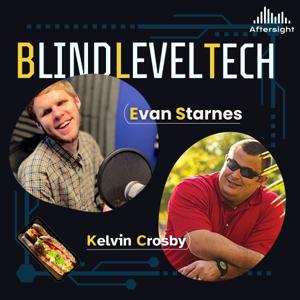


1) Episode Summary
In this episode of Blind Level Tech, host Evan Starnes is joined by producer Jonathan Price for a monthly tech news digest covering mainstream tech, access tech, AI, wearables, and listener comments. The episode opens with a preview of upcoming conversations, including Sriram Ganesh from Lumen and Shanell Matos from RightHear, highlighting AI email management, indoor orientation, accessibility beacons, and tools designed to help blind and low-vision users navigate daily life with more independence.
Evan and Jonathan also discuss major access-tech updates, including InnoSearch’s move into nonprofit status, the importance of supporting useful nonprofit technology, and the growing role of wearable AI. They talk through Meta Ray-Ban glasses, Aira integration, EchoVision glasses, and how AI-powered tools may continue shifting from phone-based experiences into glasses, watches, and other hands-free devices.
The conversation then moves into broader tech news, including AI processors, Apple’s ecosystem, Apple Intelligence, Windows Copilot, Microsoft’s approach to AI integration, and Evan’s real-world experience testing Android after years in the Apple ecosystem. The episode keeps a conversational, practical tone while asking the larger question underneath all the tech: does this actually help people live, work, navigate, communicate, and access the world more easily?
The episode closes with listener comments about Meta glasses, EchoVision, app accessibility, banking independence, and how listeners can reach out to the show with feedback, questions, or tech they would like reviewed.
2) Contact Info
Blind Level Tech / Aftersight
Website: aftersight.org
Email: [email protected]
Phone: (720) 712-8856
Featured hosts/contributors
Evan Starnes — Host, Blind Level Tech
Jonathan Price — Podcast Producer, Aftersight
3) Show Credits
Blind Level Tech is hosted by Evan Starnes and produced by Jonathan Price for Aftersight.
Aftersight provides news, information, and resources in audio format for people who are blind, have low vision, or benefit from alternatives to print.
As promissed, here is the BLT Bite demo of the OOrian app.For this demonstration, we go on a walk to Evan's office, and
On this demonstration, we take you on an immersive walk from Evan's home to the office, while taking in everything OOrian points out along the way.
It is strongly recommended to use headphones for the best listening experience.
If there is a particular feature of OOrian you would like demonstrated in a future BLT Bite, let us know by sending an email to [email protected], or calling 720-712-8856
Creators & Guests
In this solo episode of Blind Level Tech, Evan takes a deep dive into one of the most exciting accessibility tools he has tested recently: the Orion app.
Evan explains that he first encountered Orion through a friend, then tried it firsthand on both an iPhone and Meta Ray-Ban Smart Glasses. He quickly realized the app represented something he has long talked about on the show: “reactive AI,” or technology capable of describing the world around you in real time.
He gives a detailed breakdown of Orion’s history, beginning with its development in France in 2020, its early object-finding prototype in 2022, wider release in 2024, and major generative AI enhancements in 2025. He notes the addition of venue-specific navigation, voice assistant features, and most recently, integration with Meta glasses.
Evan walks listeners through setup, permissions, connecting Meta glasses, recommended settings, voice behavior, and battery considerations. He also explains the app’s core features:
•
Visual Question
•
Search Objects
•
Search Text
•
Nearby Objects
•
Nearby Text
•
Personal Objects
Throughout the episode he shares real-world examples of using Orion to:
•
Find keys, mugs, and lost objects
•
Read labels and medication packaging
•
Detect dishwasher lights
•
Adjust thermostats
•
Read office signs
•
Identify logos and products
•
Understand room layouts
•
Navigate unfamiliar environments
•
And yes… locate dog accidents on the floor
Evan emphasizes that Orion does not replace a cane or guide dog and should never be trusted for critical obstacle avoidance due to cloud-processing delays. But as a supplemental accessibility tool, he describes it as one of the most useful visual-assistance apps he has ever used.
He closes by inviting listener feedback and teasing an upcoming BLT Byte episode where he will wear the Orion-connected Meta glasses during a trip from home to work to demonstrate the app in real-world use.
Creators & Guests
In this episode of Blind Level Tech, Evan Starnes takes on a topic that can be surprisingly personal and surprisingly complicated: switching ecosystems. Rather than arguing that iPhone or Android is universally better, Evan walks listeners through what actually changes when you move from one platform to the other, especially as a blind screen reader user.
Drawing from his own recent experience of moving his eSIM from an iPhone to a new Google Pixel, Evan breaks down the practical side of switching, from initial setup and data transfer to battery life expectations and the reality of what does and does not carry over. He talks about the parts of the process that are more accessible than many people might expect, but also points out the frustrations, like message transfer issues and the extra little setup hurdles that can still make switching feel bigger than it should.
A major focus of the episode is accessibility. Evan compares VoiceOver and TalkBack, highlighting how much TalkBack has matured over the years. He discusses multi-finger gestures, customizable commands, Gemini-powered image descriptions and summaries, braille support, the TalkBack menu, and the way Android navigation differs from iOS. He also points out a few things he misses from iPhone, like direct touch in certain apps, Apple’s wider voice selection, and some of the little usability touches in iOS that make scrolling and media interaction feel smoother.
On the Android side, Evan talks about the strengths that still make Google’s platform appealing, especially for blind users who value flexibility. He highlights the usefulness of fingerprint unlock, the universal back button, home screen and launcher customization, app-specific notification sounds, and the broader ability to tailor the device to your own habits. On the Apple side, he acknowledges that iOS still has major advantages, especially when it comes to ecosystem integration with devices like the Apple Watch, iPad, AirPods, and Mac.
Overall, this episode is a thoughtful, real-world look at what switching phone ecosystems actually feels like when accessibility is part of the equation. It is not about declaring a winner. It is about helping listeners understand the tradeoffs, the surprises, and the things worth knowing before making the jump themselves.
Creators & Guests
In this episode of Blind Level Tech, Evan dives into a surprisingly practical and slightly uncomfortable question: when does “smart” tech become too smart for its own good, and what can you do if your smart device loses it's smart functionality?
The conversation is sparked by the shutdown of the Braava smart oven, a once-innovative infrared countertop appliance that relied heavily on cloud services. With the company ceasing operations and no guarantee of how long servers will remain online, Evan highlights a critical issue:
When the cloud goes away, what happens to the product?
For blind users in particular, this becomes more than an inconvenience—it can render a device nearly unusable if accessibility depends on an app or dynamic touchscreen interface.
Creators & Guests
Episode Summary
In this monthly Blind Level Tech roundup, Evan Starnes brings a fast-moving mix of mainstream and assistive tech news, opening with a reminder that Aftersight’s Tech Pulse audio edition lets listeners hear original tech articles from sources like Top Tech Tidbits, Wired, and CNET. From there, the episode moves through Amazon’s new Alexa personality options, Apple’s push into business and education, Spotify’s new Song DNA feature, Windows 11 changes, and a reported FCC router sales ban. The second half shifts into assistive tech, highlighting Speakable’s public voice-label system, a new BMIOS and Meta partnership, and an extended breakdown of the BrailleSense 7 and its new features.
This episode works well as a broad accessibility-and-innovation update. It gives listeners both consumer-facing tech developments and blind-specific tools in one place, while keeping the tone conversational, practical, and rooted in how these changes may actually affect everyday users.
Contact Info
Guest/Organization Info:
No guest featured in this episode. Host-led tech news roundup.
Aftersight Contact Info:
Aftersight
Email: [email protected]
Phone: (720) 712-8856
Website: Aftersight.org
Show Credits
Host: Evan Starnes
Producer: Jonathan Price
Organization: Aftersight
Episode Summary
In this personal three-year reflection, Evan Starnes steps away from the usual tech-heavy format to look back on the journey of Blind Level Tech since its launch in March 2023. He shares how his time at the Colorado Center for the Blind and his early internship at Aftersight helped shape his confidence, skills, and voice as both an audio producer and host.
Evan walks listeners through the evolution of Aftersight’s podcasting world, from the early days of Community Conversations to the creation of Blind Level Tech alongside producer Jonathan Price. He reflects on the guests, co-hosts, spin-off ideas, and creative risks that helped BLT find its identity as a show that makes technology approachable for both lifelong blind listeners and those newer to vision loss.
The episode also opens up a more vulnerable side of the work behind the mic. Evan speaks candidly about the pressure of trying to represent the blind and low-vision community well, the perfectionism that can come with creativity, and the personal struggles that have shaped the show’s highs and lows. It is an honest, human check-in on what it takes to keep building something meaningful week after week.
Looking ahead, Evan shares his hopes for the future of Blind Level Tech, including more demos, more guests, Throwback Thursdays, continued BLT Bites, and a stronger creative rhythm after Aftersight’s current platform transition. Through it all, his goal remains the same: to make BLT a welcoming, informative, and distinctly human space for the blind and low-vision community.
Contact Info
Organization: Aftersight
Website: Aftersight.org
Feedback Email: [email protected]
Listener Voicemail: (720) 712-8856
Producer: Jonathan Price, Podcast Producer, Aftersight
Show Credits
Show: Blind Level Tech
Host: Evan Starnes
Producer: Jonathan Price
Network: Aftersight Originals
1) Episode Summary
Evan Starnes opens this shorter solo episode with a quick update on Aftersight’s major platform transition and shares his excitement about getting back to creating more original content for Blind Level Tech. He introduces a new upcoming Thursday mini-series focused on vintage and retro assistive and consumer technology, giving listeners a fun “trip down memory lane” format that will be more relaxed and demo-driven.
The main focus of the episode is a broad overview of the latest Apple product releases and what matters most for blind and low-vision users. Evan walks through the newly announced products, highlights accessibility-relevant features, and frames the conversation around practical use rather than deep technical specs. He discusses the value of these devices for students, everyday users, and those looking to upgrade from older Apple hardware.
He also gives his take on the new iPhone and Mac lineup from the perspective of real-world accessibility, including MagSafe, storage, performance, camera practicality, and how useful certain “Pro” features may or may not be for blind users. The episode closes with an invitation for listener feedback and a reminder that more tech-focused content is on the way as the transition work settles down.
2) Contact Info
Aftersight Contact Info
Aftersight
Email: [email protected]
Phone: (720) 712-8856
Website: Aftersight.org
Producer Credit
Produced by Jonathan Price
3) Show Credits
Show: Blind Level Tech
Host: Evan Starnes
Producer: Jonathan Price
Organization: Aftersight
1) Episode Summary
In this special Aftersight Original, Kim Wardlow shares the personal story behind her leadership and the road that led her to become Executive Director of Aftersight. She reflects on growing up in Lamar, Colorado, her early love for creativity, 4-H, cooking, service, travel, and the many work experiences that quietly prepared her for nonprofit leadership.
Kim walks listeners through pivotal moments in her life—from studying abroad in Scotland and working internationally, to volunteering at what was then Radio Reading Service of the Rockies, to unexpectedly finding both her calling and her husband through the organization. She also shares how Aftersight has evolved over the years from volunteer-read programming into a wider community-centered organization offering podcasts, peer support, book club, white canes, and more.
This episode is both a personal milestone and a mission-centered reflection. As Kim celebrates her 60th birthday and approaches 25 years with Aftersight, she invites listeners to see the deeper heart behind the organization: building community, increasing independence, and creating meaningful access for people who are blind, low vision, deafblind, or in need of alternatives to print. The episode closes with an invitation to support Aftersight’s work through her birthday giving campaign.
2) Contact Info
Guest / Organization:
Kim Wardlow — Executive Director, Aftersight
Aftersight website: aftersight.org
Birthday campaign / donations: Visit the donate page at aftersight.org
Aftersight:
Aftersight Originals network featuring Navigating Life with Vision Loss, The Blind Chick, Blindsight, and Blind Level Tech
Producer Credit:
Jonathan Price — Podcast Producer, Aftersight
3) Show Credits
Special Aftersight Original
Featuring Kim Wardlow
Opening by Jonathan Price
Produced by Jonathan Price
Organization: Aftersight
4) Chapter Markers
00:00 — Jonathan’s welcome and special Aftersight introduction
00:53 — Kim introduces herself, Aftersight, and the reason for sharing her story
03:14 — Childhood in Lamar, creativity, 4-H, and early PBS dreams
05:38 — Learning leadership, service, and community values
08:03 — Solar panels, first jobs, and developing a strong work ethic
10:28 — College, Scotland, travel, and broadening her world
12:54 — Early professional life, proposal writing, and service work
15:14 — Volunteering with Radio Reading Service and working at GE Access
17:37 — Friendship, snowshoeing, travel, and a season of transition
20:02 — Layoff, September 2001, and joining Radio Reading Service
22:21 — Meeting Doug, discovering purpose, and seeing the bigger calling
24:43 — Outreach across Colorado, music, and the value of volunteers
27:04 — How Aftersight expanded into podcasts, groups, and broader services
29:29 — Leadership, rebrand, relocation, and adapting through COVID
31:44 — Community, connection, and why the work matters
34:07 — Life purpose, independence, and the mission behind Aftersight
36:31 — Kim’s birthday campaign and invitation to support Aftersight
In this episode of Blind Level Tech, host Evan Starnes sits down with Sean Keane, an accessibility professional, AI enthusiast, and founder of the AI for the Blind Club. Sean shares his journey from assistive technology trainer and nonprofit technology director to becoming deeply involved in artificial intelligence after a stroke changed how he interacts with computers.
Sean explains how losing dexterity in one hand pushed him to experiment with AI tools like ChatGPT and Suno AI, ultimately discovering how generative AI could help him write, create music, and explore ideas more efficiently. What began as a practical solution quickly evolved into a creative outlet and a new way of thinking about technology.
Throughout the conversation, Evan and Sean discuss the rapid evolution of generative AI, how blind users are uniquely positioned to benefit from text-driven tools, and why learning to prompt AI effectively is becoming an important skill. Sean also talks about his book The Hum Method, which teaches people how to turn musical ideas in their head into AI-generated songs, even if they aren’t musicians.
The episode also highlights Sean’s growing community, the AI for the Blind Club, a private Facebook group with thousands of members where blind and low-vision users share AI tools, tips, and experiments. The group has grown from a small discussion space into a nonprofit resource helping people explore emerging technology.
The conversation wraps up with a discussion of classic assistive technology, including early screen readers and computers like the Apple IIe, and the idea of bringing together longtime technology users for a panel about the evolution of accessible tech.
Whether you’re curious about AI music generation, creative uses of generative models, or how technology can empower people after life-changing events, this episode explores how AI can open new doors for creativity and accessibility.
Check out AI For the Blind Club at https://aiftb.com
Creators & Guests
From the publisher's feed
1 Listeners
2 Listeners
3 Listeners
1 Listeners
1 Listeners
3 Listeners
1 Listeners

1 Listeners
1 Listeners
1 Listeners
15 Listeners
1 Listeners
1 Listeners
0 Listeners
5 Listeners
0 Listeners
0 Listeners
0 Listeners
0 Listeners