
Sign up to save your podcasts
Or

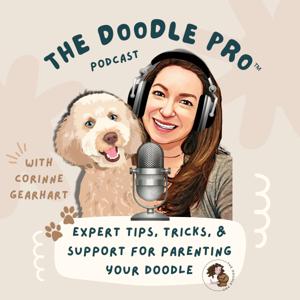

Many Doodle parents ask whether a board and train program for dogs is the best solution. Many Doodle parents eventually ask the same question:
“Should I send my dog to a board and train program?”
It’s a very understandable thought. When your dog is jumping, pulling on leash, barking, or struggling to settle, the idea of sending them away for a few weeks and getting back a perfectly trained dog can sound incredibly appealing.
In this episode, I’m sharing a personal story about sending my own Poodle to a board and train program years ago, long before I became a professional trainer.
At the time, I had young children and simply wanted to do the best thing for my dog. I had heard that positive reinforcement was the best approach, and I asked a lot of questions before enrolling her.
One of the answers I heard back then is something I now recognize as a major red flag:
“We start with positive reinforcement and only use other tools if necessary.”
When I picked up my Poodle, she had a beautiful down-stay.
But the moment I stopped using the tool she had been trained with, the behavior disappeared. And the emotional fallout for my dog was real. She became more anxious and started submissive peeing.
That experience taught me something important about how dogs actually learn.
Years later, after becoming a professional trainer and working with Doodles every day, I revisited that exact skill. I wanted to know if we could teach an even stronger down stay without relying on tools like prong collars or pressure.
That work eventually became Relaxation Protocol for Distractable Doodles™, a training approach designed specifically for the high-energy, highly social nature of Doodles.
Today I regularly see Doodles learn to settle calmly even with real-life distractions like doorbells, visitors, or activity in the home — all through positive reinforcement training.
In this episode, I talk about:
• Why behaviors built with pressure often disappear when the pressure is removed
• The red flag phrase many dog owners hear when asking about positive reinforcement training
• Why many board and train programs still rely on aversive tools like prong collars or e-collars
• Why sending a dog away for training doesn’t automatically transfer skills back to the family
• Why training together often creates stronger long-term results
• How to teach a Doodle to settle and relax using positive reinforcement training
I also want to be clear about something important. Skilled, science-based trainers can be incredibly valuable. The best trainers don’t replace the relationship between you and your dog. They help guide you so you can build that relationship yourself.
Because in the end, the most important training happens in the everyday moments between you and your dog.
Many Doodle parents also find th
🐾 Ready to train WITH me? Join the FREE Doodle Parent Challenge — 5 days of short, Doodle-specific lessons starting April 20th. No credit card, no catch. Grab your free spot at thedoodlepro.com/challenge
→ thedoodlepro.com/challenge
Corinne Gearhart is the founder of The Doodle Pro®, a science-based training platform helping Doodle parents raise calmer, well-mannered dogs using positive reinforcement. She is the host of The Doodle Pro® Podcast and author of Your Doodle’s Daily Schedule Blueprint™.
📘 Get the Doodle Schedule Blueprint:
https://thedoodlepro.com/doodle-schedule-bonus/
🎧 More episodes:
https://thedoodlepro.com/podcast
 View all episodes
 By The Doodle Pro® – Corinne Gearhart

4.9
6666 ratings
Many Doodle parents ask whether a board and train program for dogs is the best solution. Many Doodle parents eventually ask the same question:
“Should I send my dog to a board and train program?”
It’s a very understandable thought. When your dog is jumping, pulling on leash, barking, or struggling to settle, the idea of sending them away for a few weeks and getting back a perfectly trained dog can sound incredibly appealing.
In this episode, I’m sharing a personal story about sending my own Poodle to a board and train program years ago, long before I became a professional trainer.
At the time, I had young children and simply wanted to do the best thing for my dog. I had heard that positive reinforcement was the best approach, and I asked a lot of questions before enrolling her.
One of the answers I heard back then is something I now recognize as a major red flag:
“We start with positive reinforcement and only use other tools if necessary.”
When I picked up my Poodle, she had a beautiful down-stay.
But the moment I stopped using the tool she had been trained with, the behavior disappeared. And the emotional fallout for my dog was real. She became more anxious and started submissive peeing.
That experience taught me something important about how dogs actually learn.
Years later, after becoming a professional trainer and working with Doodles every day, I revisited that exact skill. I wanted to know if we could teach an even stronger down stay without relying on tools like prong collars or pressure.
That work eventually became Relaxation Protocol for Distractable Doodles™, a training approach designed specifically for the high-energy, highly social nature of Doodles.
Today I regularly see Doodles learn to settle calmly even with real-life distractions like doorbells, visitors, or activity in the home — all through positive reinforcement training.
In this episode, I talk about:
• Why behaviors built with pressure often disappear when the pressure is removed
• The red flag phrase many dog owners hear when asking about positive reinforcement training
• Why many board and train programs still rely on aversive tools like prong collars or e-collars
• Why sending a dog away for training doesn’t automatically transfer skills back to the family
• Why training together often creates stronger long-term results
• How to teach a Doodle to settle and relax using positive reinforcement training
I also want to be clear about something important. Skilled, science-based trainers can be incredibly valuable. The best trainers don’t replace the relationship between you and your dog. They help guide you so you can build that relationship yourself.
Because in the end, the most important training happens in the everyday moments between you and your dog.
Many Doodle parents also find th
🐾 Ready to train WITH me? Join the FREE Doodle Parent Challenge — 5 days of short, Doodle-specific lessons starting April 20th. No credit card, no catch. Grab your free spot at thedoodlepro.com/challenge
→ thedoodlepro.com/challenge
Corinne Gearhart is the founder of The Doodle Pro®, a science-based training platform helping Doodle parents raise calmer, well-mannered dogs using positive reinforcement. She is the host of The Doodle Pro® Podcast and author of Your Doodle’s Daily Schedule Blueprint™.
📘 Get the Doodle Schedule Blueprint:
https://thedoodlepro.com/doodle-schedule-bonus/
🎧 More episodes:
https://thedoodlepro.com/podcast
172,050 Listeners
3,816 Listeners

875 Listeners

369,882 Listeners
1,195 Listeners

3,176 Listeners

2,515 Listeners

192 Listeners
626 Listeners

23 Listeners

677 Listeners
41,507 Listeners

5,817 Listeners
12,486 Listeners
2 Listeners