
Sign up to save your podcasts
Or



One of Ken’s favorite books, The Last Men of the Revolution brings American history vividly to life. During the Civil War, Reverend Elias Hillard tracked down, photographed, and interviewed six surviving veterans of the American Revolution. The men, who had fought in the Revolution as teenagers, were all over 100 years old by that time, although some come across as remarkably witty and spry. Photography itself was only about 30 years old at that time. Their portraits were published along with short biographies in a book intended to promote patriotism at a time when the country had turned on itself. Hillard wrote in his introduction that “History lives only in the persons who created it… As we look upon their faces, as we learn the stories of their lives, it will live again before us, and we shall stand as witnesses of its great actions.”
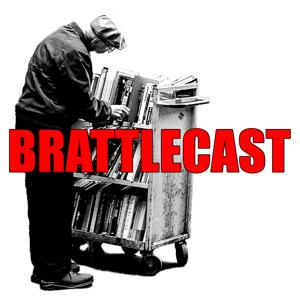
Welcome to the 100th episode of #Brattlecast! We’re celebrating by talking about the Brattle’s appraisal of a document so culturally, historically, and monetarily valuable that it featured prominently in a recent Hollywood action movie, opposite co-star Nicholas Cage. But of course the real national treasure is all the fun we’ve had on the podcast, sharing these stories and connecting with our listeners. Thanks for coming on this journey with us—we’re already looking forward to the next 100 episodes!
Today we’re discussing recent news about Covid-19’s impact on the Strand bookstore. The New York City institution received an outpouring of support after its owner, Nancy Bass Wyden, took to social media, detailing the 93-year-old store’s dire financial situation and asking the public for help. The Strand’s story has a happy ending, but many others have not been so lucky: according to the American Booksellers Association, more than one independent bookshop has closed for good each week since the start of the pandemic in March. We’ll talk about why this crisis is especially hard on smaller book stores, many of which rely on city foot traffic and in-store events, and have already been weakened by years of competition with online giants like Amazon. While the Brattle isn’t going anywhere, it functions best as part of a thriving community of fellow booksellers, the diminishment of which is a real loss to literary culture and to the fabrics of our cities and towns.
It’s something that many of us have a bit more time for these days: buying books online (and, ideally, reading them). In this episode we’ll look into some of the quirks and peculiarities that shoppers might encounter on the internet, like books that are priced way too high, or the same book being sold in a really wild range of prices (do I want the $6 copy, or the $2000 copy?). It turns out that usually the culprit behind these discrepancies is a confused computer algorithm, rather than an ambitious human bookseller. We’ll also reveal some book buying tips and tricks, plus the Brattle’s famous haggling secret (“ask nicely”).
What do you look for when you’re looking at books? In response to this question from an antiques dealer who finds books to be something of a pain in the… past, Ken details the Brattle’s time-tested methods for determining, over the phone, which libraries might be of special interest to collectors. Of course no books are really a pain in the buns: some may be rare and valuable but the rest are still great reading material that’s heavy to move, frequently dusty, and emotionally difficult for people to part with. Learn what to look for on this very specific #brattlecast.
Today we’re talking about Ken’s surprising appearance as a villain in John Grisham’s rare books heist thriller, Camino Island. Well, not Ken exactly, but someone very much like him. Oscar Stein is the fictional proprietor of the three story Old Boston Bookshop on West Street in downtown Boston, a shop that was founded by his father, Loyd Stein. Sound familiar? The only problem is that Oscar Stein is also a thief, his bookshop is failing, he’s weary of the book trade, and would rather pop pills in his cluttered office than run the shop. After reading Camino Island, Ken, baffled and understandably concerned about the possible damage it could cause to his reputation, does some investigating of his own, ultimately leading to a phone call from Grisham himself.
Finally, some good news! Today we’re taking a look at the abolitionist newspapers of the 1800s. The Liberator was published here in Boston by William Lloyd Garrison, and argued that the institution of slavery was so deeply immoral that it must be ended immediately, a radical position at the time. Although it had a relatively small circulation, The Liberator was influential, shaping abolitionist thought and inspiring others to start their own publications, including Frederick Douglass, who founded his anti-slavery newspaper, The North Star, in 1847. Today, as a new chapter in America’s troubled civil rights history unfolds, these antique newspapers remain impressive for their fierce moral clarity in the face of violent opposition and for their insistence on emancipation and full equality.
Today we’re taking a look at salesman’s sample books. These were not complete books, but mock-ups, usually consisting of sample pages of text, possibly with a few illustrations, examples of different available bindings, and a space in the back to take down orders. They were brought door to door by traveling salesmen around the time of the American Civil War, and can be rare and collectible today. The example we have in the studio with us is a sample copy of Grant’s Memoirs, one of the best works of military autobiography, and a bestseller at the time of its publication, largely due to an ingenious marketing ploy by its publisher, Mark Twain.
Today we’re taking a look at a signed, second edition copy of Grapefruit, Yoko Ono’s pioneering work of conceptual art. Yoko Ono was a fixture of the subversive 1960’s New York underground art scene, and is most associated with the Dada-inspired Fluxus movement. First published in 1964, Grapefruit consists of a series of “event scores”, poetic, zen-influenced performance scripts that can be followed by anyone to create musical or artistic pieces. This particular copy is also signed by Ono’s husband at the time, John Lennon, who wrote the introduction to this edition and was a popular musician in his own right.
Today we’re talking about one of the things that the Brattle does best: appraisals! They essentially tell you how much a book or books are worth but their formality can vary widely depending on the needs of the appraisee, from a casual verbal estimate to a rigorous written appraisal that can stand up to the scrutiny of the IRS. Learn how we do it and hear about some of Ken’s all-time favorites on this extremely valuable #brattlecast.
Are you curious about the value of your own books? Feel free to reach out to us at [email protected].
From the publisher's feed

78,338 Listeners

26,178 Listeners

5,489 Listeners

9,602 Listeners

87,092 Listeners

111,863 Listeners

56,401 Listeners

59,428 Listeners

15,573 Listeners
9,188 Listeners
20 Listeners

10,723 Listeners

2,247 Listeners

654 Listeners