
Sign up to save your podcasts
Or



Today we’re talking about some of our favorite titles from the Limited Editions Club. Founded in 1929 by George Macy, the L.E.C. brought together leading artists, illustrators, book designers, and typographers to produce beautiful editions of classic works of literature, which were then distributed to club members on a subscription basis. Only about 1,500 copies of each title was published, and they were usually signed by their author, illustrator, or both. While many of their titles have fallen out of fashion today, some are still highly collectible; James Joyce’s Ulysses, with art by Henri Matisse (who hadn’t read a word of the book and instead illustrated six scenes from Homer’s Odyssey), and Lewis Carroll’s Alice’s Adventures in Wonderland signed by Alice Hargreaves, the “original” Alice for whom the book was written.
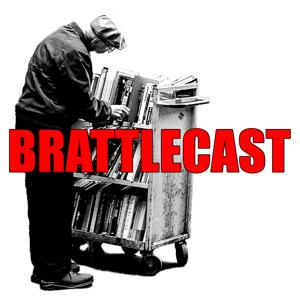
Speaking of subscription-based media, we would encourage you to subscribe to the Brattlecast if you haven’t already, and to share so that your friends can join the club!
Just another day at the Brattle: Ken gets called out to a house to look at “about 500” books, but when he arrives he finds three floors and a basement crammed with mysteries and sports biographies; some rooms are so full he can’t even get into them. Unusually for a house like this, the books are in perfect condition; a dust jacket cover has been applied to each one, and many of them are even signed by their authors. At the end of the day it ends up being more than 20,000 books. Ken and his team are still working on getting this massive library moved to the shop; it will take them literally years to sell them all. Learn about the logistics of a book-buy this big, and about the surprising connection between the real estate market and the secondhand book trade, on today’s episode.
Today we’re taking a look at a Massachusetts Militia pamphlet from 1758. ‘The Exercise for the Militia of the Province of Massachusetts Bay’ is a guide to forming and equipping a local militia, consisting mostly of rural farmers who would train part time and fight only when necessary. We’ll also talk about the history of militia groups in America, from colonial days to their sometimes controversial present-day iterations.
Today in the studio we have a very special item: a single page from a copy of the first Bible printed in Colonial America. Mamusse Wunneetupanatamwe Up-Biblum God, also known as the Eliot Indian Bible, is a translation of the Geneva Bible into Natick, a previously unwritten dialect spoken by the Algonqian peoples of Massachusetts (British publishers held a monopoly on the publication of English-language Bibles, so none were printed in America until after the revolution). This Bible was the work of John Eliot, a Puritan missionary, and a team of Algonquin translators. Printed in Cambridge it took over 14 years to produce. You can view the full Bible here and learn more about its laborious, painstaking creation on today’s episode.
Today we’re talking about Self-Service Food Stores, a 1946 book published by the trade magazine The Progressive Grocer. The book evokes the enormous post-war changes in the way that Americans shopped for food, as a world of milkmen, butchers, and mom-and-pop grocery shops gave way to gleaming new supermarkets that offered lower prices, pre-packaged goods, and seemingly unlimited selection. These changes were made possible by the newly built highway system, advances in preservation and refrigeration, and produce imports from overseas. In this episode we reflect on how quickly the once futuristic supermarket has come to seem like the most natural way to buy groceries, and the possible social cost of all that convenience and fresh fruit.
In this episode Ken takes us behind the scenes of Antiques Roadshow, GBH’s long-running appraisal program. Filming a season of Antiques Roadshow offers more than a shot at PBS fame and prestige—you also get to take a vacation to an offbeat city (or a road trip through a few) and socialize with a tight knit community of fellow appraisers. We’ll hear about how it all works, what it takes to get your item on TV, and some of Ken’s most memorable moments from his years on the show.
Today we’re talking about some new arrivals to the shop: Boston Directories from the 1800’s. Like a precursor to the modern day phone book (or, come to think of it, the slightly less antique phone book) these directories listed the residents of the city of Boston with their addresses and occupations, as well as local businesses and public officials. Perhaps most fascinatingly, they also included a map of the city, which grew steadily from edition to edition as hills were flattened and bodies of water filled in to create new land and new neighborhoods, including the Back Bay, Chinatown, and the Financial District.
If you’re not able to make it into the shop to see them in person, you can view some Directories in the Boston Athenaeum’s digital collections here.
In this episode, Ken shares his advice for book collectors who want to become book dealers, and for book dealers who want to start collecting. If you’re someone who loves books, starting a bookshop may sound like fun, but it can be a real challenge to make a living at it. And, if you’re someone who sells books, keeping too many for yourself can become a kind of occupational hazard. Even though it’s best not to get too “high on your own supply,” Ken does confess to having a few quirky collections of his own. We’ll talk about them, and a lot more, on this listener question-inspired #brattlecast.
Today we’re talking about historic African American periodicals. These newspapers and magazines often had smaller circulations than their white, mainstream counterparts, making them harder to find and more collectible today. It’s a broad and varied field, which includes the abolitionist newspapers of the early 1800s like Freedom’s Journal and The North Star, the literary journals of the Harlem Renaissance, and more recent lifestyle magazines like Ebony and Jet. These periodicals were influential in promoting the social movements of their times and can provide an important parallel history directly from the Black voices that were all too often excluded from and ignored by the mainstream American press.
This past March, the estate of Dr. Seuss announced that they would no longer be publishing new copies of six of his lesser known children’s books: And to Think That I Saw it on Mulberry Street, If I Ran the Zoo, McElligot’s Pool, On Beyond Zebra!, Scrambled Eggs Super!, and The Cat’s Quizzer, explaining in a statement on their website that, “These books portray people in ways that are hurtful and wrong.”
A sort of tantrum ensued, not from the books’ intended audience of readers aged 4-6 years old, but from a variety of politicians and cultural commentators who rushed to the defense of racially insensitive imagery in children’s literature. Was this cancel culture? Was it 1984? How could a private company have made this decision about its own intellectual property while at the very same time, unrelated raps songs with R-rated lyrics existed, and were popular?
In today’s episode we’ll talk about this latest battle in our interminable culture wars as well as the ethically tricky business of dealing with disturbing or offensive materials that, in the right hands, can be powerful teaching tools. Books should never be flat-out banned, but every bookseller has to draw their own line about what they are and aren’t comfortable selling.
From the publisher's feed

78,338 Listeners

26,178 Listeners

5,489 Listeners

9,602 Listeners

87,092 Listeners

111,863 Listeners

56,401 Listeners

59,428 Listeners

15,573 Listeners
9,188 Listeners
20 Listeners

10,723 Listeners

2,247 Listeners

654 Listeners