
Sign up to save your podcasts
Or

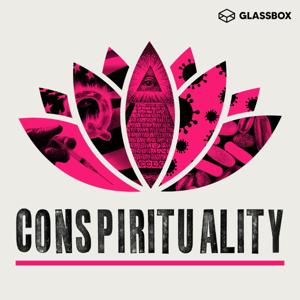

In this first of a two-part series, I dig into a century-long debate within revolutionary politics—one that now shapes the fault lines between MAGA authoritarianism and the fragmented resistance against it.
How did the American far right end up using Leninist strategy more effectively than the American left? And what does that say about our own movements—our blind spots, our strengths, and inherited illusions?
In 2013, Steve Bannon called himself a Leninist. In 2016, he openly called for the “deconstruction of the administrative state.” In Trump 2.0, he’s been an ideological whip for the vanguardism of Project 2025. If Bannon has a foil, it was the late anthropologist David Graeber—Occupy organizer, anarchist, and author of The Dawn of Everything—who championed prefigurative politics and rejected the idea that the state could ever be an instrument of liberation.
Drawing from Vincent Bevins’ If We Burn, I explore why a decade of globally interconnected mass movements failed to build lasting power—and how the right learned from their mistakes. We revisit January 6 through the lens of conspirituality influencers, we go to São Paulo to watch anarchist punk collectives lose the narrative to organized right-wing actors, and we return to Occupy to understand the spiritual hopes and organizational gaps that still shape protest culture today.
Part 2 will dig deeper into Graeber’s legacy, the theological undertow of spontaneity vs. structure, and what younger activists may inherit if we don’t learn from the last half-century of revolt and repression.
NOTE: Full citations are available on the episode page at https://www.conspirituality.net/.
Learn more about your ad choices. Visit megaphone.fm/adchoices
 View all episodes
 By Derek Beres, Matthew Remski, Julian Walker

4
20142,014 ratings
In this first of a two-part series, I dig into a century-long debate within revolutionary politics—one that now shapes the fault lines between MAGA authoritarianism and the fragmented resistance against it.
How did the American far right end up using Leninist strategy more effectively than the American left? And what does that say about our own movements—our blind spots, our strengths, and inherited illusions?
In 2013, Steve Bannon called himself a Leninist. In 2016, he openly called for the “deconstruction of the administrative state.” In Trump 2.0, he’s been an ideological whip for the vanguardism of Project 2025. If Bannon has a foil, it was the late anthropologist David Graeber—Occupy organizer, anarchist, and author of The Dawn of Everything—who championed prefigurative politics and rejected the idea that the state could ever be an instrument of liberation.
Drawing from Vincent Bevins’ If We Burn, I explore why a decade of globally interconnected mass movements failed to build lasting power—and how the right learned from their mistakes. We revisit January 6 through the lens of conspirituality influencers, we go to São Paulo to watch anarchist punk collectives lose the narrative to organized right-wing actors, and we return to Occupy to understand the spiritual hopes and organizational gaps that still shape protest culture today.
Part 2 will dig deeper into Graeber’s legacy, the theological undertow of spontaneity vs. structure, and what younger activists may inherit if we don’t learn from the last half-century of revolt and repression.
NOTE: Full citations are available on the episode page at https://www.conspirituality.net/.
Learn more about your ad choices. Visit megaphone.fm/adchoices

4,623 Listeners
432 Listeners
15,655 Listeners

4,299 Listeners

3,355 Listeners

1,939 Listeners

6,251 Listeners
2,060 Listeners
3,538 Listeners

948 Listeners
16,913 Listeners

9,431 Listeners

567 Listeners

2,600 Listeners

1,029 Listeners